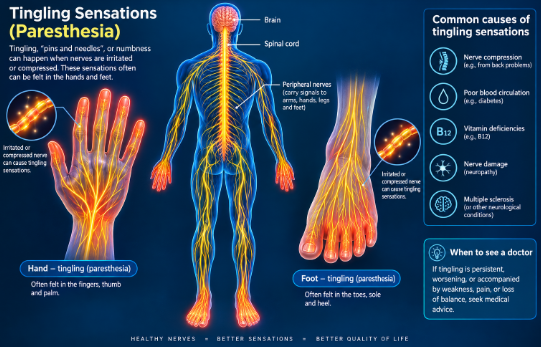
Many people experience a sudden pins and needles feeling in hands and feet at some point in their lives. Doctors medically call this tingling sensation paresthesia. Sometimes, sitting on your leg for too long cuts off blood flow and causes a brief prickling feeling. However, when this sensation occurs frequently or persists for days, it often signals an underlying nerve issue that requires attention.
Understanding the Pins and Needles Feeling in Hands and Feet
Your nervous system acts like a vast network of electrical wires that send messages to your brain. When something irritates or squeezes these nerves, the signals become scrambled. As a result, your brain interprets these disrupted signals as tingling, numbness, or a prickling sensation.
For instance, when paresthesia affects both your upper and lower limbs at the same time, peripheral nerve irritation is usually responsible. Understanding these underlying mechanisms helps you identify whether your symptoms stem from a simple temporary issue or a long-term condition.
Spinal Nerve Compression and Lower Body Symptoms
When nerve pressure starts in your lower back, it frequently affects your legs and feet. For example, a herniated spinal disc can press against the sciatic nerve root. Consequently, this compression triggers a sharp pins and needles feeling in hands and feet or radiating hip pain down one leg.
Furthermore, poor posture and heavy lifting can aggravate spinal alignment. When severe pressure compresses these spinal nerves, walking or sitting comfortably becomes difficult. Therefore, restoring proper spine health often relieves lower body tingling quickly.
When the Pins and Needles Feeling in Hands and Feet Signals Neuropathy
If you feel tingling in both hands and both feet simultaneously, peripheral neuropathy is often the primary cause. Peripheral neuropathy occurs when peripheral nerves outside your brain and spinal cord suffer damage.
For example, high blood sugar levels from unmanaged diabetes frequently damage delicate blood vessels that supply oxygen to your nerves over time. Consequently, diabetic neuropathy often starts in the toes and fingers before spreading upward. In addition, chronic alcohol use and toxic chemical exposure can also trigger widespread nerve damage.
Vitamin Deficiencies and Systemic Causes
Your body relies on essential vitamins to maintain healthy nerve function. Specifically, a severe lack of vitamin B12 weakens the protective myelin sheath surrounding your nerve fibers. Without this protective coating, your nerves cannot transmit signals properly.
Similarly, autoimmune conditions like lupus, rheumatoid arthritis, or multiple sclerosis cause your immune system to attack healthy nerve tissue. Furthermore, thyroid disorders and kidney disease can cause fluid buildup that presses directly on delicate nerve pathways throughout your body.
Effective Tips to Manage Nerve Health
Fortunately, you can take simple daily steps to protect your nerves and reduce uncomfortable tingling sensations. First, eat a balanced diet rich in leafy greens, eggs, and lean proteins to support your vitamin B levels. Second, exercise regularly to boost blood circulation and deliver vital oxygen to your extremities.
Additionally, manage chronic health conditions like diabetes by keeping your blood sugar levels within a healthy range. If you work at a desk, change your sitting posture frequently to avoid placing direct pressure on your nerves.
When to See a Doctor and Final Thoughts
In conclusion, identifying what causes the pins and needles feeling in hands and feet helps you address potential health issues early. While temporary tingling after sitting awkwardly is harmless, persistent numbness or muscle weakness requires medical evaluation. Therefore, a healthcare provider can run blood tests or nerve conduction studies to find the exact cause and create a treatment plan. For additional insights on managing peripheral nerve conditions, explore the official NINDS Paresthesia Information Page.
References
- American Academy of Neurology. (2022). Understanding Peripheral Neuropathy: Causes and Treatments.
- Cleveland Clinic. (2023). Paresthesia: Causes, Symptoms, and Diagnosis.
- Mayo Clinic. (2023). Peripheral Neuropathy: Symptoms and Causes.