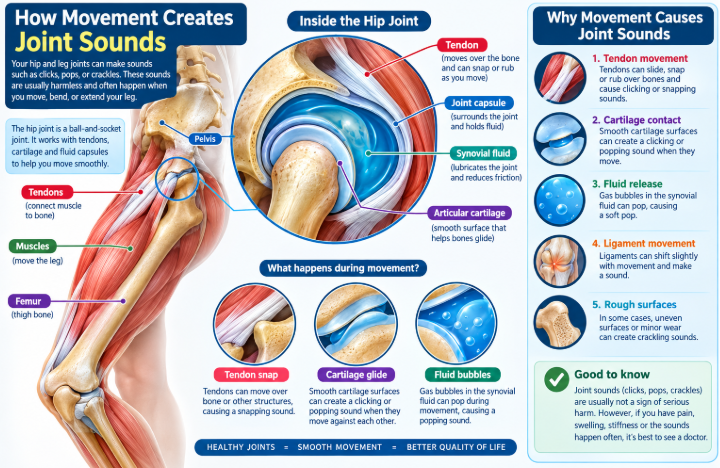
Many people notice that their leg and hip joints make cracking noises when they stand up, squat, or walk. You might hear a quick pop, a loud click, or a grinding sound during daily activities. Fortunately, medical experts call this sound joint crepitus. While these sounds often seem alarming, they usually do not indicate severe structural damage unless pain accompanies them.
What Causes Joint Popping and Snapping?
Several harmless factors cause joint popping in your lower body. First, small gas bubbles frequently form within the fluid that lubricates your joints. When you bend your leg or rotate your hip, these nitrogen bubbles burst quickly and produce a popping sound. This process resembles popping bubble wrap, and it causes no harm to your joint structure.
Second, tight tendons or ligaments often snap over bony protrusions as you move. For example, when you stand up from a deep chair, a tight muscle tendon in your thigh may slide across your hip bone. As the tendon catches and releases, it creates a distinct clicking sound.
Understanding Snapping Hip Syndrome
In many cases, doctors diagnose this condition as snapping hip syndrome. This issue occurs when tendons or muscles catch on the outer, inner, or front part of your hip joint. Athletes, dancers, and runners frequently experience this phenomenon because they perform repetitive leg motions.
For instance, an outer snapping hip happens when the iliotibial (IT) band slides across the top of the thigh bone. Although the snapping sound feels strange, it typically causes no discomfort. However, if the tendon rubs continuously against the bone, inflammation may gradually develop.
Why Your Leg and Hip Joints Make Cracking Noises with Pain
Although harmless popping is common, you should pay attention when your leg and hip joints make cracking noises that cause pain. Pain, swelling, or stiffness during joint movement usually signals an underlying joint problem rather than simple gas bubbles.
For example, osteoarthritis causes the protective cartilage inside your joints to wear away over time. As a result, raw bone surfaces rub directly against each other, creating a rough grinding sensation. Similarly, tendinitis occurs when overworked tendons become inflamed, causing them to catch painfully against nearby bones.
Simple Ways to Keep Your Joints Healthy
Fortunately, you can take simple steps to protect your joints and reduce unpleasant cracking sounds. Regular stretching exercises keep your thigh and hip muscles flexible, which prevents tight tendons from snapping. Furthermore, gentle low-impact exercises like swimming and cycling strengthen the supportive muscles around your joints without adding extra stress.
Additionally, maintaining a healthy body weight reduces unnecessary pressure on your lower body joints. Drinking enough water also helps maintain fluid balance inside your joint capsules. If you sit at a desk for long hours, take frequent standing breaks to stretch your hips.
When to Seek Medical Attention
In conclusion, occasional joint sounds without discomfort are completely normal. However, if your leg and hip joints make cracking noises alongside persistent pain, catching, or joint swelling, you should consult a healthcare provider. A doctor can evaluate your joint health, recommend physical therapy, or suggest targeted treatments to restore smooth movement. For detailed medical guidelines on evaluating joint crepitus and mobility, visit the official Johns Hopkins Medicine Health Library.
References
- American Academy of Orthopaedic Surgeons. (2022). Snapping Hip Syndrome. OrthoInfo.
- Cleveland Clinic. (2023). Crepitus (Joint Popping): Causes and Treatments.
- Mayo Clinic. (2023). Osteoarthritis: Symptoms and Causes.