After a heavy workout or a long day of physical work, you might wake up with aching legs or a tender back. However, understanding the difference between normal muscle soreness and nerve pain is crucial for choosing the right recovery plan. While both conditions create physical discomfort, your muscles and nervous system send very different signals to your brain.
What Does Normal Muscle Soreness Feel Like?
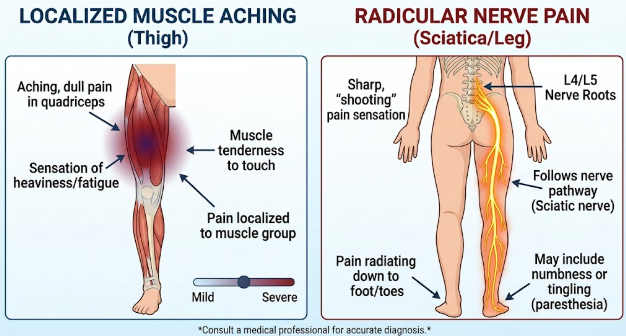
Muscle pain usually feels dull, achy, and localized in a specific area. For example, if you perform heavy leg squats at the gym, your thigh muscles will feel tight and tender for two or three days. Doctors call this feeling delayed onset muscle soreness (DOMS). Furthermore, sore muscles react predictably when you press on them or rest them. When you apply an ice pack or stretch gently, muscle discomfort gradually disappears.
Recognizing the Signs of Nerve Pain
In contrast, nerve pain produces distinct sensations that often feel sharp, burning, or electric. When a herniated disc or tight muscle pinches a nerve, you experience sudden shooting pain down your limb. For instance, sciatic nerve irritation sends burning pain from your lower back all the way to your foot. Additionally, nerve issues frequently cause numbness, tingling, or a heavy, aching feeling in your leg.
Key Factors in the Difference Between Normal Muscle Soreness and Nerve Pain
To quickly identify your discomfort, pay close attention to how your pain behaves during daily movement. First, location matters significantly. Muscle soreness stays strictly within the worked muscle group, whereas nerve pain travels along a continuous path.
Second, posture changes heavily influence nerve pressure. Sitting for long periods or bending forward compresses your spine, triggering immediate nerve flare-ups. On the other hand, muscle soreness remains constant regardless of whether you sit, stand, or lie down.
Common Examples and Everyday Triggers
Consider an everyday scenario to see the contrast clearly. Imagine lifting heavy boxes while moving into a new home. If you strain your lower back muscles, your back feels stiff, aching, and tender to the touch the next morning.
However, if a heavy box compresses a spinal disc, the irritated nerve sends sharp electric shocks down your leg whenever you take a step. Therefore, observing how specific movements alter your pain helps you pinpoint the exact cause quickly.
Simple Treatment Methods for Each Pain Type
Because muscles and nerves require different care, you must tailor your treatment strategy carefully. For muscle soreness, taking rest, staying hydrated, and applying ice packs reduces local inflammation quickly.
Conversely, nerve pain responds much better to gentle movement, posture adjustment, and targeted physical therapy. Performing simple nerve-gliding stretches can free trapped nerves and restore normal mobility without straining your joints.
When to See a Doctor and Next Steps
In summary, recognizing the difference between normal muscle soreness and nerve pain ensures you take the right steps toward recovery. While muscle tenderness improves naturally within a few days, persistent nerve burning or numbness requires proper medical evaluation. If your symptoms worsen or cause severe leg weakness, consult a healthcare provider immediately. For additional medical insights on identifying nerve symptoms, read the detailed WebMD Guide to Nerve Pain Symptoms.
References
- Cleveland Clinic. (2023). Muscle Soreness vs. Nerve Pain: How to Tell the Difference.
- Mayo Clinic. (2023). Nerve Pain (Neuropathy) Causes and Symptoms.
- WebMD. (2022). Understanding Neuropathic Pain.