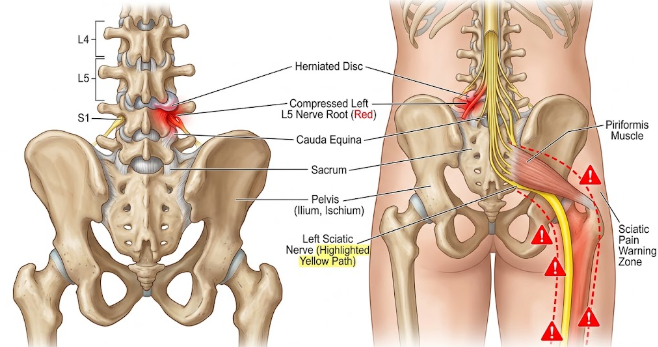
Most back discomfort improves with rest and simple physical therapy. However, experiencing severe numbness, tingling, and radiating leg pain can suddenly signal a much more critical health issue. While mild nerve irritation causes uncomfortable sensations, severe nerve compression requires immediate medical attention to prevent permanent damage.
Understanding Numbness, Tingling, and Radiating Leg Pain
Nerves transmit important electrical signals between your brain and your limbs. When a bulging disc or bone spur squeezes a nerve root, those electrical signals scramble. For example, sitting for hours might trigger a burning ache that travels down your thigh. In most cases, targeted stretching and anti-inflammatory medications relieve this discomfort over time. However, when nerve pressure increases rapidly, your body displays severe warning signs that you must never ignore.
Red Flag Symptoms That Require Urgent Care
Doctors warn that specific symptoms indicate a true medical emergency. First, sudden leg weakness makes walking or standing up nearly impossible. For instance, if your foot suddenly drops when taking a step, severe nerve compression is occurring. Second, losing control of your bowel or bladder requires immediate emergency room treatment. This unexpected loss of function shows that compressed nerves can no longer govern your pelvic organs properly.
What Is Cauda Equina Syndrome?
One of the most dangerous causes of severe nerve symptoms is cauda equina syndrome. This rare medical condition occurs when a massive disc herniation compresses the entire bundle of nerves at the base of your spinal cord. Consequently, you may lose sensation in your groin, buttocks, and inner thighs.
Doctors call this specific symptom saddle anesthesia because it affects the exact body areas that touch a horse saddle. If you experience saddle numbness along with numbness, tingling, and radiating leg pain, seek emergency surgery right away.
How Doctors Diagnose and Treat Spinal Emergencies
When you arrive at an emergency room with severe spinal symptoms, doctors act quickly. First, medical staff perform a thorough physical exam to check your muscle strength and reflexes. Next, specialists order an urgent MRI scan to view your spinal cord and nerves clearly.
If diagnostic scans confirm cauda equina syndrome or severe nerve compression, surgeons perform emergency spinal surgery within 24 to 48 hours. Rapid surgical relief prevents permanent paralysis and permanent bladder incontinence.
When to Call Your Doctor vs. Visiting the ER
Distinguishing between mild nerve discomfort and a surgical emergency protects your long-term mobility. Mild stiffness or occasional leg tingling usually warrants a routine visit to your primary care physician.
Conversely, sudden leg paralysis, saddle numbness, or loss of organ control demands immediate emergency care. Therefore, pay close attention to how quickly your symptoms escalate. When in doubt, visiting an emergency room ensures you receive timely evaluation and life-changing care.
Final Thoughts and Next Steps
In summary, recognizing when numbness, tingling, and radiating leg pain become a medical emergency protects your health and independence. While routine spinal physical therapy treats standard nerve compression, sudden loss of function requires immediate emergency intervention. Acting quickly saves delicate nerve tissue from permanent damage and restores your quality of life. For additional medical guidelines on managing acute spine conditions, visit the official Spine-health Emergency Sciatica Guide.
References
- American Association of Neurological Surgeons. (2022). Cauda Equina Syndrome.
- Cleveland Clinic. (2023). Spinal Nerve Compression and Red Flag Symptoms.
- Mayo Clinic. (2023). Sciatica: Emergency Warning Signs.