Bifacial Solar Panels: Why 2026 is the Year Your Roof Generates Power from the Bottom Up

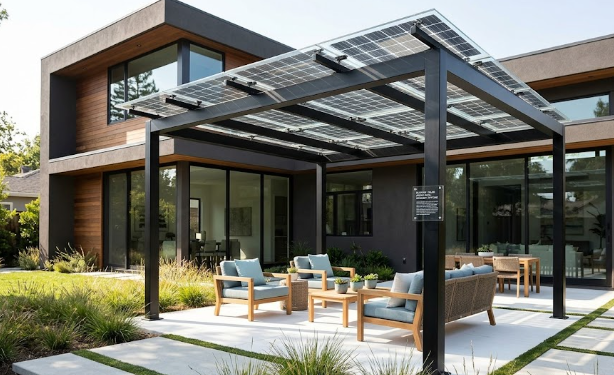
 A modern residential home featuring Bifacial Solar Panels installed on a pergola to capture sunlight from both sides.

For many years, homeowners only had one option for solar energy: panels that catch light from the top. However, Bifacial Solar Panels have changed the game in 2026. While these dual-sided modules were once only for large utility farms, they are now the standard for residential carports and flat roofs. These panels are unique because they possess the ability to generate electricity from both the front and the back surfaces.

Understanding the Science of the Albedo Effect

The secret behind the success of Bifacial Solar Panels lies in something scientists call the “Albedo” effect. This term describes how much sunlight a surface reflects. Traditional panels only use direct sunlight hitting the top. In contrast, bifacial modules capture that same direct light on the front while their rear side drinks up reflected light from the ground.

When sunlight hits the area beneath your panels, it bounces back upward. Because Bifacial Solar Panels have transparent back layers, they catch this “waste” light and turn it into extra power. Depending on the color of your roof or ground, this simple bounce can increase your total energy yield by anywhere from 5% to 30%. This makes your solar system much more efficient without taking up more space.

Optimal Specs for a Successful Installation

If you want to maximize your energy, you must follow specific installation rules for Bifacial Solar Panels. Unlike traditional panels that sit flush against a slanted roof, these need breathing room. Experts recommend at least 30cm of clearance between the panel and the mounting surface. This gap allows enough light to move underneath the module and reflect back onto the rear cells.

Furthermore, the height of the installation plays a huge role in performance. If you mount them too low, you block the light path and lose the rear-side benefit. Because of this requirement, Bifacial Solar Panels are perfect for pergolas, carports, and elevated racks on flat-roof townhouses. These setups provide the necessary elevation to ensure the back of the panel stays productive all day long.

The White Roof Synergy Trend

A major trend taking over the industry in 2026 is pairing Bifacial Solar Panels with “cool roofs.” Homeowners are now painting their roofs white or light grey to create a highly reflective surface. Since white surfaces have a high Albedo, they bounce significantly more light than dark shingles or black rubber.

This synergy creates a massive boost in power production. When you use a white roof, you ensure that the rear side of your Bifacial Solar Panels works at its maximum capacity. This combination not only generates more green energy but also helps keep your building cooler by reflecting heat away. It is a win-win situation for both your electricity bill and the environment.

Superior Durability and Double-Glass Construction

Beyond just power gains, Bifacial Solar Panels offer incredible physical strength. Most manufacturers now use double-glass construction instead of the traditional plastic backsheet. This design means the solar cells are sandwiched between two layers of tempered glass. Because glass does not degrade like plastic, these panels handle extreme weather and UV rays much better.

This shift in material has led to a new industry standard for longevity. Many companies now offer 30-year warranties on Bifacial Solar Panels, which is longer than the traditional 25-year average. You are not just buying a tool for energy; you are investing in a durable piece of glass that resists moisture and wind for decades.

Choosing the Right Tech for Your Home

As we move through 2026, the cost of this technology continues to drop. While the panels might cost slightly more upfront, the extra energy they produce pays for that difference quickly. If you have a flat roof or plan to build a solar patio, Bifacial Solar Panels are likely your best option. They turn every ray of light—even the ones that hit the ground—into usable power for your home.

You should always consult with a professional to see if your roof color and height are suitable for this technology. By capturing light from the bottom up, you ensure your home stays at the cutting edge of renewable energy. For a deeper look into how solar technology is evolving this year, you can read more at Solar Power World.

References

  • International Energy Agency (IEA). (2025). Trends in Photovoltaic Applications.
  • National Renewable Energy Laboratory (NREL). (2026). Bifacial Photovoltaics: Performance and Challenges.

Solar Energy Industries Association (SEIA). (2026). Residential Solar Standards and Albedo Gains.
 Perovskite-Silicon Tandem Cells: The 2026 Tech Making Standard Solar Panels Obsolete

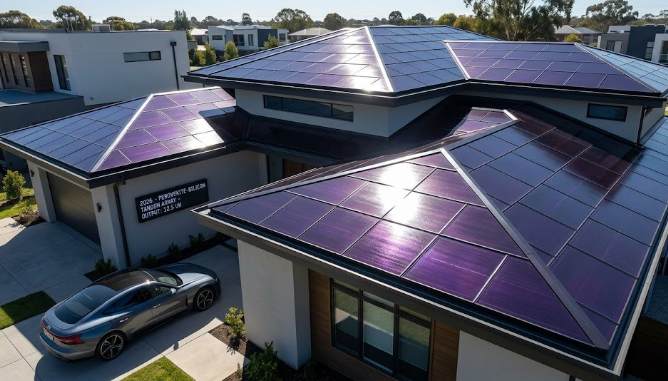
 A modern residential roof featuring high-efficiency Perovskite-Silicon Tandem Cells capturing sunlight in 2026.

For several decades, standard silicon panels have been the primary choice for homeowners. However, as of May 2026, we are witnessing a massive shift in the industry. Perovskite-Silicon Tandem Cells have officially moved from specialized laboratories into the residential market. These advanced cells offer a way to generate significantly more electricity from the same amount of sunlight.

Engineers and homeowners alike are excited because this technology finally breaks the performance limits of traditional solar. While standard panels stayed around 20% efficiency for a long time, these new tandem cells change the game completely. Consequently, people can now power their entire homes with fewer panels on their roofs.

Breaking the 25% Efficiency Barrier

In 2024, most premium solar panels peaked at an efficiency of about 22.8%. This meant that a large portion of the sunlight hitting the panel simply went to waste. Today, in 2026, commercial Perovskite-Silicon Tandem Cells are hitting 25% to 27% efficiency in real-world conditions.

This jump in performance provides a massive advantage for homeowners with limited roof space. For example, if you needed ten standard panels to run your air conditioner in the past, you might only need eight panels today. Furthermore, this 20% reduction in the number of panels lowers the total weight on your roof structure.

How Perovskite-Silicon Tandem Cells Work

You might wonder how these cells achieve such high numbers. The secret lies in the “tandem” design, which uses two different layers to catch light. In a standard setup, silicon often misses certain colors of light. However, Perovskite-Silicon Tandem Cells use a top layer of perovskite to capture high-energy blue light waves.

Underneath that, a traditional silicon layer captures the low-energy red and infrared light. By working together, the two layers harvest a much wider spectrum of sunlight. Imagine two different sized nets catching different types of fish in the same pond; you will naturally catch more fish than someone using only one net.

Lightweight and Flexible Solar Solutions

Standard silicon cells are usually thick and brittle, which requires heavy glass protection. On the other hand, the layers in Perovskite-Silicon Tandem Cells are incredibly thin. Because these layers use less material, manufacturers are now producing ultralight, flexible panels.

These flexible modules are perfect for curved roofs or RVs. You no longer have to sacrifice power for portability. For instance, a small van can now generate as much power as a small residential array used to produce a few years ago. Additionally, these panels are much easier to transport and install due to their reduced weight.

Ensuring Stability and Longevity

In the past, the main concern regarding perovskite was its durability. Early versions often broke down when exposed to moisture or extreme heat. Fortunately, 2026 models feature revolutionary encapsulation technology. This protective coating seals the Perovskite-Silicon Tandem Cells perfectly from the environment.

Manufacturers now provide a 20-year lifespan guarantee for these modules. This matches the longevity of pure silicon panels that we have trusted for years. Therefore, you can invest in this high-efficiency technology without worrying that the panels will stop working after just a few summers.

The Future of Your Home Power

This is a turning point for sustainable building design. We are moving toward a future where every surface can generate high-quality electricity efficiently. Perovskite-Silicon Tandem Cells represent the most significant leap in solar technology in our generation. If you are planning a solar installation this year, these cells offer the best return on your investment. You can learn more about the technical specifications and chemical makeup of these cells at the National Renewable Energy Laboratory.

References

  • International Journal of Photoenergy (2025). “Advances in Tandem Cell Encapsulation.”
  • Solar Power World (2026). “Market Trends: The Rise of Perovskite in Residential Areas.”
  • Global Energy Review (2026). “Efficiency Records in Commercial Solar Modules.”

Your EV is a Backup Generator: Is Your Home Hardware Bi-Directional Ready?

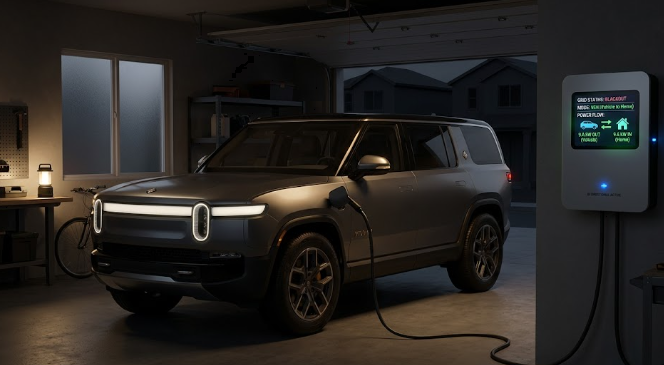
A sleek electric SUV parked in a garage connected to a wall-mounted Bi-Directional Ready DC charger, showing a digital display of power flowing into the home during a blackout.

Imagine your electric vehicle (EV) sitting in your driveway. In 2026, that car is much more than just a way to get to work. It is essentially a giant, mobile battery that can save your home during a power cut. However, you cannot just plug a standard cable into your wall to make this work. You must ensure your electrical setup is Bi-Directional Ready. This technology allows power to flow both ways: into your car and out of it.

The trend of using cars as power stations is growing rapidly. It helps homeowners maintain a healthy lifestyle even when the main power grid fails. By turning your vehicle into a backup generator, you gain independence from utility companies. In this article, we will explore what this hardware involves and how it keeps your home running.

Understanding V2H and V2G Technology

To understand if you are Bi-Directional Ready, you first need to know two important terms. The first is V2H, which stands for Vehicle-to-Home. This technology allows your car to send electricity directly to your house. For example, if a storm knocks out the power lines, your car can keep your fridge running and your lights on. It acts as a silent, clean generator for your family.

The second term is V2G, or Vehicle-to-Grid. This is a bit different because it involves the utility company. With V2G, you can actually sell the extra power in your car battery back to the city. This usually happens during “peak hours” when everyone is using electricity and prices are high. Consequently, your car becomes a tool that can help you earn money or lower your monthly bills.

Is It Safe for Your Battery?

Many people worry that using their car to power a house will ruin the battery. They fear that frequent charging and discharging will make the battery wear out too fast. However, the “Battery Health Paradox” is mostly a thing of the past. By 2026, major manufacturers like Tesla, Ford, and Hyundai have solved this issue. They now include bi-directional usage in their official vehicle warranties.

These companies use AI-Smart Inverters to manage the energy flow perfectly. The AI ensures that the battery never drains too low or gets too hot. Specifically, the system balances the load so that the impact on the battery is minimal. Because of these smart controls, using your EV as a backup generator is now a safe and reliable practice for most modern electric cars.

The Hardware You Need to be Bi-Directional Ready

To make your home Bi-Directional Ready, you need a specific piece of equipment. You cannot use a standard Level 2 charger for this task. Instead, you must install a Bi-Directional DC Charger. This device is the essential bridge between your car’s high-voltage battery and your home’s electrical panel. It converts the Direct Current (DC) from the car into the Alternating Current (AC) that your appliances use.

Installation requires a professional electrician who understands smart home integration. This charger talks to your home’s energy management system to decide when to draw power. Additionally, you may need a “transfer switch” or a “power gateway.” This hardware safely disconnects your home from the main grid during a blackout. This prevents electricity from flowing back into the street, which protects utility workers from accidents.

Emergency Capacity: Why Gas Generators are Obsolete

The capacity of a modern EV battery is truly impressive compared to traditional backup systems. A typical EV often carries a 75kWh battery. To put that in perspective, an average home uses about 15 to 20kWh of electricity per day. Therefore, a fully charged car can power your entire house for 3 to 5 days without any issues.

Furthermore, EV backup systems are completely silent and produce zero fumes. Unlike old gas generators, you do not need to store dangerous fuel in your garage. You also do not have to worry about engine maintenance or loud noise at night. Because the car is always plugged in, the backup power starts almost instantly when the lights go out. This makes the transition to a modern, electric-focused home both easy and efficient.

If you want to learn more about the technical standards for these chargers, you can read more about ISO 15118-20 and the future of grid integration.

References

  • Ford Motor Company. (2024). Intelligent Backup Power and V2H Integration Guidelines.
  • Tesla, Inc. (2025). Universal Wall Connector and Bi-Directional Support Documentation.
  • Hyundai Motor Group. (2025). V2L and V2G Battery Warranty Extensions for Ioniq Series.
  • Department of Energy (DOE). (2026). The Role of EVs in Residential Grid Resilience.

Why Solar Installations Fail Within Weeks or Months

A poorly wired solar panel connection, showing a common reason why solar installations fail.

It’s frustrating when you invest in a solar energy system only to have it stop working properly shortly after installation. Unfortunately, it’s not uncommon for solar installations fail within weeks or months. The primary reasons for this early failure are almost always related to mistakes made during the design and installation process, rather than a problem with the panels themselves. These issues range from poor workmanship to using the wrong components for the job.

Common Causes of Early Solar System Failure

1. Poor Workmanship and Installation Errors

This is the most frequent cause of an early failure. Rushed or inexperienced installers can make several critical mistakes. These include:

  • Incorrect Wiring and Connections: Loose or faulty electrical connections can lead to system shutdowns, energy loss, and even fire hazards. The wiring might not be properly secured or insulated, making it vulnerable to weather or pests.
  • Improper Mounting and Roof Penetrations: If the panels are not mounted correctly, they can become unstable. More importantly, poorly sealed roof penetrations can cause leaks, leading to costly water damage to the building.
  • Lack of Proper Testing: Professional installers should conduct a full system test, or “commissioning,” before they hand the system over to you. Skipping this step means minor errors can go unnoticed until they cause a major problem.

2. Component Mismatch and Substandard Parts

A solar system is a combination of different parts, and they must work together perfectly. Using the wrong components can cause the entire system to fail.

  • Inverter Problems: The inverter converts the DC electricity from the panels into usable AC power for your home. If the inverter is not sized correctly for the number of panels, it can overheat and shut down. An undersized inverter can be a major reason why solar installations fail early on.
  • Using Low-Quality Components: Cheaper systems often use low-quality panels, wires, or inverters. These parts may not be durable enough to handle environmental stress and can degrade quickly, leading to a drop in performance or a complete failure.

3. Poor System Design and Site Assessment

Even with perfect installation, a system won’t work if it wasn’t designed correctly for its location.

  • Shading Issues: A small amount of shade on just one panel can drastically reduce the output of the entire system. Installers must perform a thorough site assessment to check for shading from nearby trees, chimneys, or other buildings at different times of the day and year. A poorly designed system that ignores shading will quickly underperform.
  • Incorrect Sizing: A system that is too small won’t meet your energy needs, and one that is too large is a waste of money. Poor system sizing, which can lead to frequent overloads or under-performance, is a critical reason why solar installations fail to meet expectations.
  • Ignoring Local Regulations: Failing to adhere to local building codes and permits can lead to legal issues and may even require you to have the system removed, costing you a lot of money and time.

An early failure of a solar installation is almost always a result of poor planning and execution. It’s vital to hire a certified and experienced installer who provides a warranty on their work and uses high-quality components.

Maintaining Tubular Lead-Acid Inverter Batteries: A Guide to Longevity

Tubular lead Acid Battery

Tubular lead-acid batteries are a popular choice for inverters due to their durability and deep-cycle capabilities. However, proper maintenance is crucial to ensure optimal performance and extend their lifespan. This article provides key tips for maintaining your tubular lead-acid inverter battery:

1. Water Level Maintenance

  • Regular Checks: Regularly check the water levels in each cell. The frequency depends on usage and environmental conditions, but generally, check at least once every 2-3 months. More frequent checks are recommended in hot climates or with heavy usage.
  • Topping Up: If the water level is low, carefully top up with distilled water only. Never use tap water, as it contains impurities that can damage the battery.
  • Avoid Overfilling: Ensure the water level remains within the recommended range. Overfilling can lead to acid spillage during charging.

2. Terminal Care

  • Corrosion Prevention: Corrosion on battery terminals can hinder performance and lead to poor connections.
  • Cleaning: Regularly clean terminals with a baking soda and water solution. Apply petroleum jelly or a terminal protector afterward to prevent future corrosion.

3. Prevent Overcharging

  • Charger Compatibility: Use a compatible charger with an automatic shutoff feature to prevent overcharging, which can significantly damage the battery.
  • Inverter Settings: Ensure your inverter is set up to properly regulate charging.

4. Avoid Deep Discharge

  • Regular Use: Try to use the battery at least once a month to prevent deep discharge, which can significantly reduce its lifespan.
  • State of Charge Monitoring: Keep an eye on the battery’s state of charge to avoid deep discharge.

5. Environmental Considerations

  • Temperature Control: Avoid storing the battery in direct sunlight or near heat sources. High temperatures can accelerate battery degradation.
  • Dry Environment: Keep the battery area dry to prevent corrosion and short circuits.

6. Professional Maintenance

  • Regular Checkups: Consider having a qualified technician perform regular maintenance checks on your battery, especially if you’re unsure about any aspect of battery care.

7. Battery Replacement

  • Lifespan: Tubular batteries typically have a lifespan of 5-7 years with proper maintenance.
  • Replacement: Consider replacing older batteries to avoid unexpected failures.

By following these maintenance tips, you can significantly extend the lifespan of your tubular lead-acid inverter battery and ensure reliable power during outages. Remember to refer to your battery’s warranty and maintenance guidelines for specific recommendations.

How Electricity Gets Into Our Homes

Power Grid

Electricity is generated at power plants, which can use a variety of fuels such as coal, natural gas, nuclear, hydro, wind, and solar energy to generate electricity. Once generated, the electricity is transmitted over long distances through a network of high-voltage power lines, known as the power grid.

The power grid is managed by utility companies, which distribute the electricity to homes and businesses through a system of lower-voltage power lines and transformers.

When the electricity reaches your neighborhood, it is delivered to a distribution transformer that reduces the voltage to a level that can be safely used in homes and businesses. From there, the electricity is distributed through underground or overhead power lines to individual homes and businesses, where it enters the building through a service drop or service lateral.

Inside the building, the electricity passes through a meter that measures the amount of electricity used, and then enters a circuit breaker panel or fuse box, where it is distributed to various circuits throughout the building. These circuits supply power to outlets, appliances, lighting, and other electrical devices in the home.