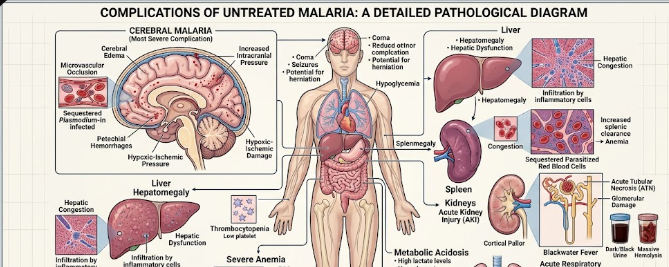
Many people view malaria as a routine illness that only causes mild fever and body pain. However, ignoring initial symptoms leads to life-threatening complications of untreated malaria that can destroy vital organs within days. When you delay treatment, the malaria parasite multiplies rapidly inside your bloodstream. Consequently, your body experiences severe vessel blockages, organ failure, and extreme physical exhaustion.
How Complications of Untreated Malaria Attack Your Brain
The most dangerous outcome of delayed treatment is cerebral malaria. In this condition, parasite-laden red blood cells become sticky and attach to small blood vessel walls. As a result, these infected cells clog the tiny capillaries that supply blood and oxygen to your brain.
Because oxygen cannot reach your brain tissue, severe swelling occurs quickly. Patients often experience high fever, deep confusion, violent seizures, and sudden coma. In addition, this blockage can trigger stroke-like paralysis, leaving one side of the body weak or unresponsive. Without immediate intervention, brain damage becomes permanent, or the condition leads to death.
Kidney Damage and Blackwater Fever
Your kidneys filter waste from your blood continuously. However, when malaria parasites multiply unchecked, they break down millions of red blood cells in a short period. This massive destruction releases huge amounts of hemoglobin directly into your bloodstream.
Consequently, your kidneys suffer severe overload while trying to filter this excess protein. This condition leads to a classic sign known as “Blackwater Fever,” where your urine turns dark red or black. Eventually, the kidneys shut down completely, causing Acute Kidney Injury (AKI). At this stage, patients require emergency dialysis to clean their blood and survive.
Respiratory Failure and Fluid in the Lungs
In severe cases, complications of untreated malaria trigger widespread inflammation throughout your body. This intense reaction causes fluid to leak into your lungs, a condition medical professionals call pulmonary edema.
Because fluid fills the tiny air sacs in your lungs, breathing becomes extremely difficult. Patients struggle for air, experience severe chest pain, and develop Acute Respiratory Distress Syndrome (ARDS). Without ventilator support, oxygen levels in the blood drop dangerously low, causing swift heart failure.
Severe Anemia and Dangerous Drops in Blood Sugar
Red blood cells carry essential oxygen to every cell in your body. Because malaria parasites feed on and destroy these cells, your blood count plummets rapidly. This severe malarial anemia starves your vital organs of necessary oxygen, leaving you profoundly weak and pale.
Furthermore, the parasites consume large amounts of glucose from your blood. Simultaneously, your body produces excess insulin in response to the infection. This double reaction causes hypoglycemia, a dangerous drop in blood sugar levels. A sudden drop in glucose deprives your brain of energy, triggering sudden loss of consciousness and seizures.
Summary: Why Quick Action Saves Lives
Malaria is not a simple fever; it is a rapid medical emergency that requires prompt laboratory testing and anti-malarial drugs. Recognizing early warning signs prevents irreversible organ damage and saves lives. For official guidelines on diagnosis, treatment protocols, and global prevention strategies, visit the World Health Organization Malaria Guidelines.
References
- World Health Organization. (2023). Guidelines for malaria. WHO Guidelines Approved by the Guidelines Review Committee.
- White, N. J. (2018). Severe malaria. Malaria Journal, 17(1), 1-15.
- Trampuz, A., Jereb, M., Muzlovic, I., & Prabhu, R. M. (2003). Clinical review: Severe malaria. Critical Care, 7(4), 315-323.