Goodbye Programming: How 2026 Adaptive Automation Learns Your Life Without a Schedule

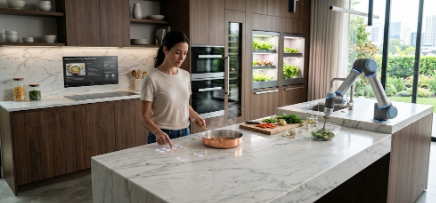
 featuring adaptive automation technology and an invisible induction cooktop under a stone counter.A modern kitchen

In the past, smart homes required a lot of manual work. You had to set schedules and “if this, then that” rules for every light and plug. However, today in May 2026, adaptive automation has changed everything. Instead of you telling the house what to do, the house learns what you want by watching your daily habits. This shift marks the end of boring programming and the start of a home that truly understands your intent.

The Power of the Orchestration Layer

Most people are tired of opening 50 different apps to control 50 different devices. To solve this, new systems use what experts call an “Orchestration Layer.” This is a central AI brain, often built into panels from brands like Brilliant or Aqara. This layer acts as a conductor for an orchestra. It watches how you use your home and finds patterns without you saying a word.

For example, imagine you start your favorite movie app every Friday night. The system notices that you always dim the living room lights and drop the thermostat to 70 degrees at the same time. After a few weeks, the adaptive automation system does this for you automatically. It does not follow a strict timer; instead, it waits for you to start the movie. This makes your home feel intuitive rather than robotic.

Why Physical Interfaces are Returning

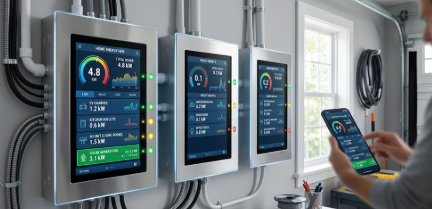
Even though we have smartphones, “app fatigue” is a real problem in 2026. Many homeowners find it annoying to unlock a phone just to turn on a kitchen light. Because of this, we are seeing a huge return to physical interfaces. Modern homes now feature sleek, in-wall AI panels. These panels offer tactile buttons and screens that give you immediate control over your entire environment.

These physical panels are much more than simple switches. They serve as the face of your adaptive automation system. They provide a dedicated spot to manage security, climate, and lighting without needing a mobile device. This trend proves that while AI is invisible, humans still enjoy the feeling of a physical button or a dedicated wall display.

Invisible Cooktops and Smart Surfaces

The kitchen is also seeing a massive technical upgrade this year. Engineers are now installing invisible cooktops directly beneath porcelain or stone worktops. These systems use induction coils hidden under the counter surface. Because the tech is hidden, your kitchen island looks like a seamless piece of stone when you are not cooking.

This design fits perfectly into the adaptive automation lifestyle. When you place a compatible pot on the stone, the surface recognizes it and activates the heat. Once you finish, the stone stays cool to the touch, allowing you to use the area for homework or food prep. It blends high-end civil engineering materials with advanced electronics to create a clutter-free home.

Presence Sensing with mmWave Radar

Old motion sensors often failed if you sat too still. If you were reading a book, the lights might suddenly turn off, leaving you in the dark. Thankfully, adaptive automation in 2026 uses mmWave radar technology. These sensors are so sensitive that they can detect a human’s breathing or even a heartbeat.

We call this “Presence Sensing” rather than just motion detection. Because the system knows you are still in the room—even if you aren’t moving—it keeps the environment perfect for you. This technology ensures that your HVAC and lighting systems operate only when someone is actually using the space. Consequently, this saves a significant amount of energy while improving your comfort.

If you want to learn more about the latest smart home standards, you can visit the Connectivity Standards Alliance website for technical updates on Matter and AI integration.

References

  • Brilliant Home Technology Trends (2026).
  • Aqara AI Processor Specifications Manual.
  • Journal of Residential Automation: The Shift to mmWave Presence Detection.
  • Modern Kitchen Design: The Engineering of Invisible Induction.

 Local-First Smart Homes: The Ultimate 2026 Privacy Flex

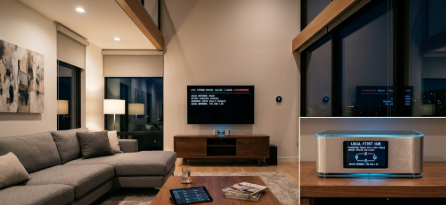
A sleek modern living room controlled by Local-First Smart Homes technology showing a hub processing data without a cloud connection.

The year 2026 has changed how we think about our living spaces. After several massive cloud outages and rising monthly costs earlier this year, many homeowners are making a big switch. They are moving away from “cloud-dependent” devices that stop working when the internet goes down. Instead, everyone is talking about Local-First Smart Homes. This trend, known as “The Local Revolution,” focuses on keeping your data inside your four walls.

In the past, your smart light bulb had to talk to a server thousands of miles away just to turn on. Now, Local-First Smart Homes handle everything right in your living room. This shift offers better security, faster speeds, and more reliability. If you want to own your tech rather than rent it, this is the privacy flex you have been waiting for.

Fast Processing with Edge Technology

One major reason for this shift is the new “Edge” processor. In 2026, smart hubs like the Aqara Camera Hub G350 or the Home Assistant Green have incredible power. These devices do not send your voice or face data to the internet. Instead, they process the information locally on the hardware.

Because the data does not travel to a far-away server, the response time is near-instant. Most Local-First Smart Homes now react in under 50 milliseconds. For example, when you walk into a room, the lights turn on before you can even blink. This speed makes your home feel much more natural and responsive. You no longer have to wait for a “cloud handshake” just to adjust your thermostat.

Reliability via Matter 1.5 and Thread

Connectivity has also seen a massive upgrade with Matter 1.5 and Thread technology. Thread is a low-power mesh network that connects your devices directly to each other. Unlike older systems, it does not rely on your home Wi-Fi or a central router to function. Consequently, your Local-First Smart Homes setup stays fully operational even if your internet provider has an outage.

Imagine a storm knocks out your fiber connection in the middle of the night. In a traditional smart home, your smart locks and alarms might fail. However, a local-first system keeps your locks, lights, and sensors working perfectly. Because the devices talk to a local Matter controller, the lack of internet does not bother them. This reliability provides peace of mind that older systems simply could not offer.

Advanced Privacy as a Hardware Spec

Privacy is no longer just a software setting; it is now built into the hardware. New cameras in 2026 feature “Local Privacy Masks.” These cameras use on-device AI to recognize sensitive areas like a child’s bed or a computer screen. The AI “redacts” or hides these areas before any human or app can view the video feed.

Furthermore, many manufacturers now include physical shutters that slide over the lens when you are home. Since Local-First Smart Homes do not upload video to the cloud, hackers have no central server to attack. You keep your private moments private because the data never leaves your house. This hardware-level security makes these systems the ultimate choice for the privacy-conscious user.

Saving Money on Subscription Fees

Switching to a local setup is also a smart financial move. Many cloud-based brands charge high monthly fees just to save your video history or use advanced features. By choosing Local-First Smart Homes, users are saving an average of $120 every year. You buy the hardware once, and you own the features forever.

In a world where every app wants a monthly subscription, “The Local Revolution” feels like a breath of fresh air. You get professional-grade automation without the “subscription tax.” This cost efficiency is a major selling point for anyone looking to balance a tech-heavy lifestyle with a strict budget. If you want to learn more about the technical standards behind these devices, you can read more about Matter technology here.

References

  • Connectivity Standards Alliance (2026). Matter 1.5 Specification Overview.
  • Home Assistant (2026). The State of the Local Home Report.
  • Smart Home Digest (2026). Why Edge Computing is Replacing the Cloud.
  • Consumer Tech Reports (2026). Annual Subscription Cost Analysis for IoT.

 Goodbye Batteries: Why Battery-Free Smart Home Sensors Rule in 2026

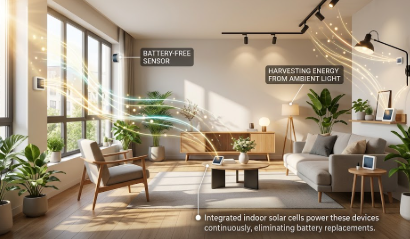
A modern living room featuring Battery-Free Smart Home Sensors harvesting energy from ambient indoor light.

May 2026 has brought a massive shift in how we power our home gadgets. We are finally saying goodbye to the constant hassle of replacing small coin-cell batteries. Battery-Free Smart Home Sensors are now the standard for modern houses. These clever devices do not need a charging cable or a battery swap to function. Instead, they “eat” the energy already floating around your rooms to stay powered forever.

Tech pioneers like Gemns have led this movement. Today, most smart home specifications include devices that harvest their own power. This technology ensures that your home stays smart without adding more tasks to your to-do list. Consequently, the days of finding a dead motion sensor or a non-responsive door alarm are over.

How Battery-Free Smart Home Sensors Harvest Energy

These sensors use a process called “energy harvesting” to stay alive. Essentially, they gather tiny amounts of power from their immediate environment. For instance, some sensors have microscopic solar cells that work perfectly with dim indoor light. Others are even more advanced. They can pull energy from the Wi-Fi signals and radio waves that already fill your home.

Furthermore, some models use temperature fluctuations to create electricity. When the air in your room warms up or cools down, the sensor converts that thermal change into a small power boost. Therefore, the device always has enough energy to send signals to your smart hub. Because they use low-energy protocols like Matter, they only need a tiny “sip” of power to work.

The Power of the Satisfying Click

Another exciting trend in 2026 is the use of kinetic hardware. You might notice new light switches that feel a bit different when you press them. These switches do not have a battery or a wired power source inside. Instead, the physical act of pushing the button creates a tiny pulse of electricity. This is often called the “satisfying click” because you can feel the energy being made.

This small burst provides just enough power to tell your smart hub to turn on the lights. Because of this clever design, you never have to worry about a “dead” switch during a power outage or a battery failure. It works every single time because you provide the power with your finger. This technology makes modern smart homes feel more reliable and mechanical.

Reliability and Maintenance-Free Specs

When you look at the technical specs for a new home today, longevity is a top priority. Battery-Free Smart Home Sensors offer a theoretical lifespan of over 15 years. This duration is impressive because it effectively matches the actual wiring inside your walls. In the past, owning fifty smart sensors meant changing fifty batteries every single year.

Now, you can install a sensor and forget about its existence for a decade or more. This maintenance-free lifestyle is why these sensors are the preferred choice for professional builders and savvy homeowners. They offer peace of mind and save you a significant amount of money on replacement parts over time. Additionally, they reduce the risk of your home security system failing when you are away on vacation.

Saving the Planet with Battery-Free Smart Home Sensors

Sustainability is no longer just a buzzword; it is a legal requirement in many regions. In 2026, the EU and the US have introduced strict “E-Waste Reduction” mandates. These laws push manufacturers to move away from disposable batteries that leak chemicals into the ground. As a result, many new buildings must use hardware that reduces environmental impact.

Battery-Free Smart Home Sensors are the primary tool for meeting these new green standards. They help builders achieve LEED certification by eliminating thousands of toxic batteries over the life of a building. By choosing these devices, you are helping the environment while enjoying the latest technology. It is a win-win situation for both the homeowner and the planet.

To learn more about the latest building standards and green hardware, check out the official USGBC LEED certification guide.

References

  • Gemns Energy Harvesting Whitepaper (April 2026).
  • Global Smart Home Trends Report (May 2026 Tech Summit).
  • European Union E-Waste Directive Update (January 2026).
  • LEED v5 Sustainability Standards for Smart Buildings.

 Perovskite-Silicon Tandem Cells: The 2026 Tech Making Standard Solar Panels Obsolete

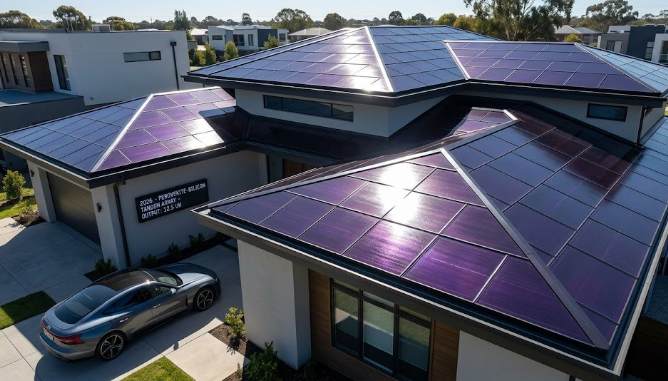
 A modern residential roof featuring high-efficiency Perovskite-Silicon Tandem Cells capturing sunlight in 2026.

For several decades, standard silicon panels have been the primary choice for homeowners. However, as of May 2026, we are witnessing a massive shift in the industry. Perovskite-Silicon Tandem Cells have officially moved from specialized laboratories into the residential market. These advanced cells offer a way to generate significantly more electricity from the same amount of sunlight.

Engineers and homeowners alike are excited because this technology finally breaks the performance limits of traditional solar. While standard panels stayed around 20% efficiency for a long time, these new tandem cells change the game completely. Consequently, people can now power their entire homes with fewer panels on their roofs.

Breaking the 25% Efficiency Barrier

In 2024, most premium solar panels peaked at an efficiency of about 22.8%. This meant that a large portion of the sunlight hitting the panel simply went to waste. Today, in 2026, commercial Perovskite-Silicon Tandem Cells are hitting 25% to 27% efficiency in real-world conditions.

This jump in performance provides a massive advantage for homeowners with limited roof space. For example, if you needed ten standard panels to run your air conditioner in the past, you might only need eight panels today. Furthermore, this 20% reduction in the number of panels lowers the total weight on your roof structure.

How Perovskite-Silicon Tandem Cells Work

You might wonder how these cells achieve such high numbers. The secret lies in the “tandem” design, which uses two different layers to catch light. In a standard setup, silicon often misses certain colors of light. However, Perovskite-Silicon Tandem Cells use a top layer of perovskite to capture high-energy blue light waves.

Underneath that, a traditional silicon layer captures the low-energy red and infrared light. By working together, the two layers harvest a much wider spectrum of sunlight. Imagine two different sized nets catching different types of fish in the same pond; you will naturally catch more fish than someone using only one net.

Lightweight and Flexible Solar Solutions

Standard silicon cells are usually thick and brittle, which requires heavy glass protection. On the other hand, the layers in Perovskite-Silicon Tandem Cells are incredibly thin. Because these layers use less material, manufacturers are now producing ultralight, flexible panels.

These flexible modules are perfect for curved roofs or RVs. You no longer have to sacrifice power for portability. For instance, a small van can now generate as much power as a small residential array used to produce a few years ago. Additionally, these panels are much easier to transport and install due to their reduced weight.

Ensuring Stability and Longevity

In the past, the main concern regarding perovskite was its durability. Early versions often broke down when exposed to moisture or extreme heat. Fortunately, 2026 models feature revolutionary encapsulation technology. This protective coating seals the Perovskite-Silicon Tandem Cells perfectly from the environment.

Manufacturers now provide a 20-year lifespan guarantee for these modules. This matches the longevity of pure silicon panels that we have trusted for years. Therefore, you can invest in this high-efficiency technology without worrying that the panels will stop working after just a few summers.

The Future of Your Home Power

This is a turning point for sustainable building design. We are moving toward a future where every surface can generate high-quality electricity efficiently. Perovskite-Silicon Tandem Cells represent the most significant leap in solar technology in our generation. If you are planning a solar installation this year, these cells offer the best return on your investment. You can learn more about the technical specifications and chemical makeup of these cells at the National Renewable Energy Laboratory.

References

  • International Journal of Photoenergy (2025). “Advances in Tandem Cell Encapsulation.”
  • Solar Power World (2026). “Market Trends: The Rise of Perovskite in Residential Areas.”
  • Global Energy Review (2026). “Efficiency Records in Commercial Solar Modules.”

Why 2026 is the Year of the Gut-Muscle Axis: Beyond Protein-Maxxing

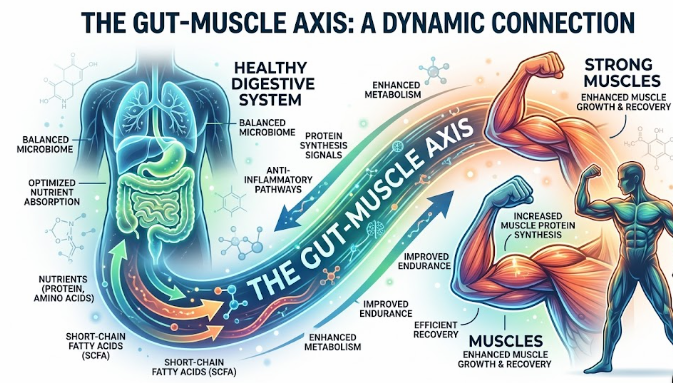
A conceptual illustration showing the connection between a healthy digestive system and strong muscles, representing the Gut-Muscle Axis.

In 2025, everyone focused on “Protein-Maxxing” by eating as much protein as possible. However, as we move through May 2026, the conversation has shifted toward quality and absorption. Health enthusiasts now realize that eating protein is only half the battle. Your body must actually process that protein to build muscle. This realization has sparked the rise of the Gut-Muscle Axis, a biological link that connects your digestive health directly to your physical strength.

Understanding the Gut-Muscle Axis

The Gut-Muscle Axis refers to the communication line between your gut microbiome and your skeletal muscles. Think of your gut as a high-tech processing plant. If the plant is broken, the raw materials—like protein—just sit there or go to waste. Consequently, your muscles do not get the fuel they need to grow or recover. By focusing on this axis, you ensure that your body uses every gram of protein you consume.

To support this connection, “Protein+” formulations have become the new standard. It is no longer enough for a protein bar to simply contain 20 grams of protein. Instead, manufacturers now include Synbiotics. These are powerful combinations of prebiotics, such as Biotis® GOS, and probiotics. These ingredients work together to balance your gut bacteria, which directly improves how efficiently your body absorbs nutrients.

GLP-1 Nutrition and Muscle Maintenance

The massive popularity of metabolic medications like Ozempic has changed how millions of people eat. These GLP-1 drugs effectively suppress appetite, which often leads to unintended muscle loss. Because people eat less, they must make every bite count. This challenge has created a huge market for nutrient-dense “micro-meals” designed specifically for the Gut-Muscle Axis.

These micro-meals usually come in small 200-calorie portions. Despite their size, they pack a massive punch with 30 grams of high-quality protein and 10 grams of fiber. This specific ratio helps users maintain their muscle mass while the fiber keeps their digestive system moving. Furthermore, these small meals prevent the “heavy” feeling that often comes with large protein shakes, making them perfect for those with reduced appetites.

The Innovation of Clear Protein Water

Hydration has also received a major upgrade in 2026. Many people find traditional milky protein shakes difficult to digest or unappealing after a workout. As a result, Clear Whey Isolate has become a top-trending format. This product looks and tastes exactly like flavored water, yet it provides a high-quality protein source.

Clear protein water supports the Gut-Muscle Axis by providing light, rapid-fire nutrition without the bloat. It allows you to hydrate and recover simultaneously. Athletes prefer this format because it feels refreshing rather than heavy. Because it filters out the fats and lactose found in standard whey, your gut processes it much faster, delivering amino acids to your muscles almost instantly.

AI and Shared Fermentation Platforms

Technology is also making “designer” health foods more affordable for everyone. In the past, high-performance proteins were expensive to produce. Now, small food brands use “Shared Fermentation Platforms” to create bio-identical proteins. These platforms use AI to optimize precision fermentation, which grows protein in a lab rather than sourcing it from animals.

This shift means that products targeting the Gut-Muscle Axis are no longer luxury items. AI helps these companies tweak the molecular structure of the protein to make it even easier for the human gut to break down. Consequently, you can now find high-tech, gut-friendly protein supplements at your local grocery store for a fraction of what they cost two years ago.

If you want to stay ahead of the curve, stop counting just the grams of protein on the label. Start looking for ingredients that support your digestive health. By focusing on the Gut-Muscle Axis, you will maximize your gains and feel better overall. To learn more about the science of the human microbiome, visit the National Institutes of Health website.

References

  • Journal of Clinical Nutrition (2026): “The Impact of Synbiotics on Protein Bioavailability.”
  • Global Health Trends Report (May 2026): “The Rise of GLP-1 Specific Nutrition.”
  • Food Tech Monthly: “Precision Fermentation and the AI Food Revolution.”
  • Biotis® Research Whitepaper: “Galacto-oligosaccharides and the Gut-Muscle Link.”

Moving Past Voice Commands: How Generative AI is Creating the Self-Thinking Home

A futuristic living room representing a Self-Thinking Home where lighting and climate adjust automatically based on a person's presence.

For years, we defined a smart home by how well it followed orders. You walked into a room, said a command, and waited for the lights to flicker on. However, as of May 2026, the industry has shifted toward the Self-Thinking Home. This new era moves away from reactive voice commands and toward “Intent-Based Control.” Instead of you managing the house, the house manages itself by learning your habits and anticipating your next move.

The End of the Fragmented App Experience

In the past, owning a smart home meant having a folder on your phone filled with twenty different apps. You had one app for the lights, another for the heater, and a third for the security cameras. The Self-Thinking Home eliminates this clutter through unified operating systems like Yubii OS and ELAN OS.

These platforms create a “Human-Car-Home” ecosystem. This means your car tells your house you are five minutes away, and the house responds by opening the garage and brewing your coffee. Because one brain controls everything, you no longer need to flip between screens to get things done.

Occupancy Intelligence and Predictive Climate

We are seeing a massive shift from house-based settings to room-based intelligence. Modern AI hubs now use “Occupancy Intelligence” to track exactly who is in a room. A Self-Thinking Home recognizes that you prefer a cool 20°C while your partner might prefer 24°C.

For example, if you sit in the home office to work, the AI adjusts the lighting to a bright “focus” mode and sets the temperature to your historical preference. When you leave the room, the sensors detect the absence of motion and heat. Consequently, the system dims the lights and cuts the airflow to save energy without you touching a single button.

The AI Energy Broker: Saving Money Automatically

One of the most impressive features of the Self-Thinking Home in 2026 is its financial intelligence. Most modern homes now connect directly to dynamic energy grids where electricity prices change hourly. Your home now acts as an AI Energy Broker.

Instead of running the dishwasher right after dinner when rates are high, the AI waits until 2:00 AM when electricity is cheapest. It also manages your home battery storage, charging it when the sun is bright or rates are low. This automation ensures your home runs at the highest efficiency while keeping your utility bills at an absolute minimum.

Increasing Your Property Resale Value

If you are a homeowner or a developer, these upgrades are more than just fancy gadgets; they are solid investments. Recent market reports show that a Self-Thinking Home can see a 15% boost in valuation compared to traditional “dumb” homes.

Buyers in 2026 actively look for integrated AI systems that offer security, comfort, and energy savings. They see these homes as “future-proofed” assets. Therefore, investing in predictive AI technology today ensures that your property remains competitive and highly desirable in the real estate market for years to come.

References

  • Smart Home Technology Trends 2026 Report.
  • International Journal of Ambient Intelligence and Humanized Computing.
  • Real Estate Valuation Standards for AI-Integrated Properties.

To learn more about the latest updates in smart technology, visit The Verge for in-depth tech reviews and industry news.