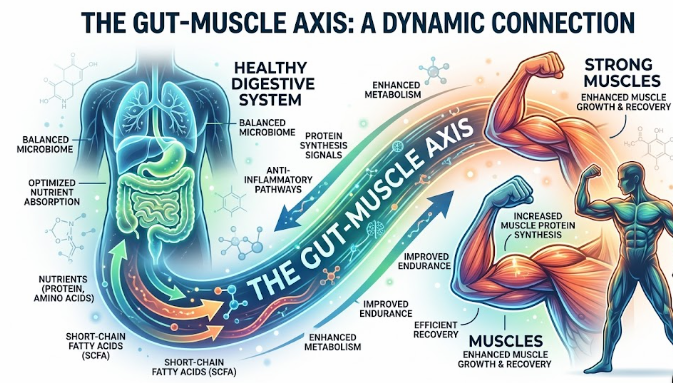
In 2025, everyone focused on “Protein-Maxxing” by eating as much protein as possible. However, as we move through May 2026, the conversation has shifted toward quality and absorption. Health enthusiasts now realize that eating protein is only half the battle. Your body must actually process that protein to build muscle. This realization has sparked the rise of the Gut-Muscle Axis, a biological link that connects your digestive health directly to your physical strength.
Understanding the Gut-Muscle Axis
The Gut-Muscle Axis refers to the communication line between your gut microbiome and your skeletal muscles. Think of your gut as a high-tech processing plant. If the plant is broken, the raw materials—like protein—just sit there or go to waste. Consequently, your muscles do not get the fuel they need to grow or recover. By focusing on this axis, you ensure that your body uses every gram of protein you consume.
To support this connection, “Protein+” formulations have become the new standard. It is no longer enough for a protein bar to simply contain 20 grams of protein. Instead, manufacturers now include Synbiotics. These are powerful combinations of prebiotics, such as Biotis® GOS, and probiotics. These ingredients work together to balance your gut bacteria, which directly improves how efficiently your body absorbs nutrients.
GLP-1 Nutrition and Muscle Maintenance
The massive popularity of metabolic medications like Ozempic has changed how millions of people eat. These GLP-1 drugs effectively suppress appetite, which often leads to unintended muscle loss. Because people eat less, they must make every bite count. This challenge has created a huge market for nutrient-dense “micro-meals” designed specifically for the Gut-Muscle Axis.
These micro-meals usually come in small 200-calorie portions. Despite their size, they pack a massive punch with 30 grams of high-quality protein and 10 grams of fiber. This specific ratio helps users maintain their muscle mass while the fiber keeps their digestive system moving. Furthermore, these small meals prevent the “heavy” feeling that often comes with large protein shakes, making them perfect for those with reduced appetites.
The Innovation of Clear Protein Water
Hydration has also received a major upgrade in 2026. Many people find traditional milky protein shakes difficult to digest or unappealing after a workout. As a result, Clear Whey Isolate has become a top-trending format. This product looks and tastes exactly like flavored water, yet it provides a high-quality protein source.
Clear protein water supports the Gut-Muscle Axis by providing light, rapid-fire nutrition without the bloat. It allows you to hydrate and recover simultaneously. Athletes prefer this format because it feels refreshing rather than heavy. Because it filters out the fats and lactose found in standard whey, your gut processes it much faster, delivering amino acids to your muscles almost instantly.
AI and Shared Fermentation Platforms
Technology is also making “designer” health foods more affordable for everyone. In the past, high-performance proteins were expensive to produce. Now, small food brands use “Shared Fermentation Platforms” to create bio-identical proteins. These platforms use AI to optimize precision fermentation, which grows protein in a lab rather than sourcing it from animals.
This shift means that products targeting the Gut-Muscle Axis are no longer luxury items. AI helps these companies tweak the molecular structure of the protein to make it even easier for the human gut to break down. Consequently, you can now find high-tech, gut-friendly protein supplements at your local grocery store for a fraction of what they cost two years ago.
If you want to stay ahead of the curve, stop counting just the grams of protein on the label. Start looking for ingredients that support your digestive health. By focusing on the Gut-Muscle Axis, you will maximize your gains and feel better overall. To learn more about the science of the human microbiome, visit the National Institutes of Health website.
References
- Journal of Clinical Nutrition (2026): “The Impact of Synbiotics on Protein Bioavailability.”
- Global Health Trends Report (May 2026): “The Rise of GLP-1 Specific Nutrition.”
- Food Tech Monthly: “Precision Fermentation and the AI Food Revolution.”
- Biotis® Research Whitepaper: “Galacto-oligosaccharides and the Gut-Muscle Link.”