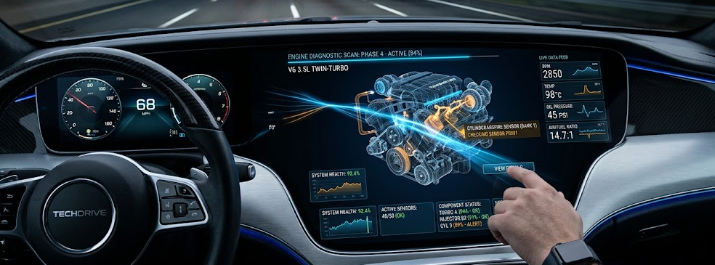
For decades, car buyers and fleet managers relied heavily on the odometer to judge a vehicle’s true value. However, a single mileage number fails to reveal the hidden wear inside a modern vehicle. Today, smart software is completely changing how we measure car health and financial depreciation. At recent automotive technology summits like MOVE 2026 in London, experts revealed that old ways of tracking vehicle wear are fading fast. Instead, a new technology called VIN-Level Predictive Analytics is completely rewriting the rules of vehicle ownership costs. By analyzing real-time data from individual vehicles, this approach gives owners a precise look at their car’s future financial and mechanical health.
Understanding VIN-Level Predictive Analytics
To understand this shift, we must look at how standard valuation works. Traditionally, companies used historical regional sales books to estimate what a car would be worth over time. Unfortunately, these generic guides completely ignore how a specific person actually drives or maintains their vehicle.
In contrast, modern diagnostic platforms use advanced software architectures powered by Agentic AI. This artificial intelligence does not just look backward at old sales history. Instead, it cross-references localized supply curves, component aging risks, and real-time market data to predict future value. Consequently, VIN-Level Predictive Analytics treats every car as a unique asset rather than a generic model number. For instance, it can predict how a specific vehicle in a damp coastal town will depreciate compared to the exact same model driven in a dry desert.
How Intent-Gap Analysis Protects Your Fleet
For fleet operators reading specsfinder.info, unexpected breakdowns represent a massive financial drain. This is where an advanced feature known as “Intent-Gap” analysis becomes incredibly valuable. This technology monitors real-time sensor telematics directly from the vehicle’s engine control units. Therefore, the system tracks exactly how the mechanical parts are aging under actual driving conditions.
It maps out precise depreciation timelines for major components before they fail. As a result, VIN-Level Predictive Analytics recommends preventative maintenance long before an aging part causes a catastrophic breakdown. For example, if a delivery van’s transmission shows minor internal stress, the system alerts the fleet manager immediately. This early warning bridges the gap between intended maintenance schedules and actual mechanical reality, saving thousands of dollars in emergency repairs.
The Power of Omnichannel Software Integration
Furthermore, this technology is moving directly into modern vehicle purchase workflows through omnichannel software integration. When you buy or sell a car, separate software platforms often drop critical data, creating frustration and confusion. Modern systems solve this issue by linking predictive health reports directly between digital appraisal tools and physical workshop diagnostic portals.
Because these systems talk to each other seamlessly, they completely eliminate the need for manual data re-entry. Dealerships and buyers can instantly see the total structural and mechanical reality of the car. Therefore, this widespread integration creates absolute transparency between buyers and sellers. When everyone has access to exact data from VIN-Level Predictive Analytics, negotiating a fair price becomes much easier and highly accurate.
Margin Protection Metric: Managing Cars as Financial Assets
Ultimately, tracking your car’s health in 2026 has transformed into a strategic asset-management game. In the past, drivers waited for a dashboard malfunction light to turn on, which often happens around day 60 of an underlying issue. By then, severe component decay has already occurred, destroying your vehicle’s value.
Modern operators now focus on the margin protection metric to stop this financial loss early. By utilizing VIN-Level Predictive Analytics, you can identify component decay risks at day 15 or 30 instead of day 60. Consequently, car owners can intervene early to fix minor issues and preserve the vehicle’s front-end asset gross. This proactive approach ensures that your vehicle retains its maximum resale value over its lifespan. To learn more about how digital fleet tools are transforming the global transportation industry, read the latest automotive tech insights on Automotive News.
References
- MOVE 2026 London Automotive Technology Summit Proceedings.
- Journal of Automotive Asset Management, The Role of Telematics in Modern Vehicle Depreciation Tracking, 2025.
- Fleet Maintenance Quarterly, Understanding Sensor-Driven Intent-Gap Analysis for Fleet Longevity, 2026.