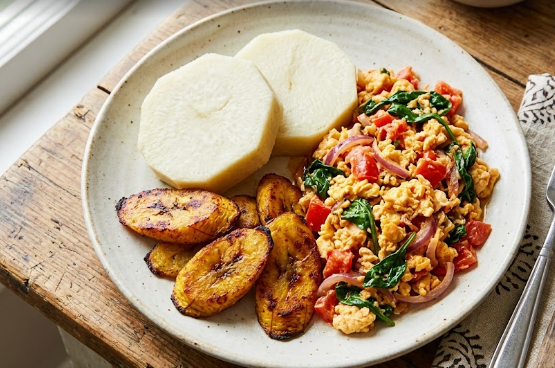
West Africans love eating staples like yam, sweet potatoes, and plantains because they taste amazing and supply quick daily energy. These tubers naturally contain high amounts of potassium and fiber, which support your heart and digestion. However, many people mostly eat them deep-fried as dodo or fried yam. Deep-frying causes the food to absorb huge amounts of oil, which drastically increases calories without adding key vitamins or protein. By focusing on upgrading boiled yam and plantain, you can enjoy these delicious meals while keeping your body healthy and energetic.
Healthier Cooking Methods for Upgrading Boiled Yam and Plantain
You can easily transform how you prepare your tubers to reduce unnecessary fats. Swapping the frying pan for healthier cooking methods makes a massive difference in your daily calorie intake. Boiling your yam or sweet potatoes retains natural nutrients while avoiding heavy oils. You can also roast plantains over grill fires to make traditional boli, or use a modern air-fryer to get a crispy texture with just a drop of oil.
Furthermore, choosing unripe plantain gives your body a special health boost. Unripe plantain contains resistant starch, a type of carbohydrate that your body does not digest quickly. Instead, resistant starch feeds the good bacteria in your gut and helps control your blood sugar levels. Eating boiled unripe plantain prevents sudden energy crashes and keeps you full for a longer time.
Pairing Tubers with Protein-Rich Vegetable Sauces
Tubers give you plenty of carbohydrates, but they lack essential protein and micronutrients. You can solve this nutritional gap by pairing your carbohydrates with nutrient-dense sauces. Create a rich scrambled egg sauce loaded with diced tomatoes, onions, and fresh leafy greens like ugu (fluted pumpkin leaves) or spinach. Eggs provide high-quality protein, while the greens supply essential iron and vitamins.
If you prefer fish, cook a tasty garden egg sauce with smoked or fresh mackerel. Mackerel brings healthy omega-3 fatty acids to your plate, which protect your heart. Garden eggs add extra fiber and antioxidants. Combining these rich sauces with your carbohydrates turns a basic meal into a complete power pack.
Managing Portion Sizes for a Balanced Meal
Even healthy foods can lead to weight gain if you eat too much of them. Managing your portion sizes ensures you get enough energy without overloading your body with excess carbohydrates. Aim to fill half your plate with your protein and vegetable sauce, while reserving only a quarter of your plate for your tubers.
A great benchmark for a single meal is two to three medium slices of yam or plantain. Pair those slices with a generous portion of your egg or mackerel vegetable sauce. This balance keeps your stomach full, sustains your energy throughout the day, and keeps your blood sugar steady.
Making these simple adjustments helps you enjoy your favorite traditional foods without risking your health goals. When you combine smart cooking choices with rich vegetable sauces, you give your body the exact nutrients it needs. For deeper insights into balancing your daily carbohydrates and protein intake, visit the Harvard T.H. Chan School of Public Health website.
References
- Harvard T.H. Chan School of Public Health. (2021). The Healthy Eating Plate. Nutrition Source.
- Slavin, J. (2013). Fiber and Prebiotics: Mechanisms and Health Benefits. Nutrients, 5(4), 1417-1435.
- World Health Organization. (2023). Healthy Diet Fact Sheet N°394. WHO Guidelines.