IEEE 802.11bb Li-Fi: Wireless Tech Beyond Radio Frequencies

 An enterprise office featuring an IEEE 802.11bb Li-Fi system transmitting secure data through near-infrared light.

The demand for faster and more secure wireless connections grows every single day. Traditional Wi-Fi networks often face heavy congestion because too many devices share the same radio waves. To solve this problem, a revolutionary technology has emerged to change how we transmit data. The IEEE 802.11bb Li-Fi standard introduces a global framework that uses light instead of radio frequencies to connect devices to the internet. This exciting development offers a powerful alternative for IT professionals and enterprise network architects who need hyper-secure, high-speed networks.

Shifting to Light with the IEEE 802.11bb Li-Fi Standard

Traditional Wi-Fi transmits data using radio frequencies, usually in the 2.4 GHz or 5 GHz bands. However, users heavily crowd these airwaves today. Think of a busy highway during rush hour; too many cars slow everyone down. In contrast, the IEEE 802.11bb Li-Fi standard shifts data transmission into the optical spectrum. Specifically, this new technology utilizes near-infrared light in the 800 nm to 1000 nm waveband to carry information.

By using light waves, this system completely avoids radio frequency gridlock. Infrared light transmits data seamlessly without interfering with your existing wireless systems. For instance, hospital rooms or military bases can use light waves safely without disrupting sensitive electronic equipment. Therefore, this technology opens up a massive, unused spectrum that provides a clean and clear channel for high-speed data.

Breaking Down Throughput in the IEEE 802.11bb Li-Fi Specs

Network architects always demand reliable and scalable speeds for modern enterprise setups. Fortunately, the IEEE 802.11bb Li-Fi standard delivers impressive throughput specifications that meet these professional needs. The technology provides a scalable performance model depending on your specific environment and hardware layout. For basic operations, it offers a highly stable baseline speed starting at a 10 Mbps floor.

On the upper end of the spectrum, the standard can reach a blistering ceiling of 9.6 Gbps. This maximum speed matches the top capabilities of Wi-Fi 6. Consequently, users can download massive files, stream high-definition media, or transfer large data packages in seconds. The wide speed range ensures that the network remains highly stable even when environmental conditions fluctuate.

Physical Security by Design in IEEE 802.11bb Li-Fi Networks

Data security remains a top priority for corporate and enterprise networks. Radio waves easily pass through drywall, glass, and wood, which exposes networks to hackers outside the building. The IEEE 802.11bb Li-Fi technology solves this critical issue through physical design. Because light cannot penetrate solid walls, the data stays strictly confined within a single room.

This strict line-of-sight requirement fundamentally changes how we protect sensitive data. Mathematically, it drops the probability of external network eavesdropping or malicious jamming to near zero. A bad actor cannot intercept your signal from the parking lot because the light waves do not reach them. As a result, this system provides unmatched physical security for banks, government offices, and research facilities.

The Perfect Synergy: How IEEE 802.11bb Li-Fi Combines with Wi-Fi

You might wonder if you need to replace your entire Wi-Fi infrastructure to adopt this new tech. Fortunately, you do not have to throw away your old routers. Standard devices will soon utilize hybrid network architectures to blend both worlds perfectly. These hybrid systems deploy the IEEE 802.11bb Li-Fi standard for high-bandwidth downstream tasks like downloading heavy files or streaming video.

Meanwhile, the system instantly falls back to standard radio-frequency Wi-Fi if someone blocks the optical line-of-sight. For example, if you place your hand over the light sensor, your device switches to Wi-Fi without dropping your connection. This smart collaboration guarantees a smooth user experience while maximizing both speed and reliability across your enterprise environment. To learn more about how light-based communication is changing global connectivity, read this detailed breakdown on the official IEEE Standards Association website.

References

  • IEEE 802.11bb Task Group Documents.
  • PureLiFi and Fraunhofer HHI Technology Reports.
  • Light Communications Alliance (LCA) Tech Briefs.
OCuLink vs. Thunderbolt 5: The 2026 eGPU Connectivity Specs Explained

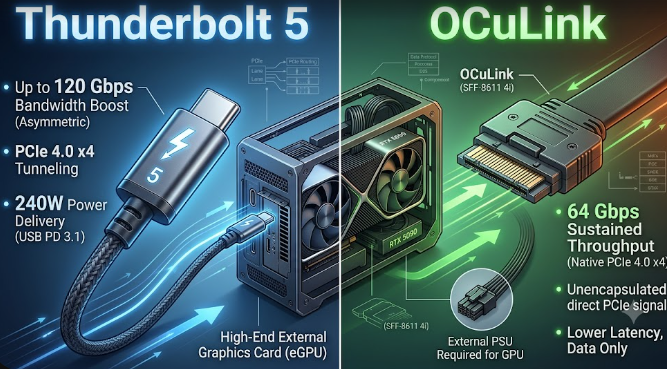
A comparison graphic showcasing OCuLink vs. Thunderbolt 5 connectors for an external graphics card setup.

Are you a handheld PC gamer wanting higher frame rates? Maybe you are a laptop power user or an AI developer running local Large Language Models (LLMs). In 2026, boosting your portable device with an external graphics card (eGPU) is easier than ever before. However, picking the right connection standard can feel overwhelming. Today, the ultimate hardware battle comes down to OCuLink vs. Thunderbolt 5. Both options promise massive speeds, but they achieve their performance goals in fundamentally different ways. Understanding these technical specifications will help you invest your money wisely.

Understanding OCuLink vs. Thunderbolt 5 Architecture

To grasp how these technologies differ, we must look at how they talk to your computer. OCuLink operates as a direct, un-tunneled PCIe 4.0 x4 connection. Consequently, it delivers a clean 64 Gbps stream of raw data straight to your processor. Think of OCuLink as an open, private highway where your graphics card drives directly to the CPU without stopping at any toll booths.

In contrast, Thunderbolt 5 acts as a complex protocol layer. This interface encapsulates the PCIe data alongside display and power signals to achieve its 80 Gbps bi-directional limit. Therefore, even though Thunderbolt 5 boasts a higher raw bandwidth number on paper, it introduces a controller “middleman” that must pack and unpack the data. This encapsulation creates protocol overhead, which can slow down real-world performance during intense tasks.

Real-World Latency and Stutter-Free Gaming

For passionate gamers, raw bandwidth numbers do not tell the whole story. Instead, frame stability and system response time dictate your actual experience. Because OCuLink completely lacks an extra protocol controller, it drastically reduces round-trip latency. Specifically, OCuLink keeps system latency under 25 milliseconds. This ultra-low latency provides a remarkably stable, stutter-free experience in ray-traced gaming compared to Thunderbolt setups.

Furthermore, heavy visual workloads like ray tracing force the GPU and CPU to communicate constantly. When you use Thunderbolt 5, the data packets must travel through the Intel controller chip. This extra step frequently introduces micro-stutters during heavy gaming sessions. For example, open-world games that stream assets on the fly will feel noticeably smoother on a direct OCuLink line because your system drops fewer frames.

Accelerating Local AI Inference Speeds

If you are an AI developer, interface speeds directly alter your workflow productivity. Running local Large Language Models demands rapid data transfers between your laptop’s RAM and the external VRAM. Fortunately, the raw connection of OCuLink shines brightest in this area. When you load heavy LLMs, such as a massive 70B parameter model, a raw OCuLink connection finishes the job much faster than competing protocols.

Additionally, OCuLink accelerates the critical “time to first token” generation phase. Thunderbolt 5 introduces roughly 110 milliseconds of round-trip controller overhead for every API call. In contrast, OCuLink bypasses this delay completely. Consequently, if you deploy agentic AI chains that fire dozens of short prompts in a sequence, OCuLink will save you several seconds per task.

The Hot-Swap and Power Delivery Trade-off

However, absolute performance requires a few daily lifestyle sacrifices. We must be entirely transparent about OCuLink’s primary limitation. Unlike the user-friendly Thunderbolt 5, OCuLink lacks seamless hot-swapping capabilities. This means you cannot simply unplug the cable when you want to take your laptop to another room. Instead, you must completely power down your handheld device or laptop before connecting or disconnecting the external GPU.

Furthermore, OCuLink does not offer reverse power delivery. While a single Thunderbolt 5 cable can send up to 240 watts of power to charge your laptop while receiving graphics data, OCuLink handles data exclusively. Therefore, you must plug a separate power brick into your machine. If you value a clean, single-cable docking station experience, Thunderbolt 5 remains the undisputed king of convenience.

Final Verdict on OCuLink vs. Thunderbolt 5

Ultimately, your choice depends on whether you value maximum frame rates or daily convenience. If you want a seamless plug-and-play setup that charges your laptop, choose Thunderbolt 5. However, if you want to extract every single ounce of performance for local AI development or high-end competitive gaming, OCuLink provides the best raw value in 2026. For further technical details on setting up external graphics enclosures and testing protocols, you can read more on the StorageReview Hardware Guides.

References

  • XDA Developers. (2026). “I expected Thunderbolt 5 to replace OCuLink for eGPU setups, but it didn’t.”
  • TechPowerUp. (2025). “External GPU Connection Battle: OCuLink Beats Thunderbolt 5 by About 16%.”
  • Local AI Master. (2026). “Thunderbolt vs OCuLink for eGPU AI: Real Benchmarks.”
  • Intel Corporation. (2025). “Thunderbolt 5 Technology for Next-Generation Gaming.”

SAE J3400 EV Charging Standard: Deciphering the 2026 Tech

A close-up view of a connector using the SAE J3400 EV charging standard.

The electric vehicle (EV) market is shifting fast in 2026. Drivers, property managers, and tech fans are watching a massive infrastructure upgrade across North America. Central to this shift is the SAE J3400 EV charging standard, which officially formalizes Tesla’s North American Charging Standard (NACS). This unified system completely updates how we power electric cars. Consequently, understanding this new tech helps everyone navigate the changing landscape smoothly.

The Mechanics of the SAE J3400 EV Charging Standard

The SAE J3400 EV charging standard solves a major infrastructure issue by combining two different charging types into one small port. In the past, cars required completely separate pins for alternating current (AC) and direct current (DC). However, the new J3400 standard handles both Level 2 home charging and Level 3 public fast charging through a single, compact five-pin layout.

How the Single Pin Layout Saves Space

Specifically, the connector uses its two main primary contacts for both charging types. Therefore, the car’s internal computer switches modes based on the incoming power source. For example, when you plug in at home, the pins carry AC power safely. When you pull into a fast-charging station, those same pins handle high-voltage DC power. This shared-pin design simplifies the vehicle’s internal wiring and reduces engineering costs for auto manufacturers.

Elimination of CCS1 Bulk

For years, non-Tesla electric vehicles used the Combined Charging System (CCS1) plug. This older system added two massive DC pins below a standard AC plug, which created a heavy and awkward connector. Drivers frequently complained about the stiffness of CCS1 cables, especially during cold winter months.

A Massive Upgrade for User Experience

In contrast, the NACS plug under the SAE J3400 EV charging standard eliminates this extra bulk entirely. It provides a lightweight, ergonomic handle that anyone can operate easily with one hand. Furthermore, property managers installing these chargers notice less physical wear and tear. Because the cables are lighter, they cause fewer drop-related accidents and suffer less structural damage at public stations.

Understanding the ISO 15118 Software Protocols

Hardware is only half of the story. Beneath the physical plug, advanced software drives the SAE J3400 EV charging standard. The integration of ISO 15118 protocols enables a feature known as “Plug & Charge.” This protocol completely transforms how the vehicle talks to the charging station.

How Plug & Charge Removes Apps and Cards

Consequently, drivers no longer need to download multiple smartphone apps or swipe physical credit cards. When you plug the J3400 connector into your car, the vehicle and the charger instantly start a secure digital handshake. They automatically negotiate power delivery, verify your account identity, and process the payment. As a result, you simply plug in, charge your battery, and drive away without any manual steps.

The 2026 Adapter Reality for Older EVs

We are currently in a major transition phase. While most 2026 model-year vehicles feature native J3400 ports straight from the factory, millions of older EVs still utilize legacy CCS1 ports. Therefore, drivers must use automaker-approved CCS-to-NACS adapters to tap into the massive Tesla Supercharger network safely.

Choosing Safe and Certified Charging Hardware

Commercial property managers and drivers must choose these adapters carefully. Official, certified adapters include internal temperature sensors and redundant safety interlocks. These components actively prevent overheating during high-amp fast charging sessions. For further technical details and regulatory updates regarding this infrastructure rollout, you can review the official guidelines on DriveElectric.gov.

References

  • SAE International. (2024). SAE J3400 Recommended Practice: North American Charging System.
  • Joint Office of Energy and Transportation. (2026). SAE J3400 Charging Connector Reference Guide.
  • International Organization for Standardization. (2025). ISO 15118-20: Road vehicles — Vehicle-to-grid communication interface.

How AMD 3D V-Cache Technology Uses Direct Cu-Cu Bonding

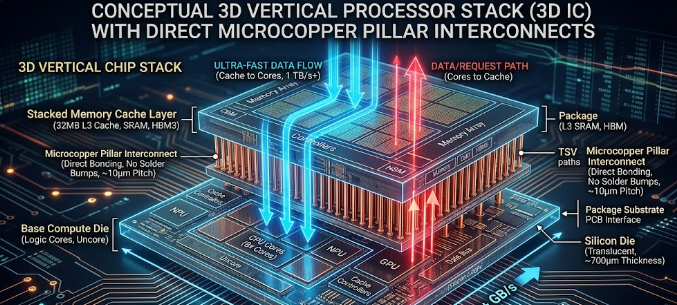
Technical diagram showing direct copper bonding inside a processor chip utilizing AMD 3D V-Cache technology.

Gamers and PC builders always want faster processors to run heavy workloads. To achieve this goal, AMD introduced an incredible hardware innovation known as AMD 3D V-Cache technology. Consequently, modern X3D processors deliver unmatched gaming performance by changing how engineers build CPUs. In this article, we will look at the physical hardware and advanced engineering driving this design.

Moving Upward with AMD 3D V-Cache Technology

Traditionally, chip makers expanded processor size horizontally across a flat plane. This older method represents planar expansion. However, spreading components out across a flat surface creates major problems. It increases the physical size of the chip and forces data to travel longer distances. As a result, latency increases and slows down communication between the core and memory.

To solve this issue, AMD chose a radical vertical approach. Instead of expanding outward, engineers stack a 64MB SRAM cache die directly on top of the CPU compute die (CCD). Therefore, the processor gains massive memory capacity without expanding its horizontal footprint. This vertical shift keeps data paths incredibly short, which slashes latency and speeds up performance dramatically.

The Power of Direct Cu-Cu Bonding Specs

Older chip designs connected stacked layers using tiny traditional solder bumps, which engineers call micro-bumps. Unfortunately, micro-bumps take up too much space and create high electrical resistance. They also limit how close connection points can be. To overcome this limitation, AMD uses a cutting-edge hybrid bonding process called direct copper-to-copper (Cu-Cu) bonding.

This new design completely eliminates traditional solder bumps. Instead, the copper pads of the top layer touch the copper pads of the bottom layer directly. This precise method allows for a sub-10 μm interconnect pitch, meaning the connection points sit incredibly close together. Ultimately, AMD 3D V-Cache technology benefits from drastically lowered electrical resistance and vastly superior power efficiency.

Vertical Data Highways in AMD 3D V-Cache Technology

How do the CPU cores talk to this newly stacked memory so quickly? The answer lies in Through-Silicon Vias, or TSVs. TSVs act as microscopic vertical data highways that drill straight through the silicon layers.

Because these pathways are so tiny and numerous, they provide massive data lanes. Therefore, the CPU cores can access the stacked L3 cache at over 2 TB/s of bandwidth. This extreme speed ensures that the processor never starves for data during heavy gaming or intense workloads.

Managing Heat in Advanced 3D Processors

Stacking silicon layers creates amazing performance, but it also creates severe thermal challenges. When you place a cache die directly over hot CPU cores, you trap heat underneath. Consequently, these X3D chips have stricter maximum temperature limits, which engineers call Tjmax, compared to standard 2D processors.

To protect the hardware, AMD applies lower voltage ceilings to these chips. Extreme overclockers must respect these boundaries because excessive voltage can permanently damage the bonded layers. Therefore, choosing a high-quality cooling system is absolutely vital if you want to get the most out of AMD 3D V-Cache technology.

The Future of Processor Design

In conclusion, AMD has revolutionized CPU architecture by building upward rather than outward. By combining direct Cu-Cu bonding with microscopic vertical data paths, they have rewritten the rules of gaming performance. If you want to dive deeper into the official hardware specifications, you can read more about CPU architectures on the AnandTech CPU Tech Section.

References

  • AMD. (2026). AMD 3D V-Cache™ Technology Drives Density and Energy Efficiency Leadership. AMD Tech Insights.
  • Avaq Semiconductor. (2026). AMD 3D V-Cache Technology Explained: A Breakthrough in 3D Chip Integration for HPC and Gaming.
  • Yole Group. (2022). AMD 3D V-Cache with TSMC SoIC 3D Packaging Teardown Report.

How the Thread 1.4 Specification Unifies Your Smart Home Mesh Network

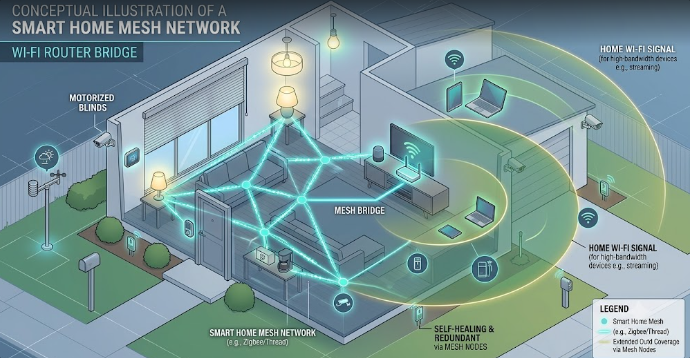
mesh network diagram illustrating the Thread 1.4 specification

Smart home enthusiasts often face a frustrating problem when setting up their devices. You buy a smart bulb from one brand and a motion sensor from another, only to find they cannot talk to each other. Fortunately, the new Thread 1.4 specification is here to solve these fragmented ecosystem headaches completely. This major upgrade transforms how your smart gadgets communicate, creating a truly unified experience for every homeowner.

What is the Thread 1.4 Specification?

To understand this update, you must first understand how older smart homes operate. In the past, different manufacturers created their own closed wireless networks. As a result, your gadgets constantly competed for bandwidth, which slowed down your entire home network.

The Thread 1.4 specification fixes this issue by standardizing device trust protocols across all brands. Consequently, Matter-certified devices from Apple, Google, Amazon, or Samsung can now join a single, unified mesh network. Instead of fighting for signals, your devices work together to pass data along the fastest route.

Standardizing Device Trust Protocols

Security often becomes a major concern when you mix different device brands. Thankfully, the new protocol introduces strict, universal security checks for every gadget. When you add a new smart plug to your home, the network verifies its identity instantly using these shared rules.

Therefore, you no longer need to worry about one weak device compromising your whole setup. This unified trust system ensures that a smart lock from one company securely communicates with a hub from another company. Ultimately, this creates a reliable and safe environment for your smart home DIY projects.

Cloud Connectivity and the Thread 1.4 Specification

In older versions, smart home hubs often struggled to communicate with the internet without specific manufacturer software. However, the Thread 1.4 specification provides a clearly defined and standardized path to the internet for all Border Routers. This means your internet connection becomes a shared highway for every smart device in your home.

Because of this direct routing, your smart gadgets can now receive remote software updates automatically. Furthermore, this seamless internet path enables dynamic cloud features without requiring proprietary hubs. For instance, your smart blinds can look up local weather data online and adjust themselves automatically to keep your living room cool.

Out-of-Home Control Made Simple

Controlling your smart home while you are away used to require multiple, expensive bridge devices. Now, this latest upgrade simplifies out-of-home control by utilizing standard internet protocols. You can turn off your lights or check your security cameras from across the world using a single app.

Since the system does not rely on a single manufacturer’s cloud server, you experience less lag and fewer connection drops. Consequently, your smart home becomes much more dependable, giving you peace of mind whether you are at work or on vacation.

Enhancing Signal Reach with Thread Over Infrastructure

Perhaps the most exciting addition to this update is a feature called “Thread over Infrastructure.” Typically, low-power mesh networks struggle to send signals through thick concrete walls or across large backyards. To solve this, the Thread 1.4 specification allows the mesh network to bridge itself over your home’s existing high-bandwidth wiring.

Specifically, the network can now use your current Wi-Fi routers and Ethernet cables to transmit data. This integration combines the power-saving benefits of a mesh network with the incredible speed and range of your home internet wiring. As a result, your smart home network expands naturally without needing extra signal boosters.

Connecting Distant Edge Devices Successfully

This infrastructure bridging drastically improves reliability for distant edge devices. For example, you can easily install an outdoor security sensor at the far edge of your driveway. Even if the sensor is far from your central hub, it can send data to a nearby Wi-Fi access point.

That access point then carries the message through your home’s Ethernet cables straight to your smart speaker. Therefore, you get an instant alert the moment someone approaches your property. IoT developers and DIYers can now build larger, more robust automation systems without worrying about signal dead zones.

Final Thoughts on the New Smart Home Standard

The Thread 1.4 specification marks a massive leap forward for smart home automation. By uniting different ecosystems, improving cloud routing, and expanding signal range through existing wiring, it removes the biggest frustrations of modern IoT setups. If you want to dive deeper into the technical details of this networking standard, you can read the official announcement on the Thread Group Website.

References

  • Thread Group. (2024). Thread 1.4 Specification Announcement.
  • Matter Protocol Architecture and Smart Home Integration Standards (2025).

What is the Ki Cordless Kitchen Standard? 2.2kW Inductive Power Specs Explained

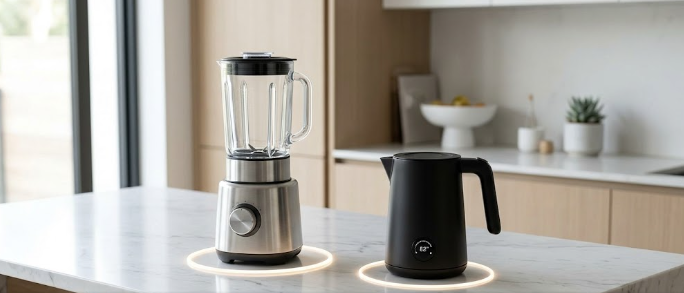
modern smart kitchen showcasing cordless appliances

Imagine a kitchen with completely bare countertops and no messy power cords. Smart home early adopters are closely watching a new technology that makes this design dream a reality. This innovation relies heavily on the Ki Cordless Kitchen standard, which completely changes how we power our everyday appliances. By removing traditional plugs, this technology creates a cleaner, safer, and much more flexible cooking space.

Wireless Power at Scale with the Ki Cordless Kitchen Standard

The Wireless Power Consortium (WPC) created this groundbreaking technology. You might already know the WPC because they developed the famous Qi charging standard for smartphones. However, while smartphones only need a few watts of electricity to charge, kitchen appliances require massive amounts of energy. Consequently, this new kitchen system safely delivers up to 2.2 kilowatts (2,200 watts) of inductive power straight through standard stone or wood countertops.

For example, you can place a high-powered blender or a water kettle directly on your kitchen island. The hidden transmitter beneath the counter transfers electricity invisibly into the appliance. Therefore, you do not need any visible outlets or wires to boil water or mix a smoothie. This massive electrical specification leap ensures that even your most demanding kitchen tools run at full capacity without a physical connection.

NFC Safety Specs of the Ki Cordless Kitchen Standard

Safety remains a top priority when dealing with 2,200 watts of wireless electricity. To prevent accidents, the Ki Cordless Kitchen standard uses strict Near Field Communication (NFC) constraints. Specifically, cordless appliances contain integrated NFC transceivers, such as the advanced ST25R3918 chip. These chips establish a constant, secure communication loop with the transmitter hidden under the counter.

Before the base station sends any high wattage, it must verify the appliance. The chip and the transmitter constantly negotiate power delivery requirements in real-time. Furthermore, this intelligent communication provides an immediate safety shut-off. If a non-certified object, like a metal fork or a human hand, disrupts the electromagnetic field, the base station instantly turns off the power to avoid any danger or burns.

Standby Energy Harvesting Features

Another impressive part of this specification involves how appliances handle power when they are idle under the Ki Cordless Kitchen standard. The technology includes a clever standby energy harvesting feature. This specification allows an appliance to harvest micro-energy from the transmitter even when you are not actively cooking. In addition, this low-power transfer happens continuously without activating the full 2.2kW power grid.

Because of this micro-energy, the digital user interfaces and LCD screens on your appliances stay awake at all times. For instance, your blender’s digital menu will light up the moment you place it on the counter. You can adjust settings or read timers immediately. The appliance achieves this convenience without drawing the massive wattage required for heavy heating or high-speed blending.

Embracing the Future of Smart Kitchens

Kitchen renovators and tech enthusiasts will surely benefit from this cordless revolution. The Ki Cordless Kitchen standard perfectly blends high-power capability with intelligent safety systems to redefine modern home design. As more manufacturers adopt these specifications, traditional power cords will soon become a thing of the past. To explore more about how wireless power is transforming modern homes, check out the official Wireless Power Consortium website for deep dives into upcoming smart appliance specifications.

References

  • Wireless Power Consortium (WPC). “The Ki Cordless Kitchen Standard.” wirelesspowerconsortium.com.
  • STMicroelectronics. “ST25R3918 High Performance NFC Universal Device and Car Access Reader Datasheet.” st.com.