Summary of Key Points
- Bluetooth OBD2 scanners connect your vehicle directly to your smartphone for instant data display.
- Real time tracking helps you catch mechanical issues before they turn into expensive repairs.
- These tools monitor crucial metrics like coolant temperature, engine RPM, fuel efficiency, and boost pressure.
- Choosing the right app enhances your diagnostic capabilities and customization options.
Introduction
Drivers today want immediate insight into vehicle health without paying expensive mechanic fees. Modern technology makes this easy through Bluetooth OBD2 diagnostic scanners for real time engine tracking. These portable devices plug directly into your car’s On-Board Diagnostics port and send live sensor data straight to your smartphone. Consequently, you can monitor engine RPM, coolant temperatures, fuel economy, and diagnostic trouble codes while you drive.
Why Choose Bluetooth OBD2 Diagnostic Scanners for Real Time Engine Tracking?
Traditional diagnostic tools often require bulky cables and expensive standalone screens. However, modern wireless adapters offer a compact and affordable alternative for everyday vehicle monitoring.
Wireless Convenience and Mobile App Integration
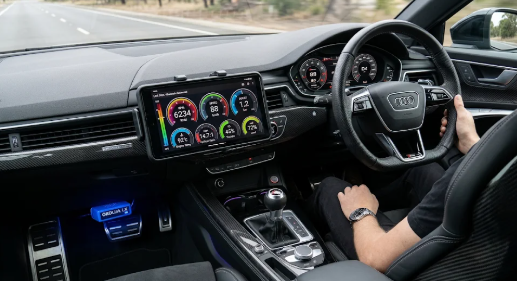
Bluetooth adapters eliminate clutter because they do not require messy cords inside your cabin. You simply plug the adapter into the OBD2 port under your dashboard. After pairing the device with your smartphone via Bluetooth, mobile applications transform your phone screen into a custom digital dashboard. Therefore, you receive live updates right in your line of sight.
Instant Vehicle Health Monitoring
Using Bluetooth OBD2 diagnostic scanners for real time engine tracking gives you continuous peace of mind. Dashboard warning lights only turn on after a problem becomes serious. In contrast, real time tracking allows you to view subtle performance changes instantly. For example, if your engine temperature rises above normal levels during a road trip, you can pull over before overheating destroys your engine block.
Key Features to Look For
Not all OBD2 scanners offer the same performance level. Therefore, you should evaluate several key features before purchasing a device for your car.
Data Refresh Rates and Sensor Metrics
High-quality Bluetooth OBD2 diagnostic scanners for real time engine tracking deliver fast data refresh rates. Fast updates ensure that digital gauges display smooth movements rather than laggy readings. Additionally, ensure the scanner supports essential PID metrics such as intake air temperature, oil pressure, mass air flow, and calculated engine load.
App Compatibility and Customization
Many hardware adapters work across popular third-party applications like Torque Pro, OBD Fusion, or Car Scanner ELM OBD2. Check whether the scanner supports both Android and iOS devices. Good software lets you customize virtual gauges, set up custom alerts, and record data logs during performance testing.
How to Set Up Your Bluetooth Scanner
Setting up your scanner takes only a few minutes. First, locate the 16-pin OBD2 port beneath your driver-side dashboard. Next, plug the adapter firmly into the port. Turn your vehicle ignition to the ‘On’ position without starting the engine. Finally, open your phone settings, pair the Bluetooth device, and launch your chosen diagnostic application.
Conclusion
Investing in reliable tools like Bluetooth OBD2 diagnostic scanners for real time engine tracking empowers you to maintain your vehicle proactively. You save time, reduce repair bills, and understand your car’s operational health far better. To learn more about automotive diagnostic standards and engine communication protocols, explore detailed technical guidelines on SAE International.
References
Society of Automotive Engineers (SAE). Surface Vehicle Recommended Practice J1979: E/E Diagnostic Test Modes. SAE International.
Federal Clean Air Act Amendments of 1990. On-Board Diagnostic Systems Requirements for Light-Duty Vehicles. Environmental Protection Agency (EPA).