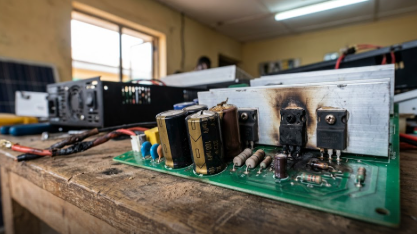
Temperatures frequently hit seasonal highs across West Africa, especially during the intense summer months. Consequently, local solar technicians report a massive spike in system breakdowns across the region. Many homeowners and businesses buy solar systems expecting reliable daily power, but they quickly face unexpected darkness.
The main culprit behind these sudden power outages usually comes down to equipment quality. Specifically, many people do not understand why cheap hybrid inverters fail so quickly in a tropical climate. Manufacturers often test these budget devices in perfectly cooled laboratories. However, these standard laboratory specifications do not match the brutal reality of operating high-voltage solar setups in sub-Saharan Africa. In this article, we will explore the technical engineering gaps that cause these failures. Furthermore, we will explain exactly what you need to look for when upgrading your solar power system.
Understanding Ambient Derating in Cheap Hybrid Inverters
First, we need to understand a technical engineering term called “ambient derating.” Manufacturers rate most budget solar equipment for peak performance at an ideal ambient temperature of 25°C. However, mechanical rooms in Nigeria and other West African countries regularly reach temperatures of 35°C to 40°C.
Therefore, when the room gets too hot, cheap hybrid inverters automatically throttle their output efficiency. They usually drop their power output by 20% to 30% simply to avoid a complete system meltdown. For example, if you buy a 5kVA inverter, it might only give you 3.5kVA of power during a hot afternoon. Ultimately, this significant drop in efficiency leaves your batteries undercharged and your appliances without enough power.
Passive Versus Active Fan Profiles
Besides derating, cooling mechanisms play a huge role in equipment survival. You must understand the hardware difference between passive and active fan profiles to make an informed choice. Manufacturers typically build budget inverters using low-cost sleeve-bearing fans. Unfortunately, these cheap fans fail quickly because they pull thick environmental dust directly into the machine.
On the other hand, high-spec tropical models use much better cooling technology. They feature dual-ball bearing, dust-sealed active cooling loops that meet strict IP65 ratings. Consequently, these premium fans spin faster, last longer, and actively push hot air out of the system. Therefore, if you buy cheap hybrid inverters, you risk losing your cooling fans within a few months, which leads directly to severe overheating and permanent damage.
The High DC-Voltage Risk for Cheap Hybrid Inverters
Another major reason why cheap hybrid inverters fail involves high direct current (DC) voltage risks. When the blazing African sun heats your solar panels, the panels experience a significant physical change. Specifically, their voltage drops, but their electrical current (amperage) heavily increases to compensate for the heat.
This sudden increase in amperage creates a massive thermal load on your equipment. Unfortunately, the basic Maximum Power Point Tracking (MPPT) controllers inside budget inverters cannot handle this sustained heat. Because they lack heavy-duty components, the excess amperage causes premature capacitor blowouts. To put it simply, the extra heat literally fries the internal electronics. Consequently, the inverter immediately stops converting solar energy into usable electricity.
The True Tropical Checklist for Inverters
To avoid these frustrating breakdowns, you must carefully check the specifications before you buy. Do not just look at the price tag. Instead, use this concrete “True Tropical” checklist to find a system that will easily survive extreme heat.
First, always look for inverters certified for up to 50°C operation. This certification guarantees the machine will handle intense afternoon heat waves without dropping its power output. Second, ensure the equipment features isolated cooling ducts. These specialized ducts separate harmful dust from the sensitive circuit boards, greatly extending the machine’s lifespan. Finally, verify that the inverter has robust surge protection tolerances to guard against unpredictable grid spikes.
Conclusion and Further Reading
In summary, buying low-quality solar equipment often costs you much more money in the long run. Extreme tropical heat exposes every single weakness in budget electronics. From aggressive ambient derating and failed cooling fans to blown capacitors, cheap hybrid inverters simply cannot survive Sub-Saharan African summers. Therefore, investing in premium, high-heat certified equipment remains the smartest choice for reliable engineering projects. If you want to dive deeper into how extreme heat affects solar panel efficiency and explore more advanced engineering solutions, I highly recommend reading this detailed guide on the impacts of temperature on solar cells at Energy.gov.
References
- Energy.gov. (n.d.). How Does Heat Affect Solar Panel Efficiency? U.S. Department of Energy.
- Standard Solar Engineering Specifications on Ambient Derating and MPPT Thermal Loads.
International Electrotechnical Commission (IEC). IP65 Enclosure and Cooling Fan Ratings for Tropical Climates.