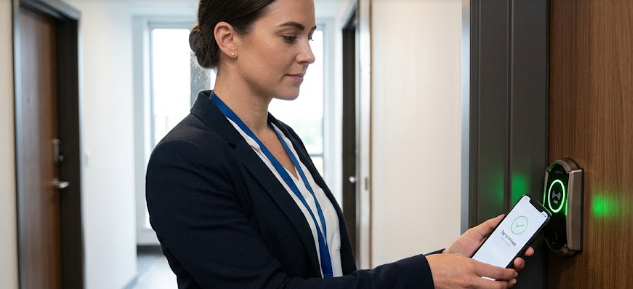
Property tech is changing very fast this week. Many real estate agents and landlords face constant issues with traditional Wi-Fi door locks because those legacy systems drop connections or run out of battery. Fortunately, property developers are moving toward a new solution called offline-tap smart locks to solve these issues. These systems do not rely on a cloud network, which protects them from internet downtime and hacking. Consequently, this hardware-isolated security style is quickly becoming the top choice for modern buildings.
How Offline-Tap Smart Locks Work Without Internet
You might wonder how a lock can grant remote access without an active internet or cellular connection. The answer lies in a clever hardware feature called the cryptographic time-sync specification. This system works exactly like the offline security keyfobs that banks use for secure online logins.
Inside the lock, a tiny internal clock synchronizes perfectly with the property manager’s mobile app. When a tenant needs to enter, the manager generates a unique access code on their phone app from anywhere in the world. Because both the app and the lock follow the exact same mathematical timing pattern, the lock decrypts the code completely offline. Therefore, you do not need to install expensive Wi-Fi routers near every single apartment door.
The End of Battery Maintenance Problems
Older smart home locks caused a lot of stress because their batteries would die without warning. This annoying issue often locked out agents and short-term rental guests. However, emerging 2026 mortise-style models completely solve this problem with a no-battery-maintenance infrastructure.
These advanced units include fast biometric fingerprint sensors and built-in security cameras. More importantly, they feature external wireless power transfer pads. If the lock ever completely loses power, a user can hold their smartphone against the pad to power the lock instantly via induction. As a result, dead internal batteries will never cause a lockout ticket again.
Matter Over Thread Power Savings for Offline-Tap Smart Locks
For readers on specsfinder.info who love new smart home standards, these devices offer another huge technical benefit. When an active local network is available, these locks do not use energy-hungry Wi-Fi. Instead, they connect to low-energy Thread mesh networks using the universal Matter protocol.
This system allows the offline-tap smart locks to communicate efficiently with other smart devices in the building. Because Thread uses very little power, these units draw less than 20% of the standby power that older Wi-Fi locks require. Furthermore, the mesh network expands its reach automatically as you add more devices, making the signal highly reliable.
Higher Profits and ROI for Real Estate Groups
Swapping to this new hardware brings a massive return on investment (ROI) for property management companies. Recent industry data shows that real estate groups cut their maintenance tickets and network setup costs by up to 35% after adopting this offline technology.
For example, managers no longer have to spend hours troubleshooting dropped Wi-Fi signals or changing AA batteries across hundreds of units. This makes the system an immediate selling point for multifamily apartment buildings and new construction projects. Ultimately, installing these modern locks saves time, reduces stress, and protects your rental income.
If you want to upgrade your rental property, choosing offline-tap smart locks is a smart financial move. They offer unbeatable security, low maintenance, and true independence from internet failures. To learn more about how new smart home automation standards change building designs, read this detailed guide on the Official Matter Smart Home Website.
References
- Connectivity Standards Alliance (2026). Matter Protocol and Thread Mesh Networking Standards.
- National Real Estate Technology Council (2025). Operational ROI of Decentralized Hardware in Multifamily Housing.