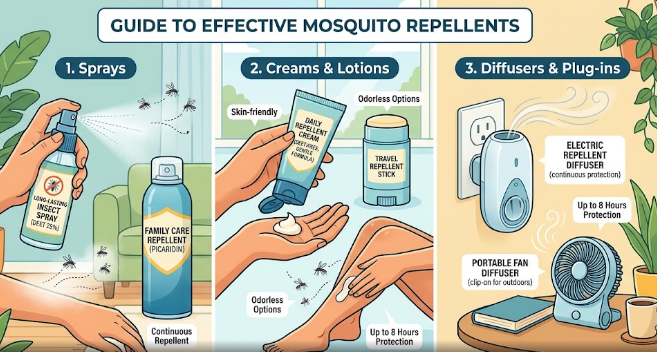
Mosquitoes make outdoor play and indoor rest very uncomfortable. These tiny pests also spread dangerous diseases like malaria and yellow fever. Finding the best mosquito repellents protects your health and keeps your family safe. Many products promise full protection, but they do not all work the same way. You must select options that match your daily activities. This guide breaks down the top choices so you can shop with confidence.
+————————————————————————-+
| MOSQUITO REPELLENT SUMMARY GUIDE |
+——————-+——————–+——————+————-+
| ACTIVE INGREDIENT | PROTECTION DURATION| SAFETY AGE LIMIT | BEST FOR |
+——————-+——————–+——————+————-+
| DEET (20-30%) | 5 to 8 Hours | 2 Months+ | Heavy Duty |
| Picaridin (20%) | 8 to 12 Hours | 2 Years+ | Everyday |
| IR3535 (20%) | 4 to 8 Hours | All Ages | Mild Areas |
| OLE / PMD (30%) | 4 to 6 Hours | 3 Years+ | Plant Lovers|
+——————-+——————–+——————+————-+
Active Ingredients in the Best Mosquito Repellents
Active ingredients determine how long a spray protects your skin. Chemical researchers test these ingredients to prove their safety and power.
DEET and Picaridin Solutions
DEET is the most famous chemical against bug bites. It drives insects away by blocking their scent sensors. A standard 20% to 30% concentration gives you up to eight hours of strong protection. However, DEET can damage plastic gear and synthetic clothes.
Picaridin mimics a natural compound found in black pepper plants. It offers similar protection times without any sticky feel or strong chemical smell. Picaridin will not melt your plastic equipment, making it ideal for outdoor workers.
OLE and IR3535 Formulas
Oil of Lemon Eucalyptus (OLE) comes from the leaves of the lemon eucalyptus tree. Its refined form, PMD, gives four to six hours of solid defense. Health agencies endorse OLE as a reliable plant-based option.
IR3535 is an odorless synthetic ingredient that repels mosquitoes and ticks. It feels gentle on human skin and works well in family lotions.
+————————————————————————-+
| REPELLENT FORMAT COMPARISON TABLE |
+——————+———————–+——————————+
| REPELLENT FORMAT | PRIMARY ADVANTAGE | BEST APPLICATION SCENARIO |
+——————+———————–+——————————+
| Body Sprays | Fast full-body cover | Hiking, camping, and farming |
| Creams & Lotions | Precise application | Children’s face and arms |
| Electric Plugins | Continuous protection | Nighttime bedroom sleep |
| Vapor Coils | Outdoor space defense | Porches, gardens, patios |
| Wearable Bands | Hands-free accessory | Low-risk daytime walks |
+——————+———————–+——————————+
Formats for the Best Mosquito Repellents
Manufacturers design different product formats for specific indoor and outdoor needs.
- Sprays and Aerosols: You can quickly apply sprays over exposed skin and light clothes. They offer the fastest coverage for farm tasks or outdoor sports.
- Creams and Lotions: These products allow controlled application. You can spread them evenly over the arms and legs without breathing in fine mist.
- Electric Diffusers: Wall plugins heat a small liquid bottle to release repelling vapors inside a bedroom. They keep sleeping areas safe all night long.
- Vaporizing Coils: Coils burn slowly to create smoke that clears mosquitoes from outdoor spaces. You should only light them in well-ventilated areas like open yards or porches.
- Wearable Bands: Silicone wristbands release subtle scents. They provide mild protection, but you should combine them with skin lotions for full safety.
Natural vs Chemical Options in the Best Mosquito Repellents
Many people prefer natural sprays because they want to avoid artificial chemicals. Raw essential oils like lemongrass, peppermint, and citronella smell fresh and offer quick relief. However, these crude oils evaporate very fast. They usually stop working within thirty to sixty minutes.
In contrast, EPA-approved agents like DEET, Picaridin, and refined OLE undergo strict laboratory testing. They create an invisible shield that lasts for many hours. While raw plant oils work for short garden visits, heavy pest areas require approved chemical or refined ingredients.
[Raw Essential Oils] ——–> Fades in 30-60 Minutes
[Refined OLE / PMD] ———> Protects for 4-6 Hours
[Picaridin / DEET] ———-> Protects for 6-12 Hours
Safety Rules for the Best Mosquito Repellents
You must follow proper safety rules to protect your family from skin irritation.
- Read Labels Carefully: Always check the age limits on the packaging before applying a product to a child. Health authorities recommend avoiding OLE products on kids under three years old.
- Apply with Your Hands: Spray the liquid onto your adult palms first. Rub it gently on your child’s cheeks and neck while avoiding their eyes, mouth, and open cuts. Never apply repellent to a child’s hands because they might rub their eyes.
- Ensure Proper Ventilation: Only burn mosquito coils outdoors or in open corridors. Running coils inside closed rooms can irritate your lungs.
- Wash Off After Use: Wash your skin with mild soap and water when you return indoors.
Final Picks for the Best Mosquito Repellents
Matching the right product to your situation ensures maximum safety throughout the day.
- For Night Indoor Sleep: Choose a 20% Picaridin lotion for your skin or plug an electric liquid diffuser into your bedroom wall.
- For Outdoor Workers: Use a 20% to 30% DEET or Picaridin spray. You can also treat your work shirts with permethrin spray for double protection.
- For Young Children: Select a mild 10% Picaridin or IR3535 lotion. Apply it carefully to exposed limbs while avoiding their faces and fingers.
For more official medical safety guidelines and bug spray registration details, you can read the CDC’s Insect Repellent Guide.
References
- Centers for Disease Control and Prevention. (2024). Prevent Mosquito Bites. U.S. Department of Health and Human Services.
- Environmental Protection Agency. (2023). Regulation of Insect Repellents. EPA Insect Guidelines.
- World Health Organization. (2023). Malaria Prevention and Vector Control Strategies. WHO Technical Report Series.
- American Academy of Pediatrics. (2022). Choosing Insect Repellents for Children. Pediatric Health Safety Standards.