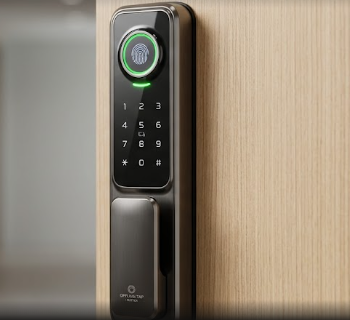
Recently, post-CES industry reports highlighted a major architectural trend in rental property technology. Unstable internet connections and data security concerns cause massive headaches in newly constructed or remote properties. Therefore, innovative brands like Lockly are moving away from cloud reliance. Instead, they actively embrace hardware-isolated local verification. This shift introduces offline-tap smart locks to the real estate market. Consequently, property managers and tenants no longer need constant internet access for secure, daily entry.
How Offline-Tap Smart Locks Work Without Wi-Fi
You might naturally wonder how these locks function without an active internet connection. First, they rely on a clever intermittent connectivity spec. To explain simply, they use a time-synchronized, decentralized cryptographic protocol. Think of this system like the physical banking tokens you use for secure money transfers. Furthermore, property managers easily generate functional access codes remotely via a smartphone app. Then, the lock decrypts this specific code completely offline. As a result, tenants gain secure access smoothly, even if the building’s Wi-Fi drops completely.
The End of Battery Maintenance Hassles
Nothing frustrates a tenant more than coming home to a dead lock battery. Fortunately, manufacturers introduced a brilliant no-battery-maintenance move for offline-tap smart locks. Modern access systems now seamlessly integrate advanced biometric sensors with reliable backup power options. For instance, developers place kinetic backups or wireless power transfer pads directly on the exterior housing. Therefore, a dead internal AA battery will never lock out a tenant or an estate agent during a property showing. You simply power the external pad with your phone and enter the building safely.
Interoperability in Modern Offline-Tap Smart Locks
For our tech-savvy specsfinder.info readers, connectivity still matters when Wi-Fi eventually becomes available. In these ideal situations, these advanced locks utilize Thread mesh networks via modern Matter protocols. Consequently, they draw only a tiny fraction of the power required by legacy 2024 Wi-Fi locks. Moreover, this Matter over Thread interoperability ensures seamless communication with other smart home devices. Thus, you get the absolute best of both worlds: reliable offline security and low-power smart integration.
Boosting Real Estate Valuation and Slashing Overhead
Upgrading to these modern access systems heavily impacts real estate valuation. Real estate developers and property managers love systems that save money and time. In fact, property management data clearly shows that multi-family buildings utilizing offline-tap access lower their operational overhead by an impressive 35%. Additionally, this system completely removes the need for cutting physical keys. It also eliminates the constant stress of continuous network maintenance. Therefore, property owners enjoy much higher profit margins and significantly happier tenants.
Final Thoughts and Further Reading
In conclusion, the real estate industry is rapidly changing, and modern access control stands at the forefront of this exciting evolution. By eliminating the heavy reliance on continuous Wi-Fi and fragile batteries, offline-tap smart locks offer unparalleled convenience. Property owners drastically reduce maintenance costs while providing secure, reliable access. If you want to dive deeper into how smart technology transforms modern living spaces, check out this comprehensive guide on Smart Home Automation by CNET.
References
- Consumer Electronics Show (CES) Post-Event Industry Reports on Smart Access Systems.
- Smart Property Management Data: Operational Overhead Reductions in Multi-Family Buildings.