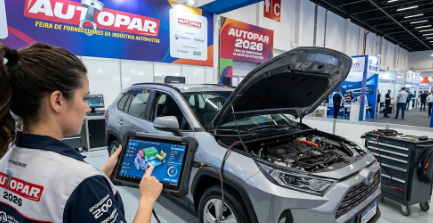
As of May 12, 2026, the automotive industry is buzzing about the latest innovations from AUTOPAR 2026. The biggest takeaway from this year’s show is clear: workshop-oriented diagnostic tools are now the essential standard for vehicle maintenance. For years, car owners used basic code readers to find simple errors. However, modern cars have become much more complex. Consequently, mechanics and DIY enthusiasts now require tools that simulate real-world repair scenarios rather than just displaying raw data.
Going Beyond Simple Error Codes
Modern vehicle health in 2026 focuses on much more than just identifying a “Check Engine” light. Today, brands like ANCEL lead the way by developing workshop-oriented diagnostic tools that feature “Bi-Directional Control.” This technology allows the tool to send commands to the car, rather than just receiving information.
For instance, a technician can now command a car to test its own fuel injectors or activate cooling fans directly from the tablet. This “active” testing cuts diagnostic time by roughly 60%. Instead of guessing which part is broken, the tool forces the component to work. If the part does not respond to the command, the mechanic knows exactly what to replace. This shift saves time and reduces the cost of unnecessary repairs.
The Influence of the Latin American Market
The Brazilian market has significantly influenced the design of these new devices. During the AUTOPAR event, experts highlighted the need for rugged, multi-language tools. Latin American workshops often handle a diverse fleet, ranging from older internal combustion engines (ICE) to the newest hybrid models.
Because of this demand, workshop-oriented diagnostic tools are now built to be tougher. They feature reinforced casings to survive drops on greasy shop floors. Furthermore, these tools now support a wide range of global languages. This inclusivity ensures that technicians everywhere can understand complex data without needing a translator. These rugged designs are becoming the global gold standard for durability.
Efficiency Through Guided Maintenance Specs
Another trending feature from the 2026 showcase is “Guided” maintenance. Modern workshop-oriented diagnostic tools use cloud-sync technology to create pre-diagnostic reports. A technician can scan a car as soon as it arrives at the shop. The tool then sends a detailed report directly to the technician’s tablet or the shop’s main computer.
This system ensures that the shop orders the right parts before the car even enters the repair bay. For example, if the tool detects a failing fuel pump via the cloud scan, the part can be ready by the time the mechanic opens the hood. This level of connectivity eliminates the “wait time” that usually slows down traditional repair shops.
Essential Connectivity for 2026 Vehicles
For readers of specsfinder.info, technical specifications are more important than ever. If you are looking for new workshop-oriented diagnostic tools, you must check for CAN-FD and DoIP protocol support. These are not just “extra” features anymore; they are mandatory for 2024–2026 vehicle architectures.
Newer cars use these high-speed communication protocols to move large amounts of data between various computer modules. Without CAN-FD or DoIP support, your diagnostic tool will simply fail to talk to the car. Investing in a tool with these specs ensures that your equipment remains useful for years to come as car technology continues to evolve.
Final Thoughts on 2026 Standards
The era of the “generic scanner” is officially over. The professional market now demands tools that offer active control, rugged hardware, and high-speed connectivity. By adopting these advanced standards, workshops can provide faster and more accurate service to their customers. To learn more about how vehicle computer systems work, you can visit Car and Driver for more technical insights.
References
- AUTOPAR 2026 Official Event Summary (May 2026).
- ANCEL Automotive Technology: The Shift to Bi-Directional Diagnostics (2026 Report).
- Global Automotive Protocols: Understanding CAN-FD and DoIP in Modern Manufacturing.