10 Raw Veggies to Eat Before Meals for Healthy Blood Sugar

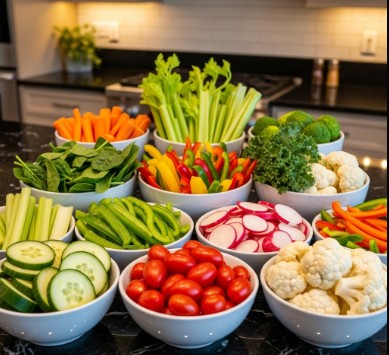
A vibrant assortment of freshly prepared vegetables, each in its own white ceramic bowl, are arranged on a polished black countertop with intricate designs, set within a brightly lit kitchen. The bowls contain a variety of colorful vegetables including crisp cucumber slices, bright orange carrot sticks, slender celery stalks, juicy red cherry tomatoes, vibrant bell pepper strips in red, yellow, and green, thinly sliced radishes, a mix of leafy greens such as spinach and kale, and florets of cauliflower. The kitchen features modern cabinetry and warm overhead lighting that illuminates the scene, highlighting the textures and colors of the produce.

Keeping your blood sugar at a healthy level is very important for your overall health. A simple and effective way to help manage this is by eating some raw vegetables before your main meals. These vegetables are packed with good things like fiber and water, and they generally do not cause a big rise in your blood sugar. Furthermore, they help prepare your digestive system for the meal ahead.

Here are 10 raw veggies to eat before meals that you can easily add to your daily routine:

Crunchy and Watery Choices for Better Blood Sugar

1. Cucumber

This watery vegetable is incredibly refreshing and low in calories and carbohydrates. You simply wash the cucumber and bite into it or cut it into slices. The high-water content helps keep you hydrated, and its fiber provides a minimal but helpful boost.

2. Celery

Celery stalks are mainly water and fiber, making them a superb pre-meal snack. They offer a satisfying crunch that makes you feel fuller sooner. They are great for dipping into a healthy spread like hummus or just chewing on them plain.

3. Lettuce

Different types of lettuce, such as romaine or butter lettuce, are very easy to eat raw. You can quickly toss them into a small side salad or just grab a few leaves. Lettuce adds bulk to your stomach without adding many calories, which also helps manage your blood sugar by reducing the amount of a higher-carb main dish you might eat.

4. Bell Peppers

These colorful vegetables—red, yellow, and green—are naturally sweet and very crunchy. You can cut them into strips for a tasty snack before your meal. The red and yellow varieties contain beneficial antioxidants, and they all offer a good dose of fiber.

Root Vegetables and Leafy Greens for Fiber

5. Carrots

Raw carrots are crunchy and slightly sweet. They are a good source of fiber, specifically the soluble kind. This fiber helps to slow down the absorption of sugar into your bloodstream. You can enjoy them whole or cut into easy-to-eat sticks.

6. Radishes

These small, root vegetables have a peppery and slightly spicy taste. They add a little bit of zing when you eat them raw. Radishes are low in carbohydrates, and their sharp flavor can help cleanse your palate before your main meal.

7. Spinach

Young, raw spinach leaves have a mild flavor and are loaded with nutrients, including magnesium, which plays a role in glucose metabolism. You can easily eat them in a small handful or as the base of a quick, simple salad.

8. Bitter Leaf

This leafy green is very common in places like West Africa and has a distinctly bitter taste. Even chewing on a small leaf or two before a meal is traditionally thought to help manage blood sugar. Research suggests the compounds in bitter leaf may improve insulin sensitivity.

Rounding Out Your Pre-Meal Routine

9. Tomatoes

Though technically a fruit, we use tomatoes like vegetables. They are juicy and full of vitamins, like lycopene. Choose ripe ones! A few slices or a small whole tomato offers a great source of water and minimal sugar before your meal.

10. Cauliflower

Raw cauliflower florets are surprisingly tasty and provide a fantastic crunch. They are very low in carbohydrates. You can eat them plain or, if you like, dip them in a healthy, low-fat dressing.

The Science: Why Raw Veggies Work Before Meals

Why eat them before your meals? Eating these raw vegetables just before your main dish helps you feel fuller. Therefore, you naturally might eat less of the main dish, which often contains more carbohydrates. The fiber in these raw foods also does something crucial: it helps to slow down the process by which sugar from your entire meal enters your blood. This slower release prevents the sharp sugar spikes that can be harmful.

Important Note: While these vegetables are helpful additions, you must always consult with your doctor or a registered nutritionist for personalized advice on managing your blood sugar. They can give you the best plan based on your individual health needs. For more details on the importance of fiber in diet, you can check the Mayo Clinic’s guide to dietary fiber.
Stop Black Pod! Easy Ways to Save Your Cocoa


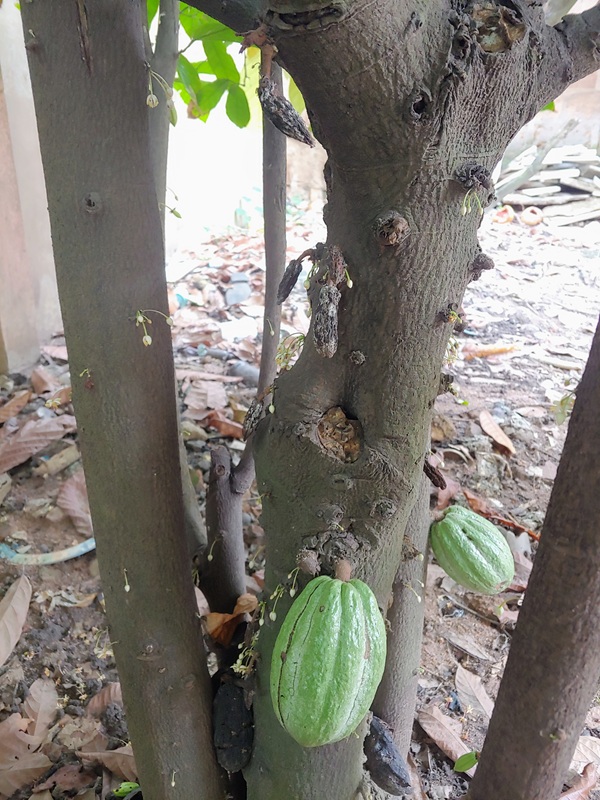
A close-up shot of a cacao tree trunk. The tree has several young, green cacao pods growing from the trunk, but many other pods are shriveled, black, and rotten, indicating a disease like black pod rot. The ground around the base of the tree is covered in leaves and dirt.

Black Pod Disease: A Big Problem for Our Cocoa

If you grow cocoa, you might have heard about a sickness called black pod disease. It’s a really serious problem that can make your cocoa pods rot and lead to a lot less cocoa to sell. Let’s learn what it is and how we can stop it.

What is Black Pod Disease?

Black pod disease is caused by tiny, living things called Phytophthora. Think of them like bad germs for your cocoa trees, but they are not exactly germs. These tiny things love wet and warm places, which is why they are common especially during the rainy season. They attack all parts of the cocoa tree, but they are easiest to see on the cocoa pods themselves.

How to Know Your Cocoa Has Black Pod

When your cocoa trees have black pod disease, you will see some clear signs:

  • Black or Brown Spots: Small spots will appear on the cocoa pods. These spots will quickly grow bigger and turn black or dark brown.
  • Rotting Pods: The inside of the pod will start to rot, and the beans inside will be ruined. Sometimes, the whole pod will become hard and black.
  • White Mold: In very wet weather, you might even see a white, powdery mold growing on the surface of the black spots.
  • Sick Flowers and Young Pods: The disease can also attack the small flowers and young, baby pods, causing them to turn black and die.
  • Stem Problems: Sometimes, the branches and trunk of the tree can also get infected, showing dark patches or even oozing liquid.

If you see these things on your cocoa trees, it’s likely they have black pod disease, and you need to take action quickly.

Easy Ways to Get Rid of Black Pod Disease

The good news is that there are several things you can do to fight black pod disease and keep your cocoa farm healthy. Here are some simple steps:

  1. Clean Your Farm Regularly (Sanitation):
  • Pick Up Bad Pods: Every week, go through your farm and pick all the cocoa pods that have black spots or look rotten. Also, pick up any old, fallen pods from the ground. These bad pods have the “germs” that cause the disease, so getting rid of them helps stop it from spreading.
  • Don’t Leave Rubbish: Keep your farm clean from weeds and other plant waste. These can create a damp environment where the disease likes to grow.
  1. Prune Your Cocoa Trees:
  • Open Up the Trees: Trim the branches of your cocoa trees so that sunlight can get through and the air can flow freely. This helps to dry the pods and leaves, making it harder for the disease to grow.
  1. Harvest on Time:
  • Don’t Wait Too Long: Pick your cocoa pods when they are ripe. Leaving them on the tree for too long, especially when it’s wet, can make them more likely to get infected.
  1. Use Medicine for the Trees (Fungicides):
  • Spray with Copper: There are special sprays called fungicides that can kill the “germs” that cause black pod disease. Sprays that contain copper are often used and work well. You need to spray the pods and the trunk of the tree.
  • Follow Instructions: If you use these sprays, make sure to follow the instructions on the container carefully. It will tell you how much to use and when to spray.
  1. Good Farm Management:
  • Don’t Plant Too Close: When you plant new cocoa trees, give them enough space so they are not too crowded. This helps with air flow.
  • Make Sure Water Drains Well: If your farm stays very wet after rain, try to make ways for the water to drain away. The “germs” that cause black pod love wet conditions.

By doing these things regularly, you can help protect your cocoa farm from black pod disease and have a better harvest. Remember, stopping this disease is important for all cocoa farmers so we can all have healthy and productive farms. If you are not sure what to do, ask other experienced farmers or someone from the agricultural extension services in your area—they can give you good advice for your specific farm

 From 1G to 5G: A Simple Guide to How Internet Speeds Have Changed

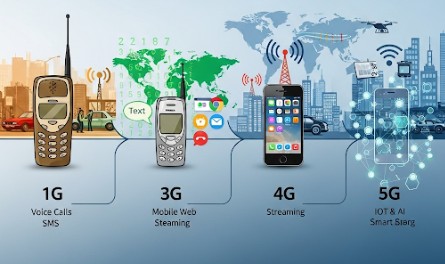
An image showing a timeline of wireless internet technology from 1G to 5G. On the far left, 1G is represented by a large, brick-like mobile phone with a prominent antenna, with text below reading "Voice Calls" and "SMS." Moving right, 2G shows a slightly smaller phone from the early 1990s, with a text message bubble. Next is 3G, depicted with an early smartphone, and icons for web Browse and streaming. 4G is represented by a modern smartphone displaying streaming video. On the far right, 5G is depicted with a futuristic smartphone connected to a network of glowing hexagonal nodes, representing IoT and smart infrastructure.

Think about the first mobile phones. They were big and could only make phone calls. Fast forward to today, and we have phones that can do almost anything, from watching movies in HD to talking to someone on the other side of the world with a video call. This amazing change is all thanks to the different generations of mobile internet. Let’s take a simple look at how our internet has changed from 1G to the super-fast 5G we have today.

1G: The Start of Mobile Calls

The very first generation, 1G, came out in the 1980s. Its main purpose was not for the internet at all. It was for mobile voice calls only. The signal was analog, which meant it was not very clear and could sometimes be a bit fuzzy. There was no such thing as downloading or Browse the internet on a 1G phone.

2G: The First Text Messages

In the 1990s, we got 2G. This was a big change because it used a digital signal. This made phone calls much clearer. The most important thing about 2G was that it allowed us to send text messages (SMS) for the first time. It also offered a very basic, very slow internet. Downloading something small might take several minutes, with speeds of about 9.6 to 40 Kbps (kilobits per second). This was enough for simple emails and very basic web pages.

3G: The First True Mobile Internet

The 2000s brought us 3G, and this is when the mobile internet we know today really started. With 3G, you could finally browse the internet properly on your phone, send emails with photos, and even make simple video calls. The download speeds were a lot faster, with typical speeds ranging from 1 to 2 Mbps (megabits per second). This made the internet a real part of our phones for the first time.

4G: The High-Speed Internet You Know Today

Around 2010, 4G arrived and changed everything. It gave us the high-speed mobile internet we use every day. With 4G, you can easily watch HD videos without buffering, download songs in seconds, and play online games without much lag. The typical download speeds for 4G are between 15 to 40 Mbps, but they can be much faster depending on your network and location. This is the internet that made smartphones truly “smart.”

5G: The Future is Ultra-Fast

5G is the latest and most powerful generation of mobile internet. It is not just a little faster than 4G; it is a giant leap forward. With 5G, you can get typical download speeds of 100 Mbps to over 900 Mbps, and in some cases, even faster. This allows you to download an entire movie in just a few seconds!

5G vs. 4G: Speed and Big New Features

While 4G is fast, 5G is on another level. Here’s a simple comparison:

Feature4G5G
Typical Speed15-40 Mbps100-900+ Mbps
Download TimeA song in seconds, a movie in minutesA song in a flash, a movie in seconds
Lag (Latency)A little bit of lag (e.g., in online games)Almost no lag, very instant
ConnectionsGood for many phones in one areaCan connect to millions of devices in one area

Because of its super-fast speed and almost no lag, 5G can do things that 4G can’t. This includes powering things like self-driving cars, advanced virtual reality (VR) experiences and making things like remote surgery possible, where a doctor can operate on a patient from a different city.

Why You Can’t Upgrade a 4G Phone to 5G

Many people ask why they can’t just do a software update to make their 4G phone work with 5G. The simple answer is that it’s a hardware problem, not a software one.

A 4G phone is built with special parts (a modem and antenna) that can only understand the signals used by 4G networks. 5G uses completely new and different radio frequencies, and a 4G phone simply does not have the hardware to “see” or “hear” these new signals. It’s like trying to get a radio that only plays AM stations to suddenly play FM music—it just doesn’t have the right parts. To use 5G, you need a phone that was built from the start with 5G modems and antennas.