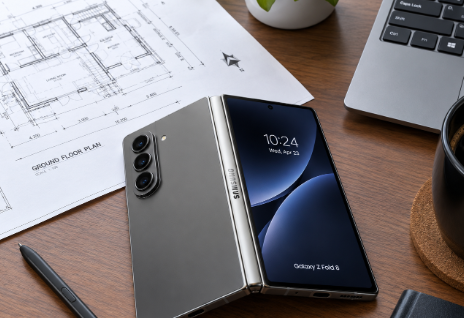
The smartphone industry constantly evolves. Consequently, users always look for devices that combine phone portability with tablet productivity. Recently, Samsung released its newest foldable phone. Many tech enthusiasts wonder if the Samsung Galaxy Z Fold 8 finally represents the maturity of book-style foldables. In this article, we evaluate the structural refinements, display crease visibility, and software multitasking maturity of the Samsung Galaxy Z Fold 8. Furthermore, we will break down complex tech terms into simple English so you can understand exactly what you get for your money.
Durability and Hinge Design of the Samsung Galaxy Z Fold 8
For years, people worried about the physical strength of foldable phones. However, the Samsung Galaxy Z Fold 8 introduces significant structural changes to solve these problems. Firstly, Samsung integrated a new Flex Titanium hinge system. This advanced mechanism makes the phone much lighter, dropping the total weight down to just 201 grams. Additionally, the engineers secured an IP48 rating for the device. As a result, the phone now actively resists solid dust particles larger than 1mm and survives total immersion in water.
Display Crease Visibility on the Samsung Galaxy Z Fold 8
Previously, a visible groove in the middle of the screen annoyed many foldable users. Thankfully, the Samsung Galaxy Z Fold significantly reduces this crease visibility. The new titanium hinge design pulls the ultra-thin glass tighter when opened, which creates a flatter, smoother surface. Moreover, Samsung applied a special anti-reflective coating directly to the inner screen. This smart coating reduces annoying glare from room lights by up to 50%. Therefore, when you watch a video or read a document, the middle crease almost disappears from your view.
Dual Display Usability
Using two different screens requires a seamless and comfortable transition. The Samsung Galaxy Z Fold gives you a 5.5-inch cover screen on the outside and a large 7.6-inch main inner display on the inside. The cover screen now uses a 10:16 aspect ratio, making it wider than previous generations. Consequently, the wider front screen feels exactly like holding a normal, traditional smartphone. You can type text messages comfortably without cramping your fingers. On the other hand, when you unfold the device, the main display gives you a spacious 4:3 shape. For example, viewing complex engineering spreadsheets or wide architectural plans becomes incredibly easy on this large inner canvas.
Multitasking Productivity with the Samsung Galaxy Z Fold 8
Professionals need a phone that handles multiple jobs at once. The Samsung Galaxy Z Fold 8 delivers exceptional multitasking productivity. First, the permanent taskbar feature lets you pin your favorite apps at the bottom of the screen. You can instantly drag and drop these apps to create side-by-side split-screen workflows. Furthermore, app continuity ensures that an app opened on the small cover screen instantly expands to full size when you open the main display. In addition, S Pen support allows you to draw diagrams or sign digital documents quickly across the split screens. Consequently, this device acts just like a mini-computer in your pocket.
Camera and Battery Trade-Offs: Samsung Galaxy Z Fold 8 vs S26 Ultra
Foldable phones often sacrifice camera size and battery capacity to save internal space. The Samsung Galaxy Z Fold 8 features a very capable dual-camera setup on the back, including a 50MP main sensor and a 50MP ultrawide sensor. However, if you compare it directly against a traditional slab flagship like the Galaxy S26 Ultra, the foldable falls slightly short. The S26 Ultra usually packs larger, more advanced camera sensors, such as a massive 200MP lens, for extreme zooming. Additionally, the Samsung Galaxy Z Fold uses a 4,800mAh battery. While this battery easily lasts a full working day, traditional flagships often offer 5,000mAh or larger batteries. Therefore, buyers must accept minor trade-offs in camera zoom and absolute battery capacity to gain the folding screen.
Value Proposition
At a starting price of around $1,900, this foldable requires a major financial investment. Does the refined design justify the premium price tag? For daily productivity users, the answer is yes. The powerful combination of the Snapdragon 8 Elite Gen 5 processor, 12GB of RAM, and massive screen real estate directly saves you time during your workday. Ultimately, you carry both a fully functioning phone and a high-end tablet in a single device. If you highly value workflow efficiency and screen size, the Samsung Galaxy Z Fold 8 offers excellent value for your money.
Conclusion
In conclusion, the Samsung Galaxy Z Fold 8 proves that book-style foldables have finally reached a true level of maturity. Samsung successfully fixed the weak hinges, widened the front screen for natural typing, and perfected the multitasking software. Consequently, this phone serves perfectly as a highly durable daily driver for serious professionals and civil engineers alike. If you want to dive deeper into the specific technical benchmarks, processor scores, and complete network specifications, you can read further on GSM Arena’s official specifications page.
References
- SamMobile: “Samsung Galaxy Z Fold 8: Everything you need to know”
- GSMArena: “Samsung Galaxy Z Fold8 – Full phone specifications”
- Wikipedia: “Samsung Galaxy Z Fold 8”
- Samsung Gulf: “Galaxy Z Fold8: Features, Specs & Key Upgrades”
- Benks: “Samsung Z Fold 8 Hinge Durability: Fold Count & Lifespan (2026)”