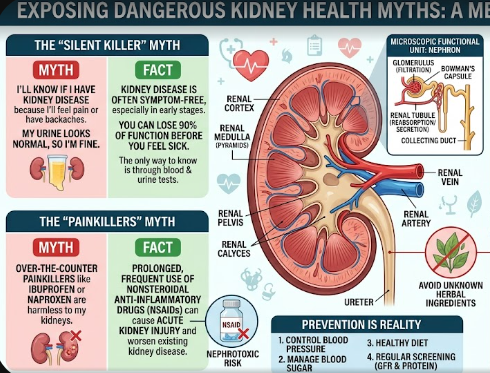
Many people unknowingly expose themselves to life-threatening risks by believing dangerous myths about kidney health. Your kidneys work around the clock to filter waste, regulate body fluids, and produce essential hormones. However, false health claims on social media and traditional beliefs often encourage habits that silently destroy these vital organs. Therefore, we must separate medical facts from popular fiction to protect our body systems.
In this detailed guide, we break down five common misconceptions surrounding renal wellness, herbal mixtures, and daily habits.
Myth 1: Herbal Remedies “Flush” and Cleanse the Kidneys
Many people believe that drinking herbal mixtures, popular concoctions, or traditional remedies (“agbo”) detoxifies the renal system. Consequently, they consume untested botanical extracts to flush out impurities. However, this belief tops the list of dangerous myths about kidney health.
In reality, unverified herbal drinks contain unknown active chemical compounds, pesticides, and heavy metals. When your kidneys attempt to filter these toxic substances, the delicate filtering tubes suffer severe harm. Doctors call this condition acute tubular necrosis, which simply means direct breakdown and death of kidney tissue.
Furthermore, unlike regulated pharmaceutical drugs, herbal mixtures lack standardized dosages. Consequently, taking these concoctions forces your organs to work extra hard, often triggering sudden organ failure.
Myth 2: Normal Urination Means Healthy Kidneys
Another widespread misconception is assuming that producing a regular volume of urine guarantees healthy organs. Therefore, many individuals ignore early medical checkups simply because they visit the restroom normally.
However, your kidneys can lose up to 80% of their functional capacity before your daily urine output changes significantly. The body adjusts by pushing the remaining healthy filters to work overtime. As a result, urine volume usually stays normal until late-stage renal failure occurs.
Instead of relying solely on urine volume, you must pay attention to subtle symptoms. For instance, warning signs include persistent foamy urine, swelling in the ankles, unexplained fatigue, and sudden changes in urination frequency at night.
Myth 3: Kidney Disease Only Strikes Seniors and Heavy Drinkers
Many young adults assume that organ damage only affects elderly individuals or people with heavy alcohol habits. Consequently, young non-drinkers frequently ignore early warning signs and risky daily habits.
In truth, renal disease affects people of all age groups. For example, frequent misuse of common pain relievers—such as non-steroidal anti-inflammatory drugs (NSAIDs)—gradually destroys renal filters over time. Additionally, uncontrolled high blood pressure, diabetes, autoimmune diseases, and genetic conditions frequently trigger kidney failure in young adults who do not drink alcohol.
Furthermore, poor diet choices, high salt intake, and chronic dehydration increase risk levels for everyone. Therefore, age and alcohol abstinence alone do not grant automatic immunity.
Myth 4: Drinking Massive Amounts of Water Cures Existing Organ Damage
Proper hydration unquestionably helps prevent painful kidney stones and urinary tract infections. Consequently, many people wrongly assume that drinking endless gallons of water every day can reverse existing organ damage.
However, over-hydration cannot repair scarred or dead renal tissues. In fact, when a person already suffers from advanced renal failure, their damaged filters cannot balance fluid levels properly. Consequently, drinking massive amounts of water causes fluid build-up in the lungs, ankles, and heart.
Therefore, while healthy individuals should drink adequate water daily, patients with existing kidney disease must strictly follow fluid intake limits set by their medical doctors.
Myth 5: You Will Feel Pain Immediately When Problems Start
Most people expect immediate, sharp back pain whenever an internal organ experiences trouble. Consequently, they assume their health remains intact as long as they feel comfortable.
Unfortunately, early-stage renal failure rarely causes physical pain. The tissue inside the organ lacks pain-sensing nerves, meaning damage develops quietly over many months or years. Typically, physical pain only occurs when you have active kidney stones or direct bacterial infections in the urinary tract.
Therefore, routine blood and urine tests remain the only reliable way to catch problems early. Medical professionals test blood creatinine levels and check urine for excess protein to evaluate your actual renal health accurately.
Taking Action for Better Health
Understanding the true facts helps you avoid habits that trigger silent damage. Instead of relying on untested traditional cleanses, focus on proven health basics. Keep your blood pressure balanced, manage blood sugar levels, avoid non-prescription painkiller abuse, and undergo annual medical checks.
For further reliable guidance on maintaining healthy kidneys, visit the National Kidney Foundation to explore expert medical resources and screening tips.
References
- National Institute of Diabetes and Digestive and Kidney Diseases (NIDDK). Causes of Chronic Kidney Disease. NIDDK, U.S. Department of Health and Human Services.
- World Health Organization (WHO). Traditional Medicine and Kidney Health Safety Guidelines.
- Centers for Disease Control and Prevention (CDC). Chronic Kidney Disease Basics and Risk Factors.
- American Kidney Fund. Common Kidney Myths and Misconceptions Exposed.