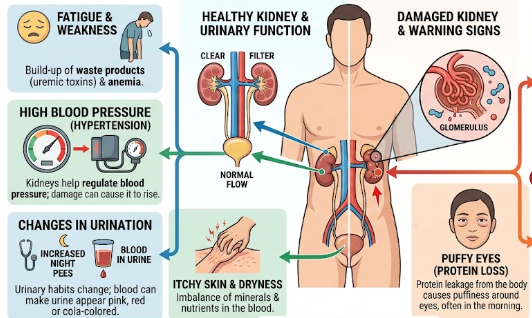
Your kidneys work quietly every second to filter out excess waste, balance vital body fluids, and produce crucial hormones. Because these two bean-shaped organs are remarkably resilient, you might not notice when they face trouble. Medical experts often refer to chronic kidney disease as a “silent killer” for a simple reason. In fact, your body can lose up to 90% of its kidney function before any severe physical symptoms manifest. Consequently, paying close attention to minor physical changes can save your life. Today, we will explore the early warning signs of kidney damage so you can protect your long-term health.
Understanding the Early Warning Signs of Kidney Damage
Your kidneys act much like a household water filtration system. When the filters remain clean, pure water flows out smoothly, and contaminants wash away. However, when the system clogs or deteriorates, subtle clues begin to surface in your daily routine. Recognizing the early warning signs of kidney damage empowers you to take action before irreversible harm takes place. Let us take a detailed look at five key physical red flags you should never overlook.
1. Persistent Foamy or Frothy Urine
Healthy kidneys filter waste while keeping precious molecules like proteins inside your bloodstream. However, damaged kidney filters (called glomeruli) start leaking a key protein named albumin into your urine.
As a result, when this protein hits the toilet water, it creates a thick layer of foam or persistent froth. Unlike normal bubbles that pop within seconds, this foam resembles whipped eggs and lingers in the bowl. Therefore, if you notice recurring foam during your daily bathroom visits, your kidneys may be sending a critical cry for help.
2. Edema (Swelling in the Feet, Ankles, and Eyelids)
Because impaired kidneys fail to remove excess fluid and sodium from your body, extra water builds up inside your tissue layers. Doctors call this fluid retention edema.
For instance, you might notice that your socks leave deep indentations on your calves at the end of the day. Similarly, your shoes might feel unusually tight, or your eyelids may look puffy every morning. Consequently, unexplained swelling in your lower limbs or around your eyes serves as one of the primary early warning signs of kidney damage.
3. Unexplained Fatigue and Brain Fog
When your kidneys slow down, metabolic waste products begin to accumulate in your blood stream, a dangerous state known as uremia. Additionally, healthy kidneys produce a vital hormone called erythropoietin, which tells your bone marrow to create red blood cells.
As kidney function drops, red blood cell production falls, triggering kidney-related anemia. Therefore, your tissues receive far less oxygen than they require. You will likely feel constantly exhausted, find it hard to concentrate, or experience persistent “brain fog” despite getting a full night of rest.
4. Noticeable Changes in Urination Patterns
Because your kidneys control fluid balance, any major shift in your daily bathroom habits warrants attention. You should monitor two specific changes:
- Frequent Nighttime Urination (Nocturia): Waking up multiple times throughout the night to pass urine can mean the kidney filters have lost their concentrating ability.
- Sudden Drops in Volume: Passing significantly less urine despite drinking your usual amount of water signals a severe decline in filtration capacity.
Thus, tracking these shifts helps you spot subtle disruptions early.
5. Persistent Dry, Itchy Skin
As metabolic toxins build up and mineral balances warp, your skin often reacts. Damaged kidneys struggle to maintain the right balance of minerals like calcium and phosphorus in your blood. As a result, many people suffer from severe, deep-seated skin itching that lotions fail to relieve.
Vital Diagnostic Tests You Should Request
Fortunately, simple medical screenings can detect kidney trouble long before physical symptoms escalate into a crisis. If you suspect any issues, you should request two low-cost baseline tests from your doctor:
- Urinalysis: A quick dipstick test that checks your urine sample for microscopic traces of protein (albumin) and blood cells.
- Serum Creatinine and eGFR Blood Test: A basic blood test that measures creatinine (a muscle waste product). Your doctor uses this value to calculate your Estimated Glomerular Filtration Rate (eGFR), which measures your exact kidney capacity percentage.
Taking Action for Your Health
By staying proactive, you can slow down or even reverse many underlying causes of kidney stress through dietary changes, hydration, and medical care. If you observe any of these early warning signs of kidney damage, schedule a quick visit with a medical practitioner immediately. For more detailed clinical guidelines on maintaining optimal kidney health, you can visit the National Kidney Foundation for further reading and expert health advice.
References
- National Kidney Foundation. (2023). Stage 1 and Stage 2 Chronic Kidney Disease (CKD). NKF Clinical Guidelines.
- Centers for Disease Control and Prevention. (2024). Chronic Kidney Disease in the United States. U.S. Department of Health and Human Services.
- Mayo Clinic. (2023). Symptoms and Causes of Chronic Kidney Disease. Mayo Foundation for Medical Education and Research.