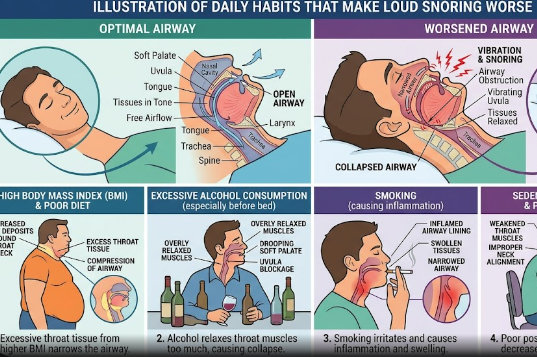
Many people suffer from noisy sleep without realizing that their daily choices play a huge role. In fact, specific daily habits that make loud snoring worse can transform mild breathing sounds into disruptive nighttime noises. When air cannot flow freely through your nose and throat, the surrounding tissues vibrate loudly. By understanding how your body reacts to routine choices, you can take control of your sleep health.
Anatomical Factors and Daily Habits That Make Loud Snoring Worse
Before examining lifestyle choices, you should understand how physical traits contribute to snoring. For example, a thicker neck circumference creates extra pressure on your airway when you lie down. Similarly, enlarged tonsils or a low, thick soft palate narrow the physical space available for airflow.
In addition, a deviated nasal septum blocks one side of your nose, forcing you to breathe through your mouth. As you grow older, your throat muscles naturally lose tone and relax more during sleep. When these biological factors combine with daily habits that make loud snoring worse, nighttime breathing becomes significantly harder.
Evening Alcohol Consumption and Airway Relaxation
Drinking a nightcap before bed might help you feel sleepy, but it severely harms your sleep quality. Alcohol acts as a potent muscle relaxant throughout your entire body. Consequently, it relaxes the muscles in your throat and tongue far too much.
When these muscles lose their firmness, your tongue sags backward into your airway. As a result, the throat tissues collapse inward and vibrate intensely every time you inhale. Therefore, cutting out late-night alcohol is one of the fastest ways to quiet your sleep.
Heavy Late Dinners Restrict Deep Lung Expansion
Eating a heavy dinner right before bedtime creates immediate physical strain on your respiratory system. When you fill your stomach with a large meal, your digestive system works on overdrive while you lie flat.
As a result, a full stomach pushes upward against your diaphragm. This upward pressure directly restricts your lungs from expanding deeply during sleep. Because your lungs cannot draw air smoothly, your body pulls air harder through your upper airway, which creates loud snoring sounds.
Smoking and Vaping Inflame Your Upper Airways
Smoking cigarettes or vaping subjects your delicate airway tissues to harsh chemical irritants. Consequently, these inhaled irritants cause chronic inflammation along the lining of your nose and throat.
Over time, this swelling narrows the breathing passage considerably. In addition, inflammation triggers your body to produce excess mucus, which further clogs your nasal passages. Therefore, smokers experience higher rates of airway blockage and intense snoring compared to non-smokers.
How to Overcome Daily Habits That Make Loud Snoring Worse
Fortunately, you can fix most of these issues by adjusting your evening routine. First, finish your last meal at least three hours before going to bed. Second, limit alcohol intake to early evening hours so your body can process it before sleep.
Furthermore, quitting smoking will reduce airway swelling and restore healthy airflow within a few weeks. You can also elevate your head with a supportive pillow to keep your throat open naturally. For further reading on sleep health and airway management, visit the Sleep Foundation website.
References
- American Academy of Sleep Medicine. (2021). Snoring and Sleep Apnea: Causes, Symptoms, and Treatments. SleepEducation.org.
- Harvard Health Publishing. (2023). Snoring: Solutions for a Quiet Night. Harvard Medical School.
- Mayo Clinic. (2022). Snoring: Symptoms and Causes. Mayo Foundation for Medical Education and Research.