Why 2026 Housing Codes are Forcing the Switch to High-Albedo Cool Roofs

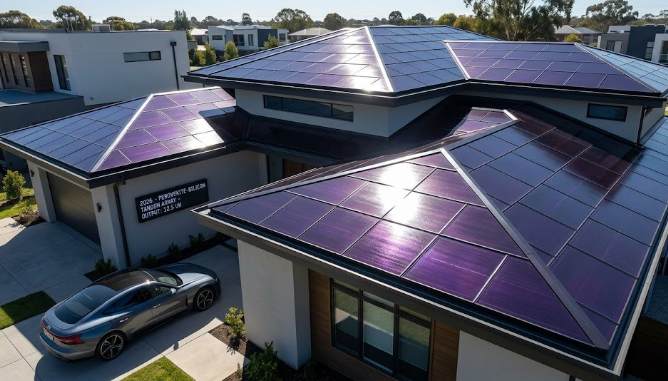
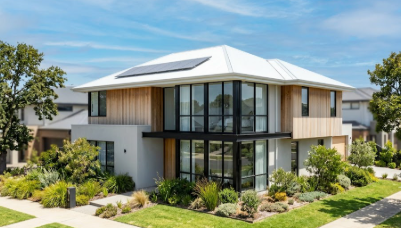
A modern residential building featuring High-Albedo Cool Roofs to improve energy efficiency.

As of this week, several major cities have officially updated their building codes to mandate the use of High-Albedo Cool Roofs. This regulatory shift marks a turning point in how we design our urban environments. For years, dark shingles dominated our skylines, but these surfaces trap immense amounts of heat. Consequently, engineers and policymakers are now prioritizing reflective technology to combat the “Urban Heat Island” effect. This article explores why this structural engineering shift is becoming the new standard for modern construction.

Understanding the Solar Reflectance Index (SRI)

To understand High-Albedo Cool Roofs, we must first look at the Albedo Spec, specifically the Solar Reflectance Index (SRI). The SRI measures a surface’s ability to reject solar heat. For example, a standard dark roof absorbs most sunlight and has an SRI close to 0. In contrast, new 2026 building codes require a “Cool Roof” to maintain an SRI of at least 78. This high rating ensures that the building reflects the majority of solar radiation back into the atmosphere rather than absorbing it into the structure.

Improving Thermal Performance and Energy Specs

The thermal performance of these materials is truly impressive. On a typical 35°C afternoon, a traditional dark roof can easily reach a scorching 65°C. However, High-Albedo Cool Roofs stay significantly cooler, often remaining under 45°C under the same conditions. Because the roof stays cooler, less heat transfers into the living spaces below. This temperature difference reduces air conditioning energy “specs” by up to 15%. Consequently, homeowners enjoy lower utility bills while the local power grid experiences less strain during peak summer months.

Modern Materials Beyond White Paint

Many people assume that a cool roof must be a bucket of white paint, but 2026 trends show great material diversity. For instance, manufacturers now produce “Cool Asphalt” shingles that look like traditional roofing but contain specialized reflective granules. Additionally, modern homes with flat roofs often utilize single-ply PVC membranes. These membranes provide excellent waterproofing while meeting the strict requirements for High-Albedo Cool Roofs. These innovations allow developers to maintain aesthetic variety while still following the new environmental laws.

Boosting Longevity Through Heat Reduction

Beyond energy savings, High-Albedo Cool Roofs offer a significant advantage in terms of durability. High heat causes roofing materials to expand and contract aggressively throughout the day. This constant movement leads to cracks, leaks, and general degradation over time. Because cool roofs absorb less heat, they undergo less thermal stress. Engineers estimate that this switch effectively increases the roof’s lifespan by approximately 25%. This longevity makes the technology a major selling point for developers looking to provide long-term value to their clients.

A Structural Shift for the Future

The move toward reflective roofing is not merely a design trend; it is a necessary evolution in civil engineering. By implementing High-Albedo Cool Roofs, we are creating buildings that work with the environment rather than against it. As more cities adopt these 2026 housing codes, we can expect cooler neighborhoods and more sustainable cities. If you are planning a renovation or a new build, choosing a high-albedo surface is the smartest way to protect your investment. You can find more technical data on sustainable building materials at the Whole Building Design Guide.

References

  • Global Cool Cities Alliance (2025). The Impact of Reflective Surfaces on Urban Heat.
  • International Code Council (2026). Updated Residential Building Standards: Section 402.3.

Lawrence Berkeley National Laboratory (2024). Solar Reflectance Index and Energy Efficiency in Modern Housing.
Community Solar for Renters: How Virtual Net Metering Works

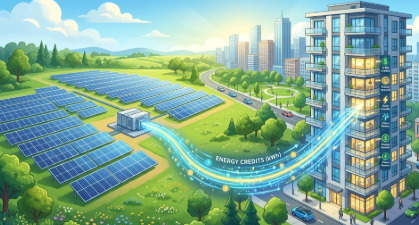
A digital illustration showing how community solar for renters transfers energy credits from a solar farm to an urban apartment building.

For a long time, people who lived in apartments felt left out of the green energy movement. If you do not own a roof, you cannot install solar panels. However, recent changes in 2026 have made community solar for renters a reality for millions of people. This system allows you to benefit from the sun even if you live in a high-rise building or a small studio. Recent updates from the U.S. Department of Energy now make it easier than ever to sign up for these programs.

What is Community Solar for Renters?

Community solar is a large array of solar panels located at an off-site facility, often called a solar farm. Instead of putting panels on your own roof, you “subscribe” to a share of this large farm. Consequently, you receive a portion of the electricity that those panels produce. This setup is perfect for the 40% of people who rent or live in condos. You simply sign up for a plan, and the clean energy produced elsewhere helps power your life.

The Power of Virtual Net Metering

The most important technical “spec” in this system is Virtual Net Metering (VNM). Normally, a meter on your house tracks the power your roof panels make. With VNM, the utility company tracks the power made by the off-site solar farm instead. They look at your specific share of the farm and then credit your monthly bill directly. For example, if your share produces $50 worth of electricity, the utility company subtracts $50 from your total bill. Therefore, you save money without ever touching a solar panel.

How Community Solar for Renters Uses the 2026 Tax Credit

In 2026, the Federal Residential Solar Tax Credit remains at a peak of 30%. In the past, only homeowners who bought panels could claim this tax break. However, new regulators have changed the rules to favor subscribers. Now, if you participate in community solar for renters, you can often claim a portion of this 30% credit on your taxes. This change makes subscribing to a solar farm just as financially rewarding as owning your own system.

Battery-as-a-Service and Shared Energy Storage

Many new community projects now include “Shared Mega-Batteries.” This is often called Battery-as-a-Service. These massive batteries store extra energy during the day when the sun is brightest. Later, the system releases that power during the evening when electricity prices are usually higher. Because of this, subscribers can avoid expensive “Time-of-Use” rates. Even if you live in a tiny apartment, you benefit from industrial-grade energy storage technology.

The Rise of Solar-Inclusive Leases

The real estate market is changing because of community solar for renters. Many landlords in big cities now offer “Solar-Inclusive Leases” as a premium feature. In this scenario, the property owner handles the solar subscription for the entire building. They then market the units as “Zero-Carbon Living” spaces. This is a great deal for tenants because it simplifies their bills. Furthermore, it increases the value of the property for the landlord.

If you want to find a program near you, check your local utility website for available solar farms. For more technical details on how energy credits are calculated, you can read more about solar energy programs at the Department of Energy website.

References

  • U.S. Department of Energy. (2026). Expanding Access to Community Solar for Renters and Multi-Family Housing.
  • Federal Energy Regulatory Commission (FERC). (2026). Guidelines for Virtual Net Metering and Off-site Credits.

National Renewable Energy Laboratory (NREL). (2025). The Economic Impact of Shared Battery Storage in Urban Environments.

 Bifacial Solar Panels: Why 2026 is the Year Your Roof Generates Power from the Bottom Up

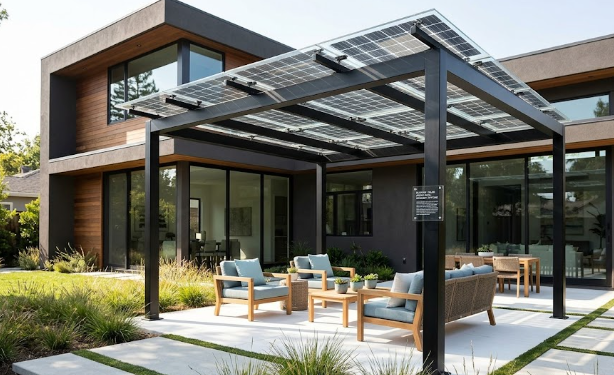
 A modern residential home featuring Bifacial Solar Panels installed on a pergola to capture sunlight from both sides.

For many years, homeowners only had one option for solar energy: panels that catch light from the top. However, Bifacial Solar Panels have changed the game in 2026. While these dual-sided modules were once only for large utility farms, they are now the standard for residential carports and flat roofs. These panels are unique because they possess the ability to generate electricity from both the front and the back surfaces.

Understanding the Science of the Albedo Effect

The secret behind the success of Bifacial Solar Panels lies in something scientists call the “Albedo” effect. This term describes how much sunlight a surface reflects. Traditional panels only use direct sunlight hitting the top. In contrast, bifacial modules capture that same direct light on the front while their rear side drinks up reflected light from the ground.

When sunlight hits the area beneath your panels, it bounces back upward. Because Bifacial Solar Panels have transparent back layers, they catch this “waste” light and turn it into extra power. Depending on the color of your roof or ground, this simple bounce can increase your total energy yield by anywhere from 5% to 30%. This makes your solar system much more efficient without taking up more space.

Optimal Specs for a Successful Installation

If you want to maximize your energy, you must follow specific installation rules for Bifacial Solar Panels. Unlike traditional panels that sit flush against a slanted roof, these need breathing room. Experts recommend at least 30cm of clearance between the panel and the mounting surface. This gap allows enough light to move underneath the module and reflect back onto the rear cells.

Furthermore, the height of the installation plays a huge role in performance. If you mount them too low, you block the light path and lose the rear-side benefit. Because of this requirement, Bifacial Solar Panels are perfect for pergolas, carports, and elevated racks on flat-roof townhouses. These setups provide the necessary elevation to ensure the back of the panel stays productive all day long.

The White Roof Synergy Trend

A major trend taking over the industry in 2026 is pairing Bifacial Solar Panels with “cool roofs.” Homeowners are now painting their roofs white or light grey to create a highly reflective surface. Since white surfaces have a high Albedo, they bounce significantly more light than dark shingles or black rubber.

This synergy creates a massive boost in power production. When you use a white roof, you ensure that the rear side of your Bifacial Solar Panels works at its maximum capacity. This combination not only generates more green energy but also helps keep your building cooler by reflecting heat away. It is a win-win situation for both your electricity bill and the environment.

Superior Durability and Double-Glass Construction

Beyond just power gains, Bifacial Solar Panels offer incredible physical strength. Most manufacturers now use double-glass construction instead of the traditional plastic backsheet. This design means the solar cells are sandwiched between two layers of tempered glass. Because glass does not degrade like plastic, these panels handle extreme weather and UV rays much better.

This shift in material has led to a new industry standard for longevity. Many companies now offer 30-year warranties on Bifacial Solar Panels, which is longer than the traditional 25-year average. You are not just buying a tool for energy; you are investing in a durable piece of glass that resists moisture and wind for decades.

Choosing the Right Tech for Your Home

As we move through 2026, the cost of this technology continues to drop. While the panels might cost slightly more upfront, the extra energy they produce pays for that difference quickly. If you have a flat roof or plan to build a solar patio, Bifacial Solar Panels are likely your best option. They turn every ray of light—even the ones that hit the ground—into usable power for your home.

You should always consult with a professional to see if your roof color and height are suitable for this technology. By capturing light from the bottom up, you ensure your home stays at the cutting edge of renewable energy. For a deeper look into how solar technology is evolving this year, you can read more at Solar Power World.

References

  • International Energy Agency (IEA). (2025). Trends in Photovoltaic Applications.
  • National Renewable Energy Laboratory (NREL). (2026). Bifacial Photovoltaics: Performance and Challenges.

Solar Energy Industries Association (SEIA). (2026). Residential Solar Standards and Albedo Gains.

 Perovskite-Silicon Tandem Cells: The 2026 Tech Making Standard Solar Panels Obsolete

 A modern residential roof featuring high-efficiency Perovskite-Silicon Tandem Cells capturing sunlight in 2026.

For several decades, standard silicon panels have been the primary choice for homeowners. However, as of May 2026, we are witnessing a massive shift in the industry. Perovskite-Silicon Tandem Cells have officially moved from specialized laboratories into the residential market. These advanced cells offer a way to generate significantly more electricity from the same amount of sunlight.

Engineers and homeowners alike are excited because this technology finally breaks the performance limits of traditional solar. While standard panels stayed around 20% efficiency for a long time, these new tandem cells change the game completely. Consequently, people can now power their entire homes with fewer panels on their roofs.

Breaking the 25% Efficiency Barrier

In 2024, most premium solar panels peaked at an efficiency of about 22.8%. This meant that a large portion of the sunlight hitting the panel simply went to waste. Today, in 2026, commercial Perovskite-Silicon Tandem Cells are hitting 25% to 27% efficiency in real-world conditions.

This jump in performance provides a massive advantage for homeowners with limited roof space. For example, if you needed ten standard panels to run your air conditioner in the past, you might only need eight panels today. Furthermore, this 20% reduction in the number of panels lowers the total weight on your roof structure.

How Perovskite-Silicon Tandem Cells Work

You might wonder how these cells achieve such high numbers. The secret lies in the “tandem” design, which uses two different layers to catch light. In a standard setup, silicon often misses certain colors of light. However, Perovskite-Silicon Tandem Cells use a top layer of perovskite to capture high-energy blue light waves.

Underneath that, a traditional silicon layer captures the low-energy red and infrared light. By working together, the two layers harvest a much wider spectrum of sunlight. Imagine two different sized nets catching different types of fish in the same pond; you will naturally catch more fish than someone using only one net.

Lightweight and Flexible Solar Solutions

Standard silicon cells are usually thick and brittle, which requires heavy glass protection. On the other hand, the layers in Perovskite-Silicon Tandem Cells are incredibly thin. Because these layers use less material, manufacturers are now producing ultralight, flexible panels.

These flexible modules are perfect for curved roofs or RVs. You no longer have to sacrifice power for portability. For instance, a small van can now generate as much power as a small residential array used to produce a few years ago. Additionally, these panels are much easier to transport and install due to their reduced weight.

Ensuring Stability and Longevity

In the past, the main concern regarding perovskite was its durability. Early versions often broke down when exposed to moisture or extreme heat. Fortunately, 2026 models feature revolutionary encapsulation technology. This protective coating seals the Perovskite-Silicon Tandem Cells perfectly from the environment.

Manufacturers now provide a 20-year lifespan guarantee for these modules. This matches the longevity of pure silicon panels that we have trusted for years. Therefore, you can invest in this high-efficiency technology without worrying that the panels will stop working after just a few summers.

The Future of Your Home Power

This is a turning point for sustainable building design. We are moving toward a future where every surface can generate high-quality electricity efficiently. Perovskite-Silicon Tandem Cells represent the most significant leap in solar technology in our generation. If you are planning a solar installation this year, these cells offer the best return on your investment. You can learn more about the technical specifications and chemical makeup of these cells at the National Renewable Energy Laboratory.

References

  • International Journal of Photoenergy (2025). “Advances in Tandem Cell Encapsulation.”
  • Solar Power World (2026). “Market Trends: The Rise of Perovskite in Residential Areas.”
  • Global Energy Review (2026). “Efficiency Records in Commercial Solar Modules.”