Many people view snoring as just a harmless, annoying habit. However, medical research shows that constant nighttime noise is often a sign of a deeper health problem. Understanding how chronic loud snoring damages the body over time can help you protect your long-term health before severe complications arise.
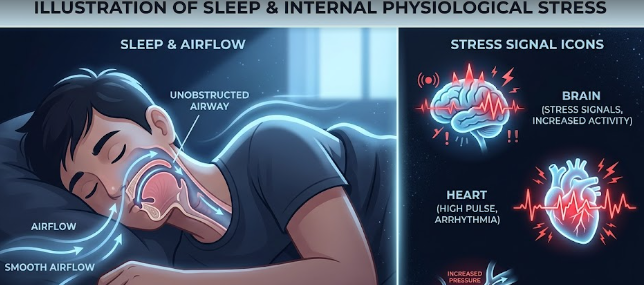
When you snore, your airway partially collapses during sleep. As air forces its way through the narrowed passage, soft tissues in your throat vibrate intensely. While this creates a loud noise, it also forces your body to fight for oxygen every night. This constant night-after-night struggle puts continuous stress on your vital organs.
The Massive Strain on Your Cardiovascular System
When your airway narrows, your oxygen levels drop rapidly. Your brain instantly detects this sudden dangerous drop and triggers a alarm response. Consequently, your sympathetic nervous system pumps stress hormones into your blood to wake you up just enough to breathe.
This repeated rise in stress hormones forces your heart to work much harder every single night. Over months and years, this constant nighttime strain leads to high blood pressure. Additionally, it increases your long-term risks of developing irregular heartbeats, heart failure, and sudden strokes.
How Vibration Harms Your Neck Blood Vessels
The physical sound of snoring causes loud, harsh vibrations inside your neck tissues. Your carotid arteries run right next to your throat, delivering fresh blood directly to your brain. Interestingly, these mechanical sound waves hit the walls of your carotid arteries constantly throughout the night.
Over time, this continuous vibration creates tiny micro-trauma inside these sensitive blood vessels. As your body tries to heal this repeated damage, the arterial walls begin to thicken and harden. As a result, this process increases your risk of developing blocked arteries, which can eventually block blood flow to your brain.
Brain Fatigue and Sleep Loss
To recover properly, your brain relies heavily on deep, uninterrupted sleep cycles. Unfortunately, severe snoring breaks your sleep architecture into hundreds of brief, unnoticed fragments each night. Although you might not remember waking up, your brain never gets the rest it desperately needs.
Without deep restorative sleep, you will likely wake up feeling exhausted and unrefreshed. Furthermore, chronic sleep disruption damages your memory consolidation, lowers your mood, and creates persistent brain fog. Over time, this mental fatigue impairs your ability to focus and greatly increases your risk of burnout.
Taking Control of Your Sleep Health
Snoring is far more than a noise problem; it is a serious physical strain on your vital organs. Fortunately, lifestyle changes, custom mouthpieces, and modern airway therapy devices can quickly stop the damage and restore your energy levels. For more information on this condition, you can explore detailed health insights on WebMD.
References
- American Academy of Sleep Medicine. (2021). The impact of obstructive sleep apnea and snoring on cardiovascular health.
- Mayo Clinic. (2023). Snoring: Symptoms, risks, and long-term health complications.
- Journal of Clinical Sleep Medicine. (2020). Carotid artery wall thickening and chronic snoring vibrations: A long-term clinical study.