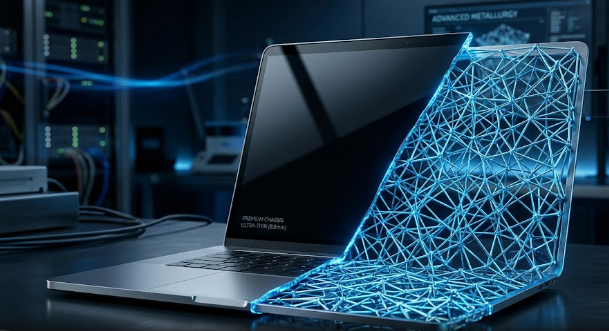
Laptop manufacturers constantly race to build the ultimate thin-and-light laptop. Mobile professionals want devices that feel weightless in their backpacks, yet hardware engineers must ensure these devices do not bend or break. For years, premium brands relied heavily on aluminum to construct device frames. However, standard metals have reached their physical limits because making them thinner makes them too weak.
To solve this problem, metallurgists developed a remarkable material solution. Modern premium ultrabooks now use Magnesium-Lithium alloys to break weight records without sacrificing strength. This advanced material blends the lightest structural metal on Earth with lithium to create a superior laptop chassis. Consequently, this innovation is shifting how engineers design high-end portable computers.
Density and Weight Metrics of Magnesium-Lithium Alloys
To understand why Magnesium-Lithium alloys are special, we must look at density metrics. Density measures how much mass sits within a specific space. Traditional aerospace-grade aluminum, which includes the popular 6000 and 7000 series, has a density of about 2.7 g/cm³. While aluminum feels premium, it adds noticeable weight to a laptop chassis.
On the other hand, standard magnesium-aluminum options drop that density down to roughly 1.8 g/cm³. Manufacturers then add lithium, which is the least dense solid element in the world. As a result, this mixture drops the density of the final alloy to a stunning 1.35 g/cm³.
Therefore, this unique metal matrix creates a laptop frame that is up to 40% lighter than traditional aluminum. Laptop buyers can instantly feel this difference when they pick up a modern 14-inch ultrabook. The material allows the total weight of the device to stay well under the elusive 1 kg (2.2 lbs) threshold.
| Material Type | Average Density (g/cm3) | Weight Reduction vs. Aluminum |
| Aerospace Aluminum (6000/7000) | ~2.70 | 0% (Baseline) |
| Magnesium-Aluminum | ~1.80 | ~33% Lighter |
| Magnesium-Lithium Alloys | ~1.35 | ~40% Lighter |
Strength-to-Weight Ratio and Chassis Integrity
People often worry that a lightweight laptop will feel flimsy or cheap. Fortunately, Magnesium-Lithium alloys offer an incredible strength-to-weight ratio. This specific engineering metric compares the material’s yield strength and stiffness against its overall mass. Hardware engineers use thin-gauge sheets of this metal to build internal frames that resist heavy pressures.
Specifically, this high yield strength prevents annoying chassis flex around the keyboard deck. When you type aggressively, the deck remains perfectly rigid under your hands. Furthermore, the material reinforces the screen hinge area, which experiences high stress every time you open the lid.
Because the metal resists bending so well, designers do not need to make the chassis walls thick. They can stamp out incredibly thin components that still protect delicate internal circuit boards. Ultimately, buyers get a laptop that feels like a solid featherweight weapon rather than a delicate plastic toy.
Damping Capacity Specs and Acoustic Profiles
Beyond weight and strength, Magnesium-Lithium alloys provide surprising acoustic benefits. Every laptop generates internal vibrations from spinning cooling fans and blasting audio speakers. Aluminum shells are highly resonant, meaning they bounce sound waves around and can create an annoying tinny echo.
In contrast, lithium-infused metals feature excellent internal damping capacity specs. Damping represents a material’s natural ability to absorb and dissipate mechanical vibrations. The unique crystal structure of this alloy turns those tiny vibrations into harmless, microscopic amounts of heat.
As a result, the laptop chassis kills internal speaker resonance before it reaches your ears. Fan motor vibrations disappear into the frame instead of rattling across your desk. This creates a remarkably quiet acoustic profile, allowing premium laptops to sound clean and feel incredibly smooth during heavy use.
Thermal Conductivity Coefficients and Engineering Challenges
While this metal sounds perfect, hardware engineers must balance some clear thermal design limitations. Magnesium-Lithium alloys have a lower thermal conductivity coefficient than pure aluminum. This means the metal does not pull heat away from hot processor chips as quickly as an aluminum shell does.
Heat Source (CPU) —> [Graphite Shield / Vapor Chamber] —> Slow Dissipation via Mg-Li Chassis
Because the chassis cannot act as a giant heat sink by itself, engineers must design smarter internal cooling systems. They cannot rely on the outer shell alone to keep the laptop cool. If they design it poorly, the laptop will get uncomfortably hot on your lap.
To fix this issue, modern ultra-light laptops use advanced internal thermal shielding. Designers install ultra-thin active vapor chambers and highly conductive graphite sheets. These parts spread the heat evenly across a wider internal surface area before it reaches the outer alloy skin. This objective design choice keeps performance high while enjoying the benefits of a lightweight build.
Choosing Your Next Ultra-Light Laptop
When you look for a premium ultrabook, check the structural chassis specifications carefully. If you see Magnesium-Lithium alloys on the spec sheet, you know you are buying cutting-edge metallurgy. This material offers a rare mix of extreme weight loss, rugged strength, and quiet operation.
However, you should also check reviewer notes regarding laptop surface temperatures. Make sure the manufacturer paired the exotic metal frame with a great internal vapor chamber or cooling fans. For a deeper look into how modern engineers test these advanced metallic structures under extreme real-world stress, read this comprehensive guide on materials testing methods across industrial applications.
References
- Avedesian, M. M., & Baker, H. (1999). Magnesium and Magnesium Alloys. ASM International.
- Kojima, Y., & Kawamura, Y. (2007). Development of ultra-lightweight Magnesium-Lithium alloys. Materials Science Forum, 561, 123-128.
- Polmear, I., StJohn, D., Nie, J. F., & Qian, M. (2017). Light Alloys: Metallurgy of the Light Metals. Butterworth-Heinemann.