Nvidia RTX Spark Superchip: Deconstructing the 3nm Arm Architecture for Laptops

 A sleek laptop showing the futuristic Nvidia RTX Spark Superchip running advanced AI tasks.

Recently, Nvidia and MediaTek announced the Nvidia RTX Spark Superchip. This powerful processor changes how Windows laptops work. For years, laptop makers used older x86 designs. Now, they are moving to advanced Arm-based architectures. Therefore, AI developers, heavy content creators, and portable workstation buyers need to understand this monumental shift.

The new chip provides incredible speed and massive efficiency for complex tasks. Before now, developers needed a massive desktop computer to run large AI models. Today, you can perform these heavy tasks right on your laptop. Next, we will break down the hardware that makes this magic happen.

The 3nm Hardware Manifest of the Nvidia RTX Spark Superchip

Nvidia and MediaTek designed the Nvidia RTX Spark Superchip to dominate the market. They build it entirely on TSMC’s cutting-edge 3nm node. This tiny size means the chip packs more power into less space. As a result, the laptop stays very thin and light.

Let us look at the layout. The chip features a powerful 20-core Grace CPU. Alongside this CPU, Nvidia includes a Blackwell-architecture GPU. This GPU boasts 6,144 CUDA cores. Consequently, the chip handles basic computing and heavy graphics at the same time. For instance, if you edit a 12K video, the CPU organizes the files while the GPU renders the high-quality images smoothly.

Unified Coherent Memory Throughput

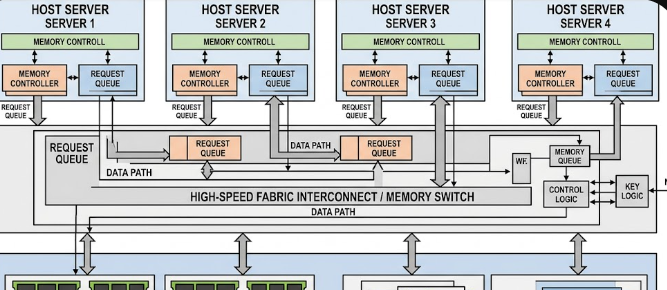
The Nvidia RTX Spark Superchip also features an amazing memory system. Traditional computers use separate memory pools for the CPU and the GPU. In the past, this separation created annoying bottlenecks. Data moved slowly between the two parts.

However, this new chip packs up to 128GB of unified, coherent memory directly on the package. Because of this design, both the CPU and the GPU access the same data pools simultaneously. They do not wait for data to travel across slow PCIe lanes. For example, when you load a massive 90GB 3D scene, the laptop processes it instantly. It blows past traditional memory limits and keeps your workflow moving fast.

The Local Petaflop Metric Explained

You might hear experts say the Nvidia RTX Spark Superchip delivers 1 petaflop of local compute. This metric sounds confusing, but it simply means the chip performs one quadrillion calculations per second. In the past, only massive cloud servers reached this speed.

Now, this math translates into incredible local AI workflows. Developers can run massively complex, 120-billion-parameter local AI models fully offline. You do not need an internet connection to use advanced AI agents. You run them right on your laptop keyboard deck. Furthermore, this local execution keeps your private data secure because it never leaves your machine.

Thermal and TDP Profile of the Nvidia RTX Spark Superchip

Heavy performance usually generates massive heat, but this chip changes the game. We must contrast this unified Arm superchip’s total power envelope against traditional high-end x86 gaming laptops. Older gaming laptops require a split 45W CPU and a power-hungry 140W discrete GPU. They generate excessive heat and drain batteries in an hour.

In contrast, the Nvidia RTX Spark Superchip delivers comparable creative performance while using a fraction of the power. MediaTek’s intelligent power management keeps the chip cool. Consequently, you get a slim laptop with all-day battery life. Finally, you can explore more about this hardware shift online. For further reading on this groundbreaking technology, visit the Nvidia Newsroom.

References

  • Nvidia. (2026). NVIDIA and Microsoft Reinvent Windows PCs for the Age of Personal AI. Nvidia Newsroom.
  • MediaTek. (2026). RTX Spark | Next Era of Windows PCs. MediaTek Products.
  • PCMag. (2026). Nvidia Unveils RTX Spark, an Arm-Based Superchip for Windows PCs. PCMag Technology News.

Multi-Refresh-Mode Gaming Panels: Dynamic Frequency and Resolution Explained

Gamers and creative professionals often face a tough choice. You either buy a 4K display for crisp visuals, or you buy a 1080p display for lightning-fast speeds. Consequently, many people crowd their desks with a dual-monitor setup. However, the display industry has finally solved this problem. The latest multi-refresh-mode gaming panels offer a single, highly adaptive solution. These innovative displays give you the best of both worlds in one sleek package. Whether you are editing a video or competing in an esports tournament, you get exactly what you need. In this article, we will explore how these monitors work and why they are replacing traditional desktop setups.

The Dual and Triple Persona Profile of Multi-Refresh-Mode Gaming Panels

During the Computex 2026 event, major brands revealed impressive 2026 dual-mode and triple-mode panels. For example, the newest Tandem OLED and Mini-LED displays operate with distinct “personas.” You can run the monitor in a pristine 4K resolution for cinematic gaming or creative work. Then, you simply press a dedicated hardware hotkey on the monitor bezel. Instantly, the display firmware switches the panel to a high-speed esports configuration.

Furthermore, this toggle happens entirely inside the monitor itself. You do not need to restart your computer or dig through confusing Windows display settings. The hardware communicates the new profile directly to your graphics card in seconds. Therefore, hardcore esports players can easily practice tracking targets at ultra-high speeds, and creative professionals can instantly switch back to a gorgeous canvas for photo editing.

Pixel Binning and Scaled Timing Metrics

To understand how multi-refresh-mode gaming panels achieve this, we must look closely at the display physics. Normally, a standard monitor forces your computer to stretch a low-resolution image across a high-resolution grid. This stretching creates a blurry, soft image. However, modern dual-mode displays use pixel binning and scaled timing metrics to fix this fundamental issue.

When you shift the panel from its native creation mode (like 4K UHD at 240Hz) down to an aggressive esports tournament configuration (like 1080p at 480Hz or 540Hz), the monitor groups the physical pixels together. It applies strict integer scaling to map one logical pixel directly onto a 2×2 block of physical pixels. As a result, the image remains incredibly sharp. You get the blistering speed of a 1080p monitor without losing the crisp edges you expect from a premium display.

Dynamic Frequency and Resolution (DFR) Logic

The real magic lives inside the scaler hardware running inside the monitor. This underlying technology is known as Dynamic Frequency and Resolution (DFR). Instead of relying on fuzzy, blurry software-level GPU upscaling, the display handles everything natively. The monitor pools adjacent subpixels directly on the Timing Controller (T-CON) chip.

Additionally, the T-CON chip automatically adjusts its internal timing clocks. By lowering the resolution, the hardware frees up massive amounts of processing bandwidth. The monitor then uses this extra bandwidth to double or triple the refresh rate. For instance, some 2026 triple-mode panels can even run at 1440p at 360Hz or drop to 1080p at a staggering 680Hz. Because the hardware controls this DFR logic, you experience zero input lag and perfect motion clarity.

Subpixel Layout and Text Clarity Fixes in Multi-Refresh-Mode Gaming Panels

Historically, high-refresh OLED gaming monitors struggled heavily with everyday office productivity tasks. Older panels used unusual subpixel configurations that caused severe text fringing and blurry letters. Creative professionals hated this artifacting when writing articles or reading spreadsheets. Thankfully, 2026 RGB-stripe Tandem OLED variations have altered their subpixel configurations completely.

These new multi-refresh-mode gaming panels remove the problematic white subpixel found in older WOLED displays. Instead, they use a traditional RGB-stripe layout. This vital structural change completely eliminates fringing and text-blurring artifacts. Consequently, the monitor renders sharp, clear text that easily rivals any professional IPS display. You can comfortably read code, manage your websites, or design graphics all day without straining your eyes.

Conclusion

Ultimately, multi-refresh-mode gaming panels represent a massive leap forward for desktop technology. You no longer need to compromise between visual fidelity and competitive speed. By integrating advanced DFR logic, integer scaling, and perfected RGB-stripe subpixel layouts, these monitors handle everything flawlessly. If you are ready to declutter your desk and upgrade your digital workspace, you should definitely consider these adaptive displays. For further reading on display scaling and refresh rate technologies, check out this comprehensive guide on monitor refresh rate advancements.

References

  • Laptop Outlet. (2026). Dual Mode vs Standard Gaming Monitors: Which One Should You Choose?
  • TFTCentral. (2026). The Future of Dual-mode Monitors – New Displays and Improved Specs Explored.
  • ViewSonic Library. (2026). What is a Dual Mode Monitor?

Wi-Fi Audio Mode vs. High-Bitrate Bluetooth: The 4.2 Mbps Earbud Spec War

A modern smartphone and premium earbuds side-by-side, illustrating the Wi-Fi Audio Mode vs. High-Bitrate Bluetooth speed comparison.

Welcome to the ultimate audio spec war of 2026. If you love high-resolution media, you already know that wireless earbuds constantly battle technical limits. Today, audiophiles and premium smartphone buyers face a tough choice when comparing Wi-Fi Audio Mode vs. High-Bitrate Bluetooth. For years, engineers relied solely on standard wireless signals to transmit sound. However, the demand for true lossless audio has forced manufacturers to innovate. Consequently, a massive shift is happening right now in flagship mobile devices. This article breaks down everything you need to know about this new technology. We will explore the bitrate bottleneck, the amazing 4.2 Mbps metric, and the battery life trade-offs.

Understanding the Bitrate Bottleneck

First, we must look at the limitations of older technology. Even the most advanced standard codecs, like LDAC or aptX Adaptive, face a serious problem. They typically top out around 990 kbps to 1.2 Mbps. Therefore, these connections act like a narrow pipe trying to carry a massive river of data. As a result, the technology must compress true lossless 24-bit/192kHz audio tracks so they can fit through the connection.

Consequently, audiophiles lose some of the rich, original details in their favorite music. The audio engine removes data to keep the stream playing without skipping. For a long time, users accepted this compromise because standard wireless connections simply lacked the necessary speed. However, consumers now demand perfection from their high-end media players and premium earbuds.

The Revolutionary Wi-Fi Audio Shift

To solve this problem, manufacturers introduced a groundbreaking solution. In 2026 flagships, such as the Xiaomi Buds 5 Pro paired with Ultra chipsets, engineers implemented a newly emerging specification. They created a localized, ultra-low-power Wi-Fi link between the phone and the earbuds.

Furthermore, the software dynamically switches the earbuds to this faster connection whenever you play a high-resolution track. When you examine Wi-Fi Audio Mode vs. High-Bitrate Bluetooth, you immediately notice the difference in raw power. Instead of relying on crowded standard wireless frequencies, the devices establish a dedicated, private network just for your music. This immediate shift completely changes how we experience portable audio.

Decoding the 4.2 Mbps Metric

Next, let us break down the numbers behind this massive improvement. This new dual-connectivity protocol scales the throughput bandwidth up to an incredible 4.2 Mbps. To understand this, we must look at the mathematics of high-resolution sound. For instance, a standard CD-quality track requires about 1.4 Mbps of uncompressed data. Meanwhile, advanced studio-quality files demand much more space.

By utilizing a 4.2 Mbps link, the system easily streams entirely uncompressed, bit-perfect audio straight to the earbud’s digital-to-analog converter (DAC). Consider the math for a studio-quality 24-bit/96kHz stereo track:

$24 \text{ bits/sample} \times 96,000 \text{ samples/second} \times 2 \text{ channels} = 4,608,000 \text{ bps}$

With standard lossless data packaging (like FLAC or ALAC) compressing the file size by roughly 50% without losing quality, this stream easily fits well within the 4.2 Mbps limit. Therefore, you hear the music exactly as the producer recorded it in the studio.

Battery Management: Wi-Fi Audio Mode vs. High-Bitrate Bluetooth

Of course, every technical breakthrough comes with a specific trade-off. We must address the battery management floors when comparing these two modes. In typical operation, the standard wireless mode yields up to 8 hours of continuous playback on a single charge because it uses very little energy.

On the other hand, the high power draw of continuous Wi-Fi data streaming significantly drains the earbud’s internal battery. However, manufacturers solved this problem through massive battery optimization in the charging case. Even though the earbuds themselves drain faster, the highly optimized case rapidly tops them up, maintaining a rough total runtime of about 10 hours.

Ultimately, the choice between these two incredible technologies depends on how you prioritize audio perfection over battery life. As this specification war continues to heat up in 2026, music lovers emerge as the clear winners. For further reading on high-resolution digital-to-analog converters and wireless standards, please visit What Hi-Fi? to explore more audio equipment reviews.

References

High-Resolution Audio Board (2025). Understanding Bitrate Bottlenecks in Modern Codecs.

Audio Engineering Society (2026). Advancements in Localized Ultra-Low-Power Networking for Wearables.

Hybrid Inference Orchestration: The Local Server Protocol in Gen 3 Silicon

In 2026, laptops are no longer just simple computers. They are advanced local servers. Today, developers and tech enthusiasts talk constantly about Hybrid Inference Orchestration. This new technology completely changes how our devices handle Agentic AI. Previously, laptops struggled with complex tasks. Now, they manage them easily. Furthermore, this breakthrough ensures your private data stays safely on your machine.

The Infrastructure Problem with AI

First, we must understand the main infrastructure problem. Running complex, multi-step AI agents entirely in the cloud costs too much money. Additionally, it creates massive privacy risks for users. When you ask an AI to read your private emails, you certainly do not want that data leaving your device.

On the other hand, standard processors quickly buckle under continuous local reasoning tasks. They simply get too hot and drain your laptop battery rapidly. Consequently, the tech industry desperately needed a better solution to handle these heavy workloads efficiently.

Defining the Hybrid Inference Orchestration Spec

To solve this problem, engineers created a new architectural framework. They showcased this brilliant solution at Computex 2026. Experts officially call it the Hybrid Inference Orchestration spec.

For example, Perplexity recently demonstrated its hybrid local server engines running flawlessly on Intel Core Ultra and Arc Series 3 hardware. Essentially, this setup turns your laptop into a smart traffic controller. Instead of doing all the heavy lifting alone, the system smartly splits the work. Therefore, it perfectly balances processing power and battery efficiency.

Dynamic Task Routing in Hybrid Inference Orchestration

Next, let us look closely at dynamic task routing. When you give your computer a prompt, the local system software instantly evaluates it. The software checks the privacy tier, the token depth, and the required math layers.

If the task involves sensitive personal data, the laptop routes the background data preparation strictly to the on-device NPU (Neural Processing Unit). Conversely, if the task requires massive macro-reasoning steps, the system quickly sends those specific, non-private parts to hyperscale cloud servers. Thus, you get the absolute best of both worlds: ultimate privacy and unlimited computing power.

The 1:1 CPU-to-GPU Ratio Shift

Finally, we must examine the physical hardware changes inside the chassis. The rapid transition from simple chatbots to autonomous agents forced hardware architectures to shift their balance entirely. In the past, CPUs dominated the motherboard layout.

However, modern Agentic AI demands intense visual processing and parallel data handling. As a result, engineers now demand a strict 1:1 ratio of CPU orchestration to GPU rendering power inside the device. This crucial shift ensures your laptop never bottlenecks when running advanced AI models locally.

Conclusion

In conclusion, Hybrid Inference Orchestration represents the true future of personal computing. It fixes the cloud cost problem, protects your privacy, and upgrades your hardware. As a result, your 2026 laptop serves as a highly capable local AI server. If you want to dive deeper into how Gen 3 Silicon hardware components physically connect and communicate, please visit Tom’s Hardware for further reading on the topic.

References

  • Intel Corporation. (2026). Computex 2026 Press Release: Gen 3 Silicon and the Future of AI.
  • Perplexity AI. (2026). Architecture Whitepaper: Local

Consumer Sleep Apnea Detection: FDA-Cleared Wearable Sensor Specs Explained

 A smartwatch analyzing consumer sleep apnea detection data on a user's wrist.

Have you ever wondered how your smartwatch knows if you sleep well? Today, consumer sleep apnea detection changes how we monitor our health. Manufacturers now build powerful medical-grade tools right into our daily wearables. Consequently, you no longer need to rely solely on bulky hospital equipment to catch early warning signs. In this article, we will explore the technology behind these life-saving devices. Furthermore, we will break down the complex FDA-cleared wearable sensor specs into simple terms so you know exactly what your smartwatch is doing.

Moving Beyond Basic Tracking for Consumer Sleep Apnea Detection

A few years ago, smartwatches only tracked basic sleep stages. They used simple accelerometers to guess if you were awake or asleep based on your tosses and turns. However, modern devices, like the Apple Watch Series 10 or specialized fitness rings, do much more. They utilize advanced diagnostic metrics to monitor your health deeply.

Therefore, the shift from simple motion tracking to true consumer sleep apnea detection represents a massive leap in wearable technology. Engineers now pack sophisticated sensors into tiny spaces. As a result, these modern wearables analyze your body’s vital signs precisely. They look for specific patterns rather than just measuring your movements. This upgrade gives users actionable health data, ultimately bridging the gap between consumer gadgets and clinical tools.

The Breathing Disturbance Index in Consumer Sleep Apnea Detection

To understand these devices, you must learn about the Breathing Disturbance Index (BDI). This metric plays a crucial role in modern consumer sleep apnea detection. Specifically, the hardware tracks microscopic wrist or finger movements. Simultaneously, the sensors watch for sudden, brief drops in your blood oxygen levels (SpO2).

When the device detects both events at once, it records a breathing disruption. Over time, the wearable calculates these disruptions to form your baseline BDI. For example, if you stop breathing for a few seconds, your blood oxygen drops. The watch immediately catches this subtle change. Consequently, this detailed tracking helps the software recognize patterns over several nights. By combining motion and oxygen data, these gadgets provide highly accurate health insights.

PPG Sampling Frequencies and Battery Management

You might wonder how these small devices capture such precise data. They use Photoplethysmography (PPG) sensors to shine light into your skin and measure blood flow. To achieve FDA clearance for consumer sleep apnea detection, the sensor must change its behavior during the night. Specifically, it must increase its sampling rate during deep sleep phases.

This fast sampling demands a lot of power. Therefore, engineers face a tough challenge. They must run the sensors frequently without completely draining the device’s small milliamp-hour (mAh) battery. Fortunately, smart algorithms solve this problem. The watch only triggers high-frequency sampling when you enter specific sleep stages. Thus, it saves battery life while still capturing the critical medical-grade data needed for accurate analysis.

Data Aggregation Tolerances for Consumer Sleep Apnea Detection

It is important to know that these wearables do not diagnose you instantly after one night. Instead, they rely on strict data aggregation tolerances to ensure accuracy. The algorithms demand a 10-to-14-day data profile to confidently evaluate your sleep. This waiting period is essential for reliable consumer sleep apnea detection.

Why do they need so much time? They must safely filter out false positives. Sometimes, a simple night of snoring, a stuffy nose, or standard restlessness can look like a breathing issue. By analyzing your data over two weeks, the system establishes your normal baseline. Finally, if the device consistently detects irregular breathing patterns over this period, it alerts you.

Conclusion

In summary, modern wearables offer incredible tools for monitoring our health. The shift toward medical-grade sensors makes early intervention easier than ever before. From tracking your Breathing Disturbance Index to managing PPG sensor battery life, the engineering behind these gadgets is truly remarkable. If you want to dive deeper into how medical devices receive approval and track such data, check out this comprehensive guide on FDA digital health regulations. By understanding these features, you can make better choices when buying your next health-focused smartwatch.

References

  1. U.S. Food and Drug Administration (FDA). “Digital Health Center of Excellence.” FDA.gov.
  2. Apple Inc. “Sleep Apnea Notifications on Apple Watch.” Apple Health Feature Summaries, 2024.
  3. National Sleep Foundation. “Understanding Sleep Apnea and Wearable Technology.” SleepFoundation.org, 2023.

 Reclaimed E-Waste Computing: Minimalist AR-Dependent Motherboards

A compact pocket gadget built through reclaimed e-waste computing, connected via a USB-C cable to modern AR glasses.

Technology moves incredibly fast, leaving behind a massive trail of discarded devices. However, hardware modders and sustainable tech advocates now use reclaimed e-waste computing to build powerful, environmentally friendly new gadgets. This process takes perfectly good processors and motherboards from broken devices and gives them a second life. Instead of throwing away a portable gaming console with a shattered screen, engineers extract the motherboard and build a brand-new, minimalist device. Consequently, this practice saves money, prevents pollution, and protects the environment.

The Screenless Form Factor

Furthermore, the most exciting part of this trend is the screenless form factor. Modern designers now decouple processing hardware from integrated screens entirely. For example, some DIY hardware modders take broken Steam Deck motherboards and turn them into dedicated pocket compute blocks. Since the original built-in screen no longer works, they remove it from the design. As a result, the new device becomes a tiny, powerful computer that easily fits in your pocket. This approach completely changes how we think about mobile gaming and portable computing.

AR Glasses Tethering Specs in Reclaimed E-Waste Computing

How do you use a portable computer without a screen? You connect it directly to augmented reality (AR) glasses. Therefore, the physical input/output (I/O) specifications of these devices focus heavily on modern USB connections. These minimalist computing shells completely omit traditional built-in display controllers. Instead, they rely strictly on alt-mode DisplayPort over USB-C to transmit visual data.

In addition, this single USB-C cable feeds high-quality images directly into wearable AR optics, such as Xreal or Rokid frames. Because the device does not need to power an internal screen, the internal wiring becomes much simpler. You simply plug your AR glasses into the pocket compute block, and a massive virtual screen appears right in front of your eyes. Thus, reclaimed e-waste computing works perfectly with modern wearable displays.

Amazing Thermal Design Advantages

Moreover, removing the built-in screen offers massive physical engineering benefits. Traditional portable devices struggle with heat. An integrated LCD or OLED display, along with its bright backlight, generates a massive amount of heat inside the device shell. In fact, removing the display eliminates up to 40% of the device’s total internal heat generation.

Consequently, this massive drop in heat allows engineers to install highly compact cooling loops. Without the extra heat from a screen, the cooling system focuses entirely on the main processor. As a result, the primary System on Chip (SoC) runs at peak boost clocks indefinitely without overheating. Gamers enjoy smoother frame rates, and the device stays perfectly cool in your hands or pocket.

Circular Manufacturing Metrics and Reclaimed E-Waste Computing

Ultimately, this minimalist architecture sets new standards for global sustainability. Builders heavily utilize post-consumer recycled (PCR) plastics to create the hard outer shells for the new devices. They combine these recycled plastics with reclaimed silicon architectures to create a fully circular manufacturing process.

Therefore, analysts can establish a clear benchmark for analyzing a device’s total lifecycle carbon cost per compute cycle. Reclaimed e-waste computing drastically lowers this carbon cost because it reuses existing, energy-intensive components instead of manufacturing new ones from raw materials. This approach proves that high-performance mobile gaming hardware can also be highly sustainable.

Conclusion and Further Reading

In conclusion, reclaimed e-waste computing represents the future of sustainable, high-performance portable technology. By dropping the built-in screen and relying entirely on external AR glasses, these gadgets offer better cooling, faster processing, and a much lower environmental footprint. If you want to dive deeper into how circular electronics manufacturing impacts global sustainability, you can read more about it at the World Economic Forum’s Circular Economy page.

References

  • World Economic Forum. (2019). A New Circular Vision for Electronics: Time for a Global Reboot.
  • Xreal & Rokid Hardware Documentation. (2025). Alt-Mode DisplayPort over USB-C Specifications for Wearable Optics.