Best Budget Monitors for Content Creators and Bloggers

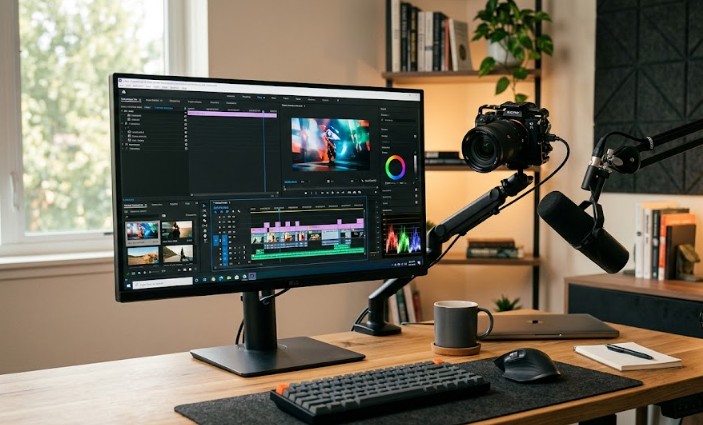
A professional desk setup showcasing one of the best budget monitors for content creators and bloggers with vibrant screen colors.

As a content creator, you definitely need a display that shows colors accurately and keeps your eyes safe. Choosing between many options can feel overwhelming when you have a tight budget. However, finding the best budget monitors for content creators and bloggers is easier than you think if you know what to look for. You must balance resolution, color coverage, and comfort to produce high-quality videos and blog posts. In this guide, we will compare the top affordable displays available in 2026 to help you make the right choice.

Comparing 4K vs. QHD Resolution

When you search for the best budget monitors for content creators and bloggers, you will encounter two main resolutions: 4K and QHD. 4K resolution offers 3840 x 2160 pixels, providing incredible sharpness for video editing. On the other hand, QHD (also known as 1440p) features 2560 x 1440 pixels. While 4K looks better, QHD is often cheaper and puts less strain on your computer’s graphics card.

If you edit 4K video for YouTube, a 4K monitor allows you to see every detail clearly. However, many bloggers prefer QHD because it offers a perfect balance of screen space and affordability. For a 27-inch screen, QHD provides a sharp image without requiring you to scale your text too much.

Understanding Color Accuracy and sRGB Percentages

Color accuracy is the most important factor for any visual artist. You should look for monitors that cover at least 99% of the sRGB color space. This ensures that the colors you see on your screen match what your audience sees on their devices. Many affordable monitors now come factory-calibrated, which saves you the stress of manual tuning.

For example, the ASUS ProArt series is famous for its high color precision at a low price point. These monitors often include a “Delta E” rating of less than 2. A lower Delta E value means the color error is almost invisible to the human eye. This level of detail makes them the best budget monitors for content creators and bloggers who care about professional results.

The Importance of Eye-Care Technology

Spending long hours in front of a screen can lead to digital eye strain. Therefore, the best budget monitors for content creators and bloggers must include advanced eye-care technology. Look for features like “Flicker-Free” panels and “Low Blue Light” filters. These tools reduce the harmful blue light that disrupts your sleep and tires your eyes.

Brands like BenQ lead the way with their Brightness Intelligence technology. This feature automatically adjusts the screen brightness based on the lighting in your room. If you write blog posts late at night, this tech will protect your vision and keep you productive for longer periods.

Top Recommendations for 2026

Based on current market trends, several models stand out for their value. The Dell UltraSharp series continues to offer great 4K options for those who want premium builds on a budget. If you prefer a faster refresh rate for occasional gaming and smooth scrolling, the AOC and Gigabyte QHD models are excellent choices.

Monitor ModelResolutionsRGB CoverageKey Feature
ASUS ProArt PA278QVQHD100%Factory Calibrated
Dell S2725QS4K99%Sleek Design
BenQ GW2790QTQHD99%Coding & Eye-Care
LG 27UK650-W4K99%HDR10 Support

Final Thoughts on Choosing Your Display

Selecting the right monitor depends on your specific workflow. If you focus on high-end photography or 4K video, invest in a 4K panel. If you primarily write articles and manage a website, a QHD monitor will serve you perfectly while saving you money. Always prioritize color accuracy and eye comfort to ensure a sustainable creative career. For more detailed technical specifications on display panels, you can check out RTINGS for in-depth lab tests.

References

  • PetaPixel. (2026). The Best Monitors for Photography and Photo Editing in 2026.
  • PCMag. (2026). The Best Cheap Monitors We’ve Tested for 2026.
  • Reolink Tech Blog. (2026). QHD vs. 4K: What’s the Difference for Work and Gaming?
Laser Distance Measurers vs. Traditional Tapes: Accuracy Specs Explained

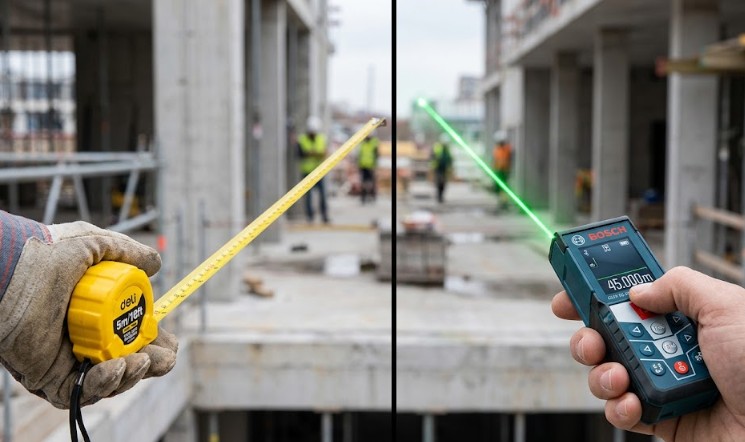
A side-by-side comparison of laser distance measurers vs traditional tapes on a construction site.

Laser Distance Measurers vs. Traditional Tapes

When comparing laser distance measurers vs traditional tapes, you must consider both speed and precision. A traditional tape measure is reliable for short distances, but it often sags over long spans. This sagging introduces small errors that can ruin a structural layout. In contrast, a laser measurer uses a light beam to calculate the distance to a target instantly.

In 2026, these digital tools provide accuracy that a manual tape simply cannot match over long distances. For instance, a high-quality laser device can measure a 100-meter span while you stand perfectly still. This capability eliminates the need for a second person to hold the other end of a tape.

Understanding Accuracy Specs and Margins

The most important specification to check is the accuracy margin. Most professional-grade lasers, like the Bosch GLM 50-27 CG, offer an accuracy of ±1.5mm. This means the measurement is almost always within a tiny fraction of the true distance. High-end models from Leica can even achieve an incredible accuracy of ±1.0mm.

In contrast, a traditional tape is subject to human error and environmental factors. For example, temperature changes can cause a steel tape to expand or contract slightly. Furthermore, reading a physical scale at an awkward angle often leads to “parallax error.” Laser measurers remove these risks by providing a clear digital reading on a backlit screen.

Bosch vs. Leica: Top Rated Models in 2026

If you are looking for the best tools, you will likely choose between Bosch and Leica. The Bosch GLM 150-27 C is a favorite for site engineers because it includes a digital viewfinder. This camera allows you to see exactly where your laser point is landing, even in bright sunlight. It also features a rugged IP65 rating to handle dust and rain.

Leica remains the “gold standard” with models like the Leica DISTO X6. This device uses Point-to-Point (P2P) technology, which allows you to measure the distance between two remote points from a single position. While Leica tools often cost more, their superior optics and build quality justify the investment for complex infrastructure projects.

Bluetooth Connectivity and Mobile Syncing

One of the biggest advantages of laser distance measurers vs traditional tapes is digital documentation. Most modern lasers feature Bluetooth connectivity that pairs with your smartphone. Bosch uses the MeasureOn app, while Leica offers the DISTO Plan app. These apps allow you to overlay measurements directly onto photos or floor plans.

Instead of writing dimensions on a piece of paper that might get lost, you can sync the data to the cloud instantly. This workflow ensures that your office team sees the site data the moment you take the measurement. Consequently, this reduces the time spent on manual data entry and prevents transcription errors.

Comparison Table: Laser vs. Traditional Tape

FeatureTraditional Steel TapeLaser Distance Measurer
Max Range5m – 30m50m – 250m+
Typical Accuracy±2.0mm (Short range)±1.0mm to ±1.5mm
OperationUsually needs 2 peopleSolo operation
Data StorageManual note-takingBluetooth / Internal Memory
DurabilityHigh (No batteries)High (IP65/66 Ratings)

Final Thoughts on Measuring Tools

Ultimately, the choice in the debate of laser distance measurers vs traditional tapes depends on the specific task. For measuring a small pipe diameter, a tape is still the quickest tool. However, for site layouts, room dimensions, and vertical heights, the laser is superior. Investing in a high-quality laser will save you hundreds of hours over a single construction season.
To explore the latest standards in construction measurement accuracy, you can visit the International Organization for Standardization (ISO).

References

  • Bosch Professional. (2026). GLM Series User Manual and Technical Specifications.
  • Leica Geosystems. (2026). Leica DISTO: The Power of P2P Technology.
  • Engineering Surveying Journal. (2025). Comparing Digital vs Manual Measurement Errors in Large Scale Projects.
  • NIST. (2025). Calibration Standards for Laser Distance Measurement Tools.

 Laptop Requirements for Structural Design: Running AutoCAD and RCC Spreadsheets

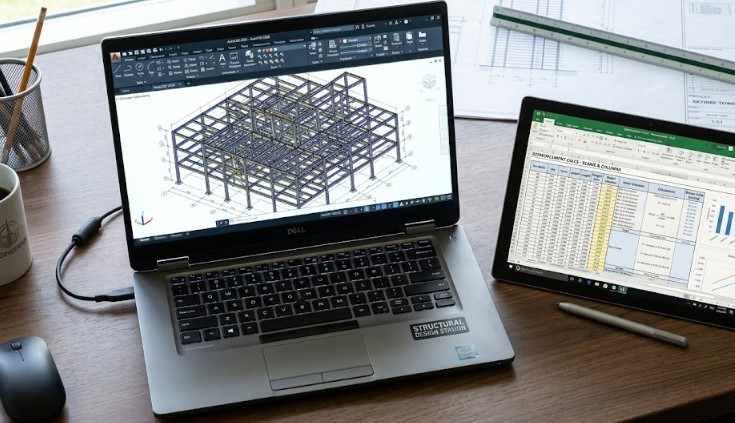
A high-performance laptop showing the laptop requirements for structural design by running AutoCAD and RCC spreadsheets.

Laptop Requirements for Structural Design

To work efficiently, you must understand the laptop requirements for structural design before making a purchase. Structural engineering tasks, especially 3D modeling and large-scale calculations, demand high “single-core” processor speeds and plenty of temporary memory. While a basic laptop might open a file, only a high-performance machine will let you design without the frustration of lag.

Processor: The Brain of Your Design Station

The processor (CPU) handles every command you give to AutoCAD. For structural design, you should look for an Intel Core i7 or an AMD Ryzen 7 as your starting point. These processors offer the high clock speeds (measured in GHz) that AutoCAD needs to move lines and objects instantly.

In 2026, the recommended spec is a processor with a boost speed of 4.5GHz or higher. If you choose a budget i5 processor, you might notice “ghosting” or delays when you zoom in on a complex reinforcement detail while using your RCC spreadsheets.

RAM: Handling Heavy Spreadsheets and Multitasking

RAM is the “short-term memory” of your laptop. If you run out of RAM, your laptop will slow down to a crawl. For the laptop requirements for structural design in 2026, 16GB of RAM is the absolute minimum. However, we strongly recommend 32GB if you plan to keep your design software, Excel, and many browser tabs open at the same time.

Large RCC spreadsheets often use complex macros and thousands of formulas to calculate steel areas. With 32GB of RAM, your laptop can hold all this data ready for instant access. This prevents the “Not Responding” error that haunts many engineers when they update a design.

Graphics Card (GPU) and Screen Quality

AutoCAD is a visual tool. While a standard integrated graphics card can work for simple 2D drawings, 3D structural modeling requires a dedicated GPU. Look for a laptop with at least an NVIDIA RTX 40-series (like the 4050 or 4060) with 6GB to 8GB of VRAM to ensure smooth performance.

Furthermore, ensure your screen has at least a 1080p resolution. As a structural engineer, you spend hours looking at fine lines and small text. A high-brightness screen (400 nits or more) will also help if you need to review a drawing or check RCC spreadsheets while standing on a bright construction site.

Summary of Specs for Structural Engineering

ComponentMinimum SpecRecommended Spec
ProcessorIntel i7 / Ryzen 7 (13th Gen+)Intel i9 / Ryzen 9 (Latest)
RAM16GB DDR532GB or 64GB DDR5
Storage512GB NVMe SSD1TB or 2TB NVMe SSD
Graphics4GB Dedicated VRAM8GB+ Dedicated (RTX Series)

Why an SSD is Essential

Never buy a laptop with a traditional Hard Disk Drive (HDD) for engineering work. A Solid State Drive (SSD) is much faster. It allows AutoCAD to load in seconds rather than minutes. It also makes saving large project files and RCC spreadsheets nearly instantaneous.

For your laptop requirements for structural design, a 1TB SSD provides the best balance between speed and storage space for your growing project library. Choosing the right hardware ensures that your focus stays on the safety of the building rather than the speed of your computer. For a deeper look into professional workstation benchmarks, you can find more information at Autodesk Support.

References

  • Autodesk. (2026). Official System Requirements for AutoCAD 2026.
  • Intel Corp. (2025). Comparing i7 vs i9 for Professional Engineering Workloads.
  • Microsoft. (2026). Optimizing Excel for Large Engineering Calculation Sheets.
  • Structural News. (2025). Top Laptops for Structural Engineers: A 2026 Buying Guide.

Best Smartphones for Civil Engineers in 2026

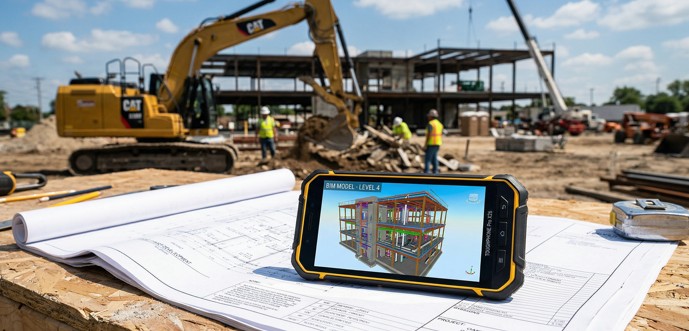
 A rugged smartphone showing a 3D model on a construction site, representing the best smartphones for civil engineers in 2026.

When choosing the best smartphones for civil engineers in 2026, you need to balance two worlds. On one hand, you need a rugged body that survives a 2-meter drop onto gravel. On the other hand, you need high-end specs to run BIM viewers or 3D scanning apps. This year, the market offers incredible options that bridge this gap perfectly.

Toughness and Environmental Protection

A phone on a construction site must have an IP68 rating. This rating ensures your device stays safe against fine dust and water immersion. Many engineers now look for MIL-STD-810H certification as well. This military-grade standard means the phone survived extreme vibration, temperature changes, and repeated drops.

For example, the Samsung Galaxy XCover 7 remains a top choice for field workers. It features a rugged “armored” design that does not require an extra bulky case. It also has a unique “Glove Mode” which allows you to use the touchscreen even while wearing thick safety gloves.

Performance and 3D Scanning Power

Civil engineering now involves a lot of digital documentation. The best smartphones for civil engineers in 2026 must handle more than just phone calls. The latest iPhone 17 Pro and Pro Max models come equipped with advanced LiDAR (Light Detection and Ranging) sensors.

You can use these sensors to create instant 3D scans of a room or a trench. This technology saves hours of manual measuring. The iPhone 17 Pro also features a screen with 3,000 nits of peak brightness. This high brightness makes it very easy to see floor plans even under the direct midday sun.

Battery Life for Long Site Days

Nothing stalls a workday like a dead battery. Engineers often spend 10 to 12 hours away from a power outlet. Therefore, battery capacity is a non-negotiable feature. Modern flagship phones like the Samsung Galaxy S26 Ultra use 5,000mAh batteries combined with AI power management.

If you prioritize power over everything else, the CAT S75 or the Hammer Construction 2 5G are excellent alternatives. These “specialist” phones often include thermal cameras. These cameras help you spot heat leaks or electrical hotspots behind walls during a site inspection.

Comparison of Top Engineering Phones in 2026

ModelKey FeatureRugged RatingBattery Life
iPhone 17 ProLiDAR 3D ScanningIP68 / Ceramic Shield24+ Hours
Samsung XCover 7Removable BatteryIP68 / MIL-STD-810H18+ Hours
Samsung S26 UltraS-Pen for AnnotationsIP68 / Titanium28+ Hours
CAT S75Built-in Thermal CameraIP69K / MIL-STD-810H30+ Hours

Final Thoughts on Choosing Your Device

The best smartphones for civil engineers in 2026 depend on your specific role. If you manage high-end data and 3D models, the iPhone 17 Pro is your best tool. However, if you work in muddy, extreme environments, a dedicated rugged phone like the Samsung XCover series is safer. Always check for screen brightness above 2,000 nits to ensure you can work comfortably outdoors.

To learn more about how mobile technology is changing construction, you can read more at Engineering News-Record (ENR).

References

  • Samsung. (2026). Galaxy XCover Series: Built for the Frontline.
  • Apple Inc. (2025). Using LiDAR on iPhone for Professional Site Surveys.
  • PCMag. (2026). The Best Rugged Phones for Tough Environments.
  • CNET. (2026). Smartphone Battery Life and Outdoor Performance Reviews.