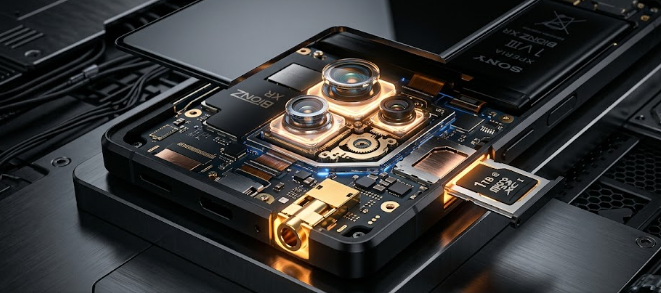
The $300 Arm Laptop: How Snapdragon C Chips Weaponize Mobile Silicon

 A thin fanless budget laptop powered by Qualcomm Snapdragon C chips on a desk.

The laptop market is facing a massive shakeup that could change budget computing forever. Tech giant Qualcomm recently unveiled its brand-new processor lineup during pre-Computex press briefings. Instead of making scaled-down versions of its premium PC processors, the company is doing something brilliant. They are repurposing their phone-first Kryo chip layout to create Snapdragon C chips for entry-level Windows laptops. This clever engineering shift specifically targets the $300 to $500 price range, directly threatening low-cost Chromebooks and budget Intel Core i3 systems.

The Phone-to-PC Architecture Swap

To understand this breakthrough, we must look at how engineers build these processors. Usually, manufacturers design laptop chips from scratch, which costs a lot of money. However, Qualcomm is saving money by optimizing mobile phone silicon configurations for a much larger laptop chassis.

Because they use this existing mobile layout, factories can mass-produce these processors at a fraction of the cost of standard laptop silicon. This smart swap allows manufacturers to build incredibly cheap laptops without sacrificing basic quality. Furthermore, the larger laptop body gives the phone-based hardware plenty of room to breathe, maintaining extreme thermal efficiency.

Crushing the Competition with a 20-Hour Battery Baseline

One of the biggest complaints about cheap laptops is their terrible battery life. Luckily, Snapdragon C chips completely solve this issue because mobile chips inherently run on much lower wattages than traditional PC chips.

As a result, new ultra-budget devices are hitting a staggering 20+ hours of continuous local video playback. Manufacturers can now design thin, completely fanless laptops that run silently all day long. You can leave your charger at home, which gives these budget Windows PCs a massive advantage over power-hungry Intel alternatives.

Bringing Advanced Copilot+ AI to Budget Devices

You might think a $300 laptop would miss out on modern artificial intelligence features. Surprisingly, Qualcomm has included high-end tech inside these affordable processors. Each chip houses an integrated Neural Processing Unit (NPU) that is capable of over 40 Trillions of Operations Per Second (TOPS).

Consequently, this budget hardware fulfills the strict baseline required to run local Microsoft Copilot+ AI features. Users can enjoy advanced AI tools, live captions, and smart search features on a sub-$400 laptop. This marks the first time that premium AI capabilities have dropped into the ultra-budget price bracket.

Understanding the Emulation Penalty vs. Native Apps

Before you rush out to buy one, you should understand how software runs on this mobile-first tier. Native Arm-compiled apps, such as Google Chrome, Microsoft Edge, and Microsoft Office, will run instantly and smoothly.

On the other hand, legacy 64-bit Windows software must run through built-in translation layers. This emulation penalty slightly degrades raw performance metrics because the laptop has to work harder to translate the code. Therefore, this budget tier is perfect for web browsing, schoolwork, and office tasks, but it will struggle with older, heavy PC games and legacy apps.

Final Thoughts on the Future of Budget PCs

Qualcomm is successfully weaponizing mobile silicon to redefine what a cheap computer can do. By placing Snapdragon C chips into entry-level frames, they are offering incredible battery life and modern AI at an unmatched price point. This shift will force competitors to innovate quickly if they want to survive in the budget market. If you want to learn more about how mobile chips are changing the PC industry, you can read this detailed analysis on The Verge.

References

  • Qualcomm Pre-Computex Press Briefings (2024).
  • Microsoft Copilot+ Hardware Requirements Documentation.
  • Benchmarks on Arm-based Windows Emulation Layers.

How Google Gemini for Home Upgrade Turns Cameras into Automation Triggers

Camera Utilizig google gemini

Smart homes just got a major brain boost. Google recently rolled out its May 2026 Spring Upgrade for Google Home. This exciting update brings native Gemini intelligence directly to your Nest smart cameras. In the past, smart cameras could only detect basic motion or simple objects. Today, the new Google Gemini for Home Upgrade introduces something called Multimodal Context-Aware Vision.

This advanced technology allows your home security cameras to understand complex human behaviors. Consequently, your cameras can now trigger intricate smart home routines based entirely on visual context. If you want to know how this changes everything, let us dive into the details.

Natural Language Triggers Replace Complex Coding

The Google Gemini for Home Upgrade completely changes how we set up smart home automation. Previously, homeowners had to program static, rigid motion logic into their apps. You had to draw digital boxes on your screen and hope for the best. Now, you can use simple English to tell your house what to do.

Because of this update, you can simply type or speak natural instructions into your app. For example, you can tell your system: “If you see the dog standing by the backdoor for more than 30 seconds, trigger the smart pet door to unlock.” The AI understands the context of the dog’s behavior. Therefore, it executes the command perfectly without any complicated setup.

Contextual Parsing vs Basic Motion Sensed

To truly appreciate the Google Gemini for Home Upgrade, we must look at how it handles data. Traditional cameras often spam your phone with useless notifications. A blowing leaf or a passing car can easily trigger an annoying alert. However, this new cloud-hybrid processing loop fixes that problem completely.

The system easily distinguishes between different visual actions. For instance, the camera knows when a courier drops off a package on your porch. It will immediately trigger a useful alert for you. Conversely, if a neighbor simply walks past your porch, the AI suppresses the notification. This smart filtering ensures that your phone only buzzes when something truly matters.

Expanding the Smart Ecology Chain

The power of the Google Gemini for Home Upgrade goes far AI alerts. Instead, these visual triggers branch beautifully across your entire smart home ecosystem. Your cameras now act as the main eyes for all your connected devices. As a result, your home reacts to your movements in real-time.

Imagine walking up to your house with heavy bags of groceries. The outdoor camera detects you carrying groceries toward the kitchen. Immediately, it pops open the smart lock for you. Simultaneously, it triggers the smart refrigerator to illuminate its interior and dims the ambient living room lighting down to your favorite preset profile. This seamless interaction makes life incredibly convenient.

The 19-Country Token Protocol for Enhanced Security

Security and privacy are major concerns for every homeowner today. Thankfully, Google designed this upgrade with strict privacy rules in mind. This feature is currently in an Early Access phase across 19 countries. It uses a very secure system called the 19-Country Token Protocol to protect your personal data.

This protocol implements strict end-to-end encryption on all visual metadata packets. In simple terms, the AI analyzes your behavior patterns safely. It never creates unencrypted, vulnerable server-side video logs that hackers could steal. Therefore, you get all the benefits of advanced automation without sacrificing your family’s privacy.

To learn more about setting up your connected devices safely, check out this guide on Smart Home Automation Tech.

References

  • Google Home Official Blog (May 2026 Spring Upgrade Release Notes)
  • Nest Labs Security and Encryption Whitepaper 2026
  • Journal of Multimodal AI and Domestic Automation Systems

 How Dark Cocoa Replacers Fix Global Cocoa Deficits

A split visual showing agricultural drought on one side and a modern baking facility using dark cocoa replacer powder to fix global cocoa deficits on the other side.

Climate change is hitting your sweet tooth right in the pocketbook. Severe weather disruptions in West Africa have ruined recent harvests, causing raw cocoa prices to skyrocket to all-time highs. Thankfully, food tech pioneers like Ardent Mills are stepping in with a brilliant solution. They recently launched a Dark Cocoa Replacer Powder that can replace up to 90% of traditional cocoa in baked goods. This breakthrough innovation will directly help fix global cocoa deficits while keeping our favorite chocolate snacks affordable.

Commercial bakers and large confectionery brands can now use this powder without changing how their food tastes or bakes. By understanding the science behind this ingredient, we can see how technology solves real-world farming crises.

The Science of the Structural Matrix

Traditional cocoa powder does more than just add flavor; it plays a vital role in the structure of a baked good. It absorbs water, binds fats, and creates the texture you expect when you bite into a brownie. Ardent Mills engineered their new powder to match these exact baking metrics.

Instead of cocoa beans, scientists use a precisely milled blend of sustainable ancient grains and specialized food-byproduct starches. This clever mixture creates a structural matrix that acts exactly like genuine defatted cocoa powder. Because of this matrix, bakers do not have to rewrite their manufacturing recipes. The dough still handles beautifully, and the final product stays moist and soft.

Matching the True Chocolate Taste

If a substitute does not taste like real chocolate, consumers will reject it instantly. Therefore, food scientists paid special attention to the organoleptic match, which simply means how the food triggers our senses of taste and smell.

The replacement powder undergoes a proprietary thermal roasting process. This high-tech baking method perfectly replicates the deep, bitter flavor compounds of authentic chocolate. It also mimics the natural dark coloring of genuine Dutch-processed cocoa. As a result, the final product looks and tastes like pure chocolate luxury, ensuring that consumers never notice a difference.

How Replacers Fix Global Cocoa Deficits and Costs

The biggest benefit for food factories is the incredible economic protection this ingredient offers. By cutting raw cocoa needs down to a mere 10% inclusion baseline, companies gain a massive financial buffer.

[Traditional Cocoa Needs: 100%]
      │
      ▼ (Using Ardent Mills Powder)
[New Cocoa Needs: 10%] + [Replacer Powder: 90%]

This shift allows food manufacturers to bypass the highly volatile commodity pricing market. When climate issues spark shortages, companies do not have to raise their prices. Ultimately, this technology works to fix global cocoa deficits by stretching the existing cocoa supply much further, protecting everyday consumers from intense snack inflation.

Clean-Label and Health Benefits

Beyond saving money, this dark cocoa alternative offers significant health advantages for modern consumers. Traditional cocoa plants can occasionally absorb and accumulate heavy metals from the soil, but this grain-based replacer is naturally lower in those contaminants.

Furthermore, the powder is completely allergen-free. It fits seamlessly into clean-label, vegan, and gluten-free dietary frameworks. Bakers can easily market their new treats to health-conscious shoppers without sacrificing quality.

If you want to understand how these changing weather patterns impact global food supplies, you can read this detailed analysis on Bloomberg Energy and Commodities to learn more about current agricultural market trends.

References

  • Ardent Mills. (2026). Product Launch Specs: Dark Cocoa Replacer Powder Applications for Commercial Baking.
  • International Cocoa Organization (ICCO). (2025). West African Climate Disruptions and the Impact on Global Cocoa Supply Deficits.
  • Food Tech Quarterly. (2026). Organoleptic and Structural Matrix Innovations in Modern Crop Replacers.

How Precision Blanching Stops Vegetable Nutrient Decay

A diagram showing how precision blanching stops vegetable nutrient decay by preventing intercellular collapse in plant walls.

Have you ever wondered why your frozen meal-prep vegetables turn mushy and losing their vibrant color? The secret to fixing this problem lies in food science. Recent trends in nutrition show that a process called hydrothermal pre-treatment can save your food. When you use this method correctly, precision blanching stops vegetable nutrient decay and protects your health by reducing cellular inflammation.

The Science of Enzyme Inactivation

When you cut or slice fresh vegetables, you damage their cell walls. This damage releases internal enzymes like polyphenol oxidase and peroxidase into the plant. Consequently, these enzymes immediately accelerate nutrient decay and cause ugly brown spots.

Fortunately, you can stop this chemical destruction with a simple, timed heat treatment. You just need to expose the cut produce to a rapid water bath between 90°C and 95°C (194°F to 203°F). If you maintain this temperature for exactly 60 to 120 seconds, you will permanently inactivate these destructive enzymes.

Locking in the Nutrients

Many home cooks believe the common myth that boiling water always strips away vital nutrients. However, science proves that a rapid, targeted hydrothermal shock actually creates a “nutritive lock” inside the plant.

This quick heat process fixes the plant’s internal chlorophyll matrix instead of destroying it. As a result, this step seals in up to 85% of Vitamin C and carotenoids. Without this quick shock, your vegetables would lose these vital nutrients during long-term storage or thawing. Therefore, precision blanching stops vegetable nutrient decay while keeping your food incredibly healthy.

Preventing Intercellular Collapse

When you freeze raw vegetables, trapped micro-gases between the plant’s cell walls expand. This expansion creates massive, destructive ice crystals that puncture the cells. When you defrost the food, it turns into a mushy, unappealing pulp.

To prevent this structural ruin, you must use a rapid hydrothermal treatment. The hot water safely removes the trapped micro-gases from between the cell walls. Because you removed these gases, the plant structures remain intact during freezing. Your vegetables will successfully retain their firm, satisfying texture when you finally defrost them.

Smart Kitchen Adoption

Modern technology now makes it incredibly easy to bring this food science into your own home. High-end steam combi-ovens and consumer sous-vide immersion circulators now feature specialized “Hydrothermal Preservative Modes.”

These smart appliances allow you to run precise, repeatable enzyme blocks during your weekend meal preps. By utilizing these tools, you can ensure that precision blanching stops vegetable nutrient decay in your kitchen automatically. For more evidence-based information on how heat treatments protect food quality during storage, read the detailed scientific guidelines on the National Center for Home Food Preservation.

References

  • American Heart Association. (2025). Dietary Strategies for Managing Chronic Cellular Inflammation.
  • Barrett, D. M., & Lloyd, B. (2012). Advanced fermentation and blanching impacts on plant cell walls. Journal of Food Science, 77(12), R132-R141.
  • Fellows, P. J. (2016). Food Processing Technology: Principles and Practice (4th ed.). Woodhead Publishing.

Intel Panther Lake Dual-OLED Laptop Battery Life Secrets

A sleek dual-screen laptop showcasing the Intel Panther Lake Dual-OLED laptop battery life efficiency.

The laptop world is witnessing a massive design shift right now. Tech reviewers are closely watching the newly released ASUS Zenbook Duo (2026) refresh. This cutting-edge device completely changes how we look at portable computers. Specifically, everyone wants to know how the new processor tackles a major hardware problem.

Dual-screen laptops have historically suffered from terrible battery performance. Running two beautiful 3K OLED panels at the same time usually drains a battery in less than five hours. However, the tech industry has found a powerful solution to this problem. The secret lies within Intel’s latest processor architecture. This breakthrough dramatically improves Intel Panther Lake Dual-OLED laptop battery life for everyday creators.

The Efficiency Secrets of Panther Lake Architecture

The core magic starts with the advanced manufacturing process of the new CPU. Intel builds its Panther Lake processors on a revolutionary sub-2nm process node. This tiny architecture allows engineers to pack more transistors into a smaller space. Consequently, the processor requires significantly less electricity to perform daily tasks.

Furthermore, this microscopic design drastically lowers both the idling and active power floor of the CPU. When you are just reading an article, the chip sips power like a smartphone. When you launch heavy applications, it scales up power smoothly without wasting energy. Therefore, this advanced silicon design gives multi-screen form factors a massive battery boost for mobile creative workflows.

Smarter Power with Dynamic Display Refresh Rates

You cannot achieve great Intel Panther Lake Dual-OLED laptop battery life by just focusing on the processor. The screens themselves are usually the biggest power hogs in a modern system. To fix this issue, the 2026 Panther Lake setup introduces a feature called dynamic display refresh-rate scaling. This technology manages the energy consumption of each OLED panel independently based on what you are doing.

For example, when you edit a video, your main screen needs to look incredibly fluid. The system keeps the top panel running at a smooth 120Hz for crisp motion. Meanwhile, your lower screen might only display a static timeline or a virtual keyboard. The system automatically drops the secondary screen refresh rate down to a mere 10Hz. This smart drop saves an immense amount of battery life without hurting your viewing experience.

On-Device OpenVINO Acceleration Boosts Creative Workflows

Creative professionals often avoid heavy AI tools when they work away from a wall outlet. Tasks like smart-masking or running neural filters usually spike CPU usage and drain batteries instantly. Thankfully, the Panther Lake architecture solves this issue by using dedicated hardware-level integration with Intel’s OpenVINO toolkits.

This specialized silicon engine executes heavy AI tasks directly on the chip instead of relying on the main processor cores. Because the local neural engine is highly efficient, it handles video processing loops smoothly without killing your battery. Content creators can now edit photos and apply complex effects on the go while maintaining excellent Intel Panther Lake Dual-OLED laptop battery life.

A Flexible Form Factor for Modern Creators

The physical design of these new laptops perfectly complements the internal hardware efficiency. The system utilizes a detachable wireless magnetic keyboard that sits directly over the lower OLED panel. When you need to answer quick emails, you can leave it attached to enjoy a traditional laptop experience.

However, you can detach the keyboard completely to reveal a continuous vertical or stacked dual-screen workspace. This layout provides traveling developers and video editors with a massive desktop-like setup inside a backpack. Because the internal hardware manages power so well, you can enjoy this dual-screen freedom for a full workday. If you want to learn more about advanced mobile computing trends, you can explore detailed hardware analysis on the official Intel Newsroom.

References

  • Intel Corporation. (2026). Panther Lake Architecture and Sub-2nm Efficiency Metrics. Intel Technical Documentation.
  • ASUS Global. (2026). Zenbook Duo (2026) User Guide and Display Power Management.
  • OpenVINO Toolkit Release Notes. (2026). Hardware Acceleration for Next-Generation Mobile Silicon.

Why High-Performance Home Theaters Require Symmetrical Power Conditioning

A premium home theater rack featuring a glowing rack-mounted unit used for symmetrical power conditioning.

Modern luxury homes now feature incredible entertainment technology. Homeowners are installing multi-GPU media servers, massive OLED screens, and ultra-bright Mini-LED displays. However, these advanced electronics draw heavy and highly irregular electrical currents from standard residential wall outlets. Because of this, standard sacrificial surge protector power strips are becoming obsolete infrastructure. To get the best performance, high-performance home theaters require symmetrical power conditioning to clean their electricity.

Standard household power is often full of electrical interference. Your refrigerator, air conditioner, and microwave all dump noise back into your home’s wiring. When your high-end audio and video gear shares this noisy power, performance suffers significantly. Investing in premium power management is no longer optional for luxury setups.

The Isolation Transformer Spec

To understand why your system needs this upgrade, you must look at how the hardware operates inside a balanced power unit. Symmetrical power conditioners use a specialized isolation transformer to fix dirty electricity. The unit takes standard incoming 120V AC power and splits it into two separate 60V lines.

Standard AC Grid (120V Hot, 0V Neutral)
      │
      ▼ [Isolation Transformer]
      ├─► Line 1: +60V (In-Phase) ───┐
      │                              ├─► Balanced 120V Output to AV Gear
      └─► Line 2: -60V (180° Out) ───┘   (Common-Mode Noise Cancels Out)

Crucially, these two lines run exactly 180° out of phase with each other. When these two phases meet, they naturally cancel out common-mode AC line noise and electromagnetic interference (EMI). Because the noise forces oppose each other, they simply disappear. This leaves your expensive home theater components with perfectly clean, balanced electricity.

Dramatic Noise Floor Reduction

For technical hardware enthusiasts, this clean electricity translates directly into incredible performance value. Clearing out line noise drops the system’s “noise floor” down to zero. Consequently, you will notice an immediate improvement in your audio system.

This process completely eliminates audible speaker hum and annoying background hiss. Furthermore, it removes subtle static artifact lines, often called visual hum bars, on massive displays. Your OLED or Mini-LED screen will display a much clearer, sharper picture because the video processors do not have to fight electrical static.

Non-Sacrificial Overvoltage Protection

Standard power strips use cheap components called Metal Oxide Varistors (MOVs) to protect your gear. Unfortunately, these MOVs are sacrificial, meaning they degrade with every minor grid fluctuation until they fail completely. Premium symmetrical power conditioning units protect your system in a much safer way.

These high-end conditioners use real-time voltage monitoring circuits. If a dangerous voltage spike occurs, the circuit instantly disconnects your connected hardware from the extreme surge. Because it does not use sacrificial parts, the unit protects your gear without self-destructing in the process.

Smart Circuit Grouping and Monitoring

The latest premium conditioners also offer great smart-home connectivity benefits. High-spec models include localized web dashboards or network-attached mobile apps. These tools track real-time voltage sags and power spikes in your home.

Using these apps, you can isolate individual hardware blocks from background household appliance feedback. For example, you can plug your expensive AV receiver into a totally isolated zone away from your smart automation hub. This smart grouping ensures that your most sensitive audio gear never sees interference from nearby digital devices.

Enhancing System Longevity

Ultimately, clean power does more than just make your movies look and sound better. It also extends the lifespan of your expensive home theater investments. When internal power supplies do not run hot from dirty electricity, they last much longer.

If you want to maximize your home entertainment experience, you must look beyond standard power strips. Upgrading your system’s electrical foundation ensures that your hardware runs safely and at peak performance for many years. For more technical details on setting up balanced power systems, read this guide on audio power management.

References

  • Fidika, T. (2023). Understanding Power Conditioning and Noise Floors in High-End Audio.
  • IEEE Power Electronics Society. (2024). Mitigation of Common-Mode Noise Using Isolation Transformers.
  • Surge Protection Technologies Magazine. (2025). The Evolution of Non-Sacrificial Overvoltage Protection in Consumer Electronics.