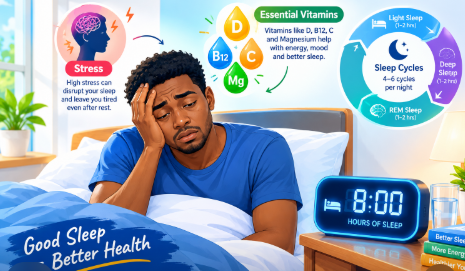
You wake up after spending eight full hours in bed, yet you still feel exhausted. You grab a second cup of coffee, but your brain feels foggy all day. Many people ask themselves, why am I always tired even when I get 8 hours of sleep? Simply staying in bed for eight hours does not guarantee that your body gets proper rest. Total time spent sleeping is only one part of the health equation. Sleep quality matters just as much as sleep duration.
When you sleep, your body moves through different cycles, including deep sleep and REM (Rapid Eye Movement) sleep. Deep sleep repairs your physical muscles, while REM sleep refreshes your brain and mind. If factors interrupt these vital stages during the night, you wake up feeling drained. Consequently, you feel tired even if your alarm clock shows a full eight-hour night.
┌─────────────────────────────────────────────────────────┐
│ NIGHTTIME SLEEP CYCLE │
├─────────────┬─────────────┬─────────────┬───────────────┤
│ Light Sleep │ Deep Sleep │ REM Sleep │ Interruption? │
│ (Gradual) │ (Physical) │ (Mental) │ (Exhaustion) │
└─────────────┴─────────────┴─────────────┴───────────────┘
Poor Sleep Hygiene Breaks Your Natural Sleep Quality
Sleep hygiene refers to the habits and environment that surround your bedtime routine. You might lie in bed for eight hours, but poor habits can ruin your rest. For example, using your smartphone or watching television right before bed floods your eyes with blue light. As a result, your brain stops producing melatonin, which is the natural hormone that prepares your body for restful sleep.
Additionally, drinking late-afternoon coffee or consuming alcohol in the evening damages your sleep cycles. Caffeine stays in your bloodstream for many hours and keeps your brain alert. Alcohol may help you fall asleep faster, but it blocks deep sleep later in the night. Therefore, you wake up feeling unrefreshed because your body never reached deep restoration.
| Habit | Effect on Sleep | Better Alternative |
| Late Phone Use | Blue light suppresses melatonin | Read a printed book 30 minutes before bed |
| Evening Alcohol | Interrupts REM and deep sleep cycles | Drink herbal tea like chamomile |
| Afternoon Coffee | Keeps your brain in a high-alert state | Stop caffeine intake after 2:00 PM |
Hidden Medical Conditions: Why Am I Always Tired Even When I Get 8 Hours of Sleep?
Sometimes hidden medical conditions prevent you from getting restorative rest. Sleep apnea is one common culprit that affects millions of adults worldwide. This condition causes your throat muscles to relax, which repeatedly blocks your airway while you sleep. Your brain briefly wakes you up to gasp for air, sometimes hundreds of times a night. Because these awakenings are brief, you rarely remember them, yet they ruin your sleep quality completely.
Another hidden factor is a nutrient or vitamin deficiency. Low levels of iron, vitamin D, or vitamin B12 reduce your body’s ability to produce energy. For instance, iron deficiency causes anemia, which limits the oxygen carried to your tissues and muscles. As a result, you experience persistent fatigue regardless of how long you lie in bed.
CHRONIC STRESS & SLEEP CYCLE
High Daily Stress / Anxiety
│
▼
Elevated Cortisol Levels
│
▼
Prevents Deep Restorative Sleep
│
▼
Morning Fatigue & Brain Fog
Chronic Stress Hormones Keep Your Body on High Alert
Your daily stress levels directly influence how well your body recovers overnight. When you experience constant anxiety or work pressure, your adrenal glands release stress hormones like cortisol. Normally, cortisol levels drop in the evening to allow your muscles and mind to relax. However, chronic stress keeps cortisol levels high throughout the entire night.
When your body remains in this “fight or flight” mode, it cannot enter deep sleep. You might stay asleep for eight hours, but your nervous system stays active and guarded. Thus, you wake up feeling like you ran a marathon instead of resting peacefully.
Unsyncing Your Circadian Rhythm Causes Daytime Fatigue
Your circadian rhythm acts as an internal 24-hour clock that regulates sleepiness and wakefulness. Going to bed at irregular times confuses this internal clock completely. For example, staying up very late on weekends and sleeping in breaks your body’s natural schedule. Medical experts often call this habit “social jetlag.”
Furthermore, lack of natural sunlight in the morning disrupts your circadian rhythm. Exposure to bright sunlight early in the day signals your brain to stop producing melatonin and start making energy. Without morning sunlight, your body stays in a sluggish state for hours after waking up.
Simple Steps to Improve Your Daily Energy Levels
You can take immediate, practical steps to rebuild your energy and fix your sleep quality:
- Keep a Strict Schedule: Go to bed and wake up at the exact same time every day, including on weekends.
- Get Morning Sun: Step outside for 10 to 15 minutes of natural daylight right after waking up.
- Optimize Your Bedroom: Keep your room dark, quiet, and cool (around 15–19°C or 60–67°F).
- Cut Late Stimulants: Avoid heavy meals, caffeine, and alcohol for at least four hours before sleeping.
When to Consult a Healthcare Professional
If you fix your sleep hygiene and still feel constantly exhausted, schedule a doctor’s visit. A healthcare provider can order simple blood tests to check your thyroid function, iron levels, and vitamin status. They can also recommend a professional sleep study to test for sleep apnea or other sleep disorders.
Addressing chronic fatigue early protects your long-term health and restores your daily productivity. For comprehensive medical insights on sleep disorders and fatigue management, visit WebMD for further reading on the topic.
References
- National Heart, Lung, and Blood Institute. “Sleep Deprivation and Deficiency: Causes and Symptoms.” NIH Guidelines (2025).
- American Academy of Sleep Medicine. “International Classification of Sleep Disorders, 3rd Edition.” AASM Clinical Resources (2024/2025).
- Centers for Disease Control and Prevention. “Sleep and Sleep Disorders: Fast Facts and Health Effects.” CDC Public Health Review (2026).