Summary of Key Points
- HEPA filters remove 99.97% of airborne dust, pollen, and tiny particles inside your vehicle.
- Activated carbon layers absorb stubborn smells from food, pets, smoke, and outdoor fumes.
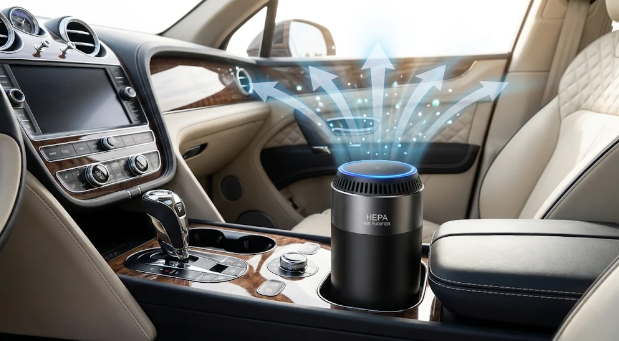
- Compact designs fit seamlessly into car cup holders or mount onto dashboards.
- Regular maintenance ensures consistent air purification for healthier daily driving.
Introduction
Commuting in heavy traffic constantly exposes drivers and passengers to dust, exhaust fumes, and pollen. Using compact HEPA car air purifiers for dust and odor control provides a simple and effective solution to refresh your cabin environment. These portable devices target microscopic pollutants while removing lingering odors. Consequently, you can enjoy fresh, breathable air every time you hit the road.
How Compact HEPA Air Purifiers Clean Cabin Air
Air purifiers designed for vehicles rely on multi-stage filtration systems to clean the air quickly. First, a pre-filter captures large debris such as hair and visible dust. Next, the True HEPA filter traps smaller particles down to 0.3 microns. Therefore, it effectively captures allergens, mold spores, and fine dust that standard cabin air filters miss.
In addition, high-quality units include an activated carbon filter. This layer neutralizes gaseous pollutants, cigarette smoke, fast-food smells, and outdoor exhaust gases. Because these filters work together continuously, they maintain a fresh atmosphere inside your automobile during long trips.
Benefits of Compact HEPA Car Air Purifiers for Dust and Odor Control
Installing a small air purifier offers clear health and convenience benefits for drivers. Allergy sufferers experience immediate relief because the purifier removes airborne irritants. As a result, you will notice less sneezing and coughing while driving through high-pollen areas.
Furthermore, compact purifiers eliminate nasty smells instead of simply masking them with artificial fragrances. Chemical air fresheners often release volatile organic compounds that irritate eyes and throats. In contrast, HEPA purifiers physically remove odor molecules from the air, creating a truly clean space.
Space-Saving Design and Ease of Use
Manufacturers design these units specifically for vehicle interiors. Most compact models fit directly into standard cup holders or attach easily to headrests. Additionally, modern units run quietly via USB ports or 12V power sockets. Therefore, you can run the purifier continuously without draining car battery power or disrupting conversations.
What to Look for When Buying a Car Air Purifier
Before purchasing a unit, evaluate the size of your vehicle cabin. Larger SUVs require devices with a higher Clean Air Delivery Rate (CADR) to circulate air efficiently. Additionally, check filter replacement costs and availability. Most filters require replacement every three to six months depending on usage.
Moreover, consider convenient features like automatic air quality sensors. These smart sensors adjust fan speeds based on real-time pollution levels inside the vehicle. Low noise levels also remain important, so select a model that operates under 30 decibels on low settings.
Maintaining Your Device for Peak Performance
To keep your car purifier working efficiently, follow routine maintenance guidelines. Check the filter monthly for excessive dust buildup. Furthermore, wipe down the intake grilles with a soft cloth to maintain optimal airflow into the filtration chamber.
Investing in clean cabin air significantly improves your daily commute and long-term health. You can learn more about air filtration standards and benefits by visiting the United States Environmental Protection Agency.
References
United States Environmental Protection Agency. (2023). What is a HEPA filter? EPA.gov.
American Lung Association. (2024). Clean Air at Home and on the Road. Lung.org.