High cholesterol affects millions of people around the world, yet many people ask: how do I lower my high cholesterol through diet alone? Fortunately, changing what you put on your plate can make a huge difference in your blood test results. Your body produces cholesterol naturally, but the foods you eat strongly influence your blood cholesterol levels. By replacing harmful fats with heart-healthy foods, you can protect your heart without relying immediately on medication.
Understanding Cholesterol and How Food Affects It
To manage your blood levels, you first need to understand the two main types of cholesterol. Low-density lipoprotein (LDL) is often called “bad” cholesterol because it builds up inside your artery walls and blocks blood flow. On the other hand, high-density lipoprotein (HDL) is known as “good” cholesterol because it carries excess bad cholesterol back to your liver for removal.
When you consume excessive amounts of saturated fats, your liver produces more bad cholesterol than your body can clean up. Consequently, plaque builds up in your arteries and increases your risk of heart attacks. Fortunately, eating high-fiber foods and healthy plant fats acts like a broom that sweeps away LDL before it enters your bloodstream.
Eat Soluble Fiber to Soak Up Cholesterol
If you are wondering how do I lower my high cholesterol through diet alone, soluble fiber is your best friend. Soluble fiber dissolves in water to form a gel-like substance inside your digestive tract. This gel binds to cholesterol-rich bile acids and pulls them out of your body through natural digestion.
You can easily boost your daily intake by adding these simple foods to your meals:
- Oatmeal and oat bran: Start your morning with a warm bowl of rolled oats to get a quick dose of beta-glucan fiber.
- Beans and lentils: Kidney beans, black beans, and lentils digest slowly and keep you full while pulling bad cholesterol out of your system.
- Fruits: Apples, pears, strawberries, and citrus fruits contain pectin, a powerful type of soluble fiber.
- Vegetables: Brussels sprouts, broccoli, and carrots offer great digestive benefits along with essential vitamins.
Aim to eat at least 10 to 25 grams of soluble fiber every single day for maximum benefits.
Use Plant Sterols and Stanols to Block Absorption
Plant sterols and stanols are natural substances found in plant cell membranes that look similar to cholesterol. Because they share a similar structure, they compete with cholesterol for absorption in your digestive system. When you consume plant sterols, your gut absorbs them instead of the bad cholesterol, which passes out of your body as waste.
You can naturally find small amounts of sterols in vegetable oils, nuts, seeds, whole grains, and legumes. Additionally, many grocery stores sell fortified products like orange juice, spreads, and yogurt drinks enriched with plant sterols. Consuming about 2 grams of plant sterols daily can reduce your LDL levels by up to 10 percent within a few weeks.
Eliminate Harmful Fats to Protect Your Arteries
Removing bad fats from your kitchen is just as important as adding good foods. Saturated fats and trans fats directly trigger your liver to produce far more bad cholesterol than you need.
To keep your blood vessels clear, cut back on or completely avoid the following items:
- Fatty meats: Reduce your intake of beef, pork, sausage, bacon, and poultry with the skin left on.
- Full-fat dairy: Switch from whole milk, heavy cream, and rich cheeses to low-fat or plant-based alternatives.
- Tropical oils: Limit palm oil and coconut oil, as both contain high concentrations of saturated fat.
- Trans fats: Avoid fried foods and commercially baked goods like cookies or pastries that contain partially hydrogenated oils.
Instead, cook your meals using liquid plant oils such as extra virgin olive oil or canola oil.
Enjoy Healthy Fats to Lower LDL Levels
Not all fats harm your health, so you do not need to follow a completely fat-free diet. Polyunsaturated and monounsaturated fats actively lower your LDL levels while supporting healthy HDL levels.
For instance, fatty fish such as salmon, mackerel, sardines, and tuna contain high amounts of omega-3 fatty acids. Omega-3s lower your triglycerides and stabilize your heart rhythm. Try to eat at least two servings of fatty fish every week.
Furthermore, avocados, walnuts, chia seeds, and flaxseeds provide rich sources of healthy fats that protect your heart. You can easily sprinkle chopped walnuts over your morning oatmeal or slice an avocado onto your lunchtime sandwich.
Sample 1-Day Meal Plan to Lower Cholesterol
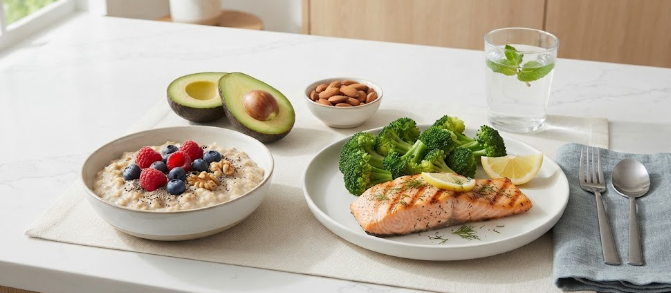
Planning your meals in advance makes sticking to a heart-healthy diet much easier. Here is a simple, delicious one-day menu that puts these principles into practice:
- Breakfast: One bowl of warm oatmeal topped with fresh blueberries, a tablespoon of ground flaxseeds, and a handful of walnuts. Drink a small glass of plant-sterol-fortified orange juice.
- Lunch: A large green salad with mixed spinach, sliced grilled chicken breast, black beans, cherry tomatoes, and half an avocado, drizzled with olive oil and lemon juice.
- Snack: An apple served with a small handful of raw almonds.
- Dinner: Grilled salmon served alongside brown rice and a generous side of steamed broccoli tossed in garlic and olive oil.
Track Your Progress and Stay Consistent
Dietary changes take time to reflect in your medical lab results, so consistency remains the key to long-term success. Give your body about eight to twelve weeks on this diet before scheduling a follow-up lipid panel with your doctor. Most people notice a measurable reduction in their numbers within this timeframe.
Combine your new eating routine with regular physical activity, adequate sleep, and plenty of water for even better results. If you want to explore more detailed medical insights on managing heart health through lifestyle choices, check out the heart-health guides on the Mayo Clinic website.
References
- American Heart Association. (2023). Prevention and Treatment of High Cholesterol (Hyperlipidemia). Circulation, 147(5), 112-120.
- Jenkins, D. J., et al. (2020). Direct comparison of a dietary portfolio of cholesterol-lowering foods with a statin in hypercholesterolemic participants. American Journal of Clinical Nutrition, 111(3), 672–681.
- Harvard T.H. Chan School of Public Health. (2022). Fats and Cholesterol: Out with the Bad, In with the Good. Nutrition Source.
- National Heart, Lung, and Blood Institute. (2021). Your Guide to Lowering Your Cholesterol With TLC (Therapeutic Lifestyle Changes). NIH Publication No. 06-5235.