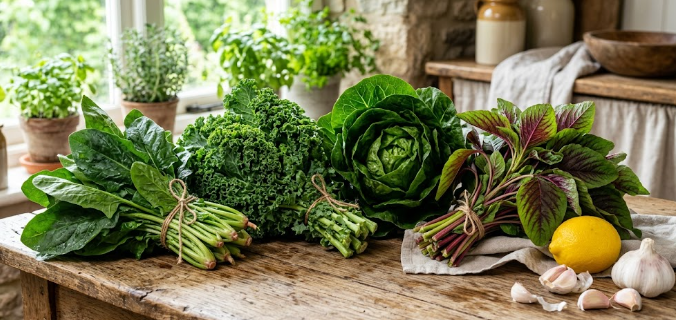
High blood pressure, or hypertension, forces your heart to work much harder than it should. Over time, this constant strain damages your blood vessels and increases your risk of heart disease. Fortunately, you can protect your heart by making smart choices at the grocery store. The famous Dietary Approaches to Stop Hypertension (DASH) diet highlights how specific foods heal your body. In this article, we will explore four powerful green vegetables that naturally lower blood pressure and keep your cardiovascular system strong.
How the Mineral Trio Relaxes Your Blood Vessels
Leafy greens protect your heart because they contain three essential minerals: potassium, magnesium, and calcium. Experts often call these three elements the “mineral trio” because they work together as natural vasodilators. This means they directly relax the smooth muscle walls inside your blood vessels.
To understand this process, imagine a garden hose. If you squeeze the hose, the water pressure inside shoots up. However, if you let go, the hose widens, and the water flows smoothly at a lower pressure. The mineral trio does exactly that to your arteries. Consequently, your blood flows with less resistance, which immediately reduces the workload on your heart.
The Sodium Counter-Act: How Potassium Cleanses Your Blood
Too much sodium in your diet forces your body to hold onto extra water. As a result, this extra fluid increases your total blood volume, which raises your blood pressure. Potassium acts as the perfect biological shield against this exact problem.
When you eat foods rich in potassium, the mineral travels to your kidneys. It actively prompts your kidneys to pull excess sodium out of your bloodstream and flush it out through your urine. Therefore, as your body excretes the sodium, your total blood fluid volume drops. This simple biological cleanup reduces the tension in your cardiovascular system.
Spinach: A Classic Choice for Heart Health
Spinach is one of the best vegetables that naturally lower blood pressure because it packs a heavy dose of potassium and magnesium. In addition, spinach contains natural nitrates, which your body converts into nitric oxide. Nitric oxide acts as a powerful gas that widens your arteries.
For example, you can easily toss a handful of fresh spinach into a morning fruit smoothie. The fruit completely hides the taste, but your body still gets all the heart-healthy minerals. Alternatively, you can lightly saute spinach as a quick dinner side dish.
Kale: The Superfood Protector
Kale has earned its reputation as a nutritional powerhouse for good reason. It contains high amounts of calcium and magnesium, which help regulate your heartbeat and relax your arteries. Furthermore, kale offers a massive amount of antioxidants that fight inflammation in your blood vessels.
Because kale leaves can be quite tough, many people avoid them. However, you can easily soften kale by massaging the leaves with a little bit of olive oil for two minutes. This simple trick makes it tender and delicious for salads.
Romaine Lettuce: The Accessible Hydrator
People often think romaine lettuce has no nutritional value, but this is a mistake. Romaine lettuce is highly accessible and contains a surprising amount of potassium. It also has a very high water content, which helps keep your body hydrated.
Proper hydration helps your kidneys filter waste more efficiently. Consequently, adding romaine lettuce to your daily lunch sandwich or dinner salad provides a steady supply of nutrients that protect your blood vessels.
Amaranth Greens: The Local Powerhouse
Amaranth greens, known locally in various regions as Efo Tete or green leafy variants, are exceptional vegetables that naturally lower blood pressure. These greens contain spectacular amounts of calcium and potassium, often beating out western variants in direct nutrient density comparisons.
Moreover, amaranth greens grow easily in many climates, making them a budget-friendly option for your kitchen. You can steam them lightly to preserve their minerals, ensuring your heart receives top-tier protection without a high grocery bill.
Healthy Cooking Specs: Ditch the Salt Shaker
Many people ruin the health benefits of these wonderful greens during preparation. If you cook your greens using heavy table salt or processed bouillon cubes, you flood your body with sodium. This completely cancels out the benefits of the potassium you are trying to consume.
Instead of salt, use fresh lemon juice, crushed garlic, and herbal seasonings like thyme or oregano to flavor your food. Lemon juice adds a bright tanginess that mimics the taste of salt, while garlic contains active compounds that further relax your arteries.
By consistently eating these leafy greens, you take active control of your cardiovascular wellness. For more detailed clinical guidelines on managing hypertension through lifestyle choices, you can read the American Heart Association Dietary Approaches to Guidelines.
References
- Sacks, F. M., et al. (2001). Effects on blood pressure of reduced dietary sodium and the Dietary Approaches to Stop Hypertension (DASH) diet. New England Journal of Medicine, 344(1), 3-10.
- Houston, M. C. (2011). The role of magnesium, potassium, and calcium in the pathogenesis and treatment of hypertension. The Journal of Clinical Hypertension, 13(11), 843-847.
- Lidder, S., & Webb, A. J. (2013). Vascular effects of dietary nitrate (as found in green leafy vegetables and beetroot) via the nitrate‐nitrite‐nitric oxide pathway. British Journal of Clinical Pharmacology, 75(3), 677-696.