The Nightly Interruption: A Simple Guide to Understanding Obstructive Sleep Apnea

A serene image of a woman resting comfortably in a dimly lit room. She is wearing a CPAP mask over her nose, illustrating a peaceful and restorative night's sleep with sleep apnea therapy

Have you ever been told you snore like a freight train? Do you often wake up feeling tired and groggy, even after a full night in bed? If so, you might be experiencing more than just poor sleep. These are common signs of obstructive sleep apnea (OSA), a serious but treatable sleep disorder that affects millions of people. This article will break down, in simple terms, what OSA is, how it happens, its causes and symptoms, and how you can get help.

What is Obstructive Sleep Apnea?

Imagine holding your breath for a few seconds. Now imagine that happening repeatedly throughout the night, without you even knowing it. That’s essentially what obstructive sleep apnea is. It’s a condition where your breathing repeatedly stops and starts while you are asleep because your airway becomes physically blocked.

These pauses in breathing, called “apneas,” can last for ten seconds or longer and can happen hundreds of times each night. Each time your breathing stops, your brain senses the lack of oxygen and briefly wakes you up to reopen your airway. These awakenings are so short that you usually don’t remember them in the morning, but they prevent you from getting the deep, restorative sleep your body needs.

How Does It Happen in the Body? The Mechanics of a Blocked Airway

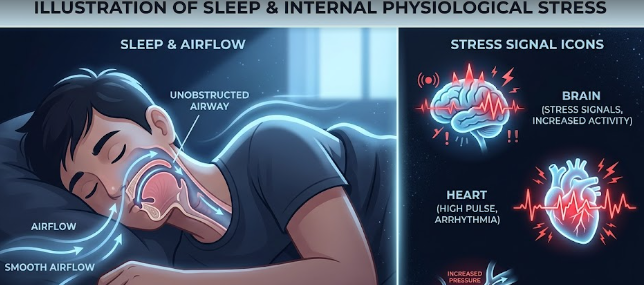
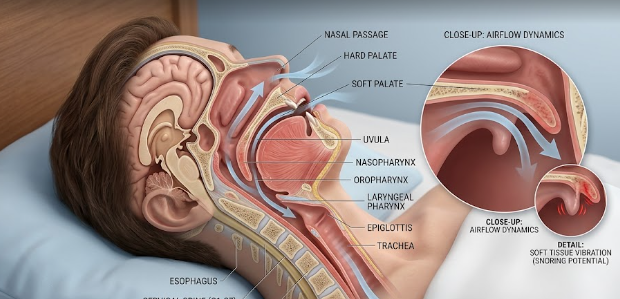
When you are awake, the muscles in the back of your throat keep your airway stiff and open, allowing air to flow freely into your lungs. When you fall asleep, these muscles naturally relax.

For most people, this relaxation doesn’t cause any problems. However, for someone with obstructive sleep apnea, these muscles relax too much. This causes the soft tissues at the back of the throat, including your tongue and soft palate, to collapse and block the airway.

Here’s a step-by-step breakdown of what occurs during an apnea event:

  1. Muscle Relaxation: You fall asleep, and your throat muscles relax.
  2. Airway Collapse: The soft tissues at the back of your throat sag and completely block the passage of air.
  3. Breathing Stops: Despite your chest and diaphragm trying to pull in air, none can get through the blockage.
  4. Oxygen Levels Drop: The oxygen level in your blood starts to fall.
  5. Brain Arousal: Your brain detects this dangerous drop in oxygen and sends a panic signal. It briefly rouses you from sleep to tighten the throat muscles and reopen the airway.
  6. Breathing Resumes: You take a loud gasp, snort, or choking sound as air rushes back into your lungs.
  7. The Cycle Repeats: You fall back asleep, and moments later, the cycle can begin all over again.

This constant cycle of collapsing, waking, and gasping for air is what disrupts your sleep and leads to health problems over time.

What Causes the Airway to Collapse? Risk Factors and Triggers

There isn’t one single cause for obstructive sleep apnea. Instead, it’s usually a combination of physical traits and lifestyle factors that increase your risk. The most common causes include:

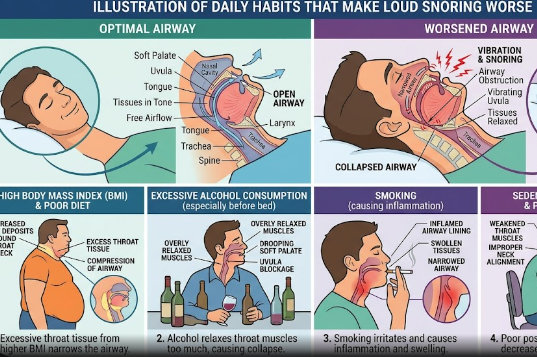
  • Excess Weight and Obesity: This is the most significant risk factor. Excess fatty tissue around the neck can narrow the airway and put pressure on the throat muscles, making them more likely to collapse during sleep.
  • A Naturally Narrow Airway: Some people are simply born with a smaller throat passage.
  • Large Tonsils and Adenoids: Particularly in children, enlarged tonsils or adenoids can physically block the airway.
  • Jaw Anatomy: A lower jaw that is shorter than the upper jaw (a receding chin) can position the tongue further back, making it easier for it to block the airway.
  • Age: As you get older, your throat muscles can lose some of their tone, increasing the risk of collapse.
  • Family History: If sleep apnea runs in your family, you may have an inherited predisposition to the condition.
  • Alcohol and Sedatives: These substances relax your throat muscles even more than usual, which can worsen or trigger apneas.
  • Smoking: Smoking can cause inflammation and fluid retention in the upper airway, narrowing the passage.
  • Nasal Congestion: If you have trouble breathing through your nose due to allergies or other issues, you are more likely to experience airway collapse when you breathe through your mouth.

Recognizing the Signs: Common Symptoms of Obstructive Sleep Apnea

Because the most dramatic events happen while you’re asleep, it’s often a bed partner who first notices the problem. However, there are many day and night symptoms you might experience yourself.

Nighttime Symptoms:

  • Loud, persistent snoring
  • Witnessed pauses in breathing (by another person)
  • Sudden awakenings accompanied by gasping or choking
  • Waking up frequently to urinate (nocturia)
  • Restless sleep and tossing and turning

Daytime Symptoms:

  • Waking up with a dry mouth or sore throat
  • Morning headaches
  • Excessive daytime sleepiness: Feeling very tired and having a strong urge to fall asleep during the day, for example, while working, reading, or even driving.
  • Difficulty concentrating and memory problems
  • Feeling irritable, moody, or depressed

Finding Relief: How Obstructive Sleep Apnea is Treated

The good news is that OSA is highly treatable. Treatment not only improves your sleep and quality of life but also reduces your risk for long-term health complications like high blood pressure, heart disease, and stroke. The most common and effective treatments include:

1. Positive Airway Pressure (PAP) Therapy:

This is the gold standard for treating moderate to severe OSA. The most common type is a Continuous Positive Airway Pressure (CPAP) machine. It works by delivering a gentle, steady stream of air through a mask you wear over your nose, or nose and mouth, while you sleep. This constant air pressure acts like a splint, keeping your airway open and preventing it from collapsing. While it can take some getting used to, it is incredibly effective.

2. Oral Appliances:

For those with mild to moderate OSA, a custom-fitted oral appliance (similar to a mouthguard) can be an effective alternative to CPAP. These devices are designed to either move your lower jaw forward or hold your tongue in place, preventing them from blocking your throat while you sleep. They are made and fitted by a dentist who specializes in sleep medicine.

3. Lifestyle Changes:

For some, especially those with mild OSA, lifestyle changes can make a significant difference or enhance the effectiveness of other treatments:

  • Weight Loss: Losing even 10% of your body weight can drastically reduce the severity of sleep apnea.
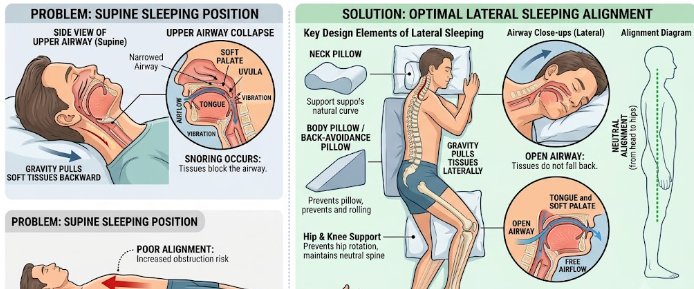
  • Positional Therapy: Some people only have apnea when they sleep on their back. Simple solutions, like sewing a tennis ball onto the back of your pajamas, can help you learn to sleep on your side.
  • Avoiding Alcohol and Sedatives: Limiting or avoiding these substances, especially before bedtime, can prevent the over-relaxation of throat muscles.
  • Quitting Smoking: This can reduce inflammation in your airway.

4. Surgery:

Surgery is usually considered a last resort if other treatments have failed. Surgical options aim to remove or shrink the tissue that is blocking the airway, such as enlarged tonsils, or to reposition the jaw to create more space.

If you suspect you have obstructive sleep apnea, the first step is to talk to your doctor. They can refer you for a sleep study (polysomnogram), which is the only definitive way to diagnose the condition. Taking control of your sleep apnea is a crucial step towards better energy, better health, and quieter nights for everyone in your home.

Seeing White Smoke From Your Car? Here’s What It Could Mean

Full view of a dark blue sedan on a crisp morning. The ground is covered in frost, and a plume of white condensation smoke drifts from the car's tailpipe

It can be alarming to look in your rearview mirror and see a plume of white smoke trailing behind your car. While it’s not always a sign of a major problem, it’s definitely something you shouldn’t ignore. This article will walk you through all the possible reasons your car might be giving off white smoke, in simple, easy-to-understand terms.

Is It Just Water Vapor? The Harmless Cause

The most common and least worrying cause of white smoke from the exhaust is simple condensation.

  • What it looks like: Thin, wispy white smoke that disappears quickly, much like your breath on a cold day.
  • When it happens: You’ll usually notice this when you first start your car, especially on cool mornings.
  • Why it happens: Moisture naturally collects in your car’s exhaust system when it cools down. When you start the engine, this moisture heats up and turns into steam, which is then pushed out of the exhaust. Once the exhaust system is fully warmed up, the smoke should go away.

If the white smoke you’re seeing fits this description, there’s no need to panic. It’s a perfectly normal occurrence.

When White Smoke Signals a Problem: The Serious Causes

If the white smoke is thick, persistent, and doesn’t go away after the car has warmed up, it likely points to a more serious issue. In most cases, this is due to coolant leaking into your engine’s combustion chamber, where it gets burned along with fuel. This is a problem that needs to be addressed by a mechanic as soon as possible to avoid major engine damage.

Here are the most common culprits behind this type of white smoke:

1. Blown Head Gasket

This is one of the most frequent serious causes of white exhaust smoke. The head gasket is a crucial seal between the engine block and the cylinder head. If it fails, coolant can leak into the cylinders.

  • What to look for: Thick, continuous white smoke with a sweet smell (the smell of antifreeze). You might also notice your engine overheating, a loss of coolant without any visible leaks, or a milky, frothy appearance in your engine oil.

2. Cracked Cylinder Head

Similar to a blown head gasket, a crack in the cylinder head can also allow coolant to seep into the combustion chamber. This is often a result of the engine overheating.

  • What to look for: The symptoms are very similar to a blown head gasket – persistent, sweet-smelling white smoke and potential engine overheating. A professional mechanic will need to diagnose whether it’s the gasket or the cylinder head itself that’s damaged.

3. Cracked Engine Block

This is a more severe and less common issue, but a crack in the engine block can also lead to coolant entering the combustion chambers. This is a major engine problem and can be very expensive to repair.

  • What to look for: The signs are consistent with other coolant leaks into the engine: dense white smoke from the exhaust and likely engine overheating.

Other Potential, Less Common Causes

While coolant leaks are the primary suspect for thick white smoke, there are a couple of other possibilities:

4. Leaking Fuel Injector

In some cases, especially in diesel engines, a faulty fuel injector can leak fuel into the cylinder. If too much unburned fuel gets into the exhaust, it can vaporize and create a thick white smoke.

  • What to look for: White smoke that smells strongly of raw fuel. You may also experience poor engine performance and decreased fuel economy.

5. Transmission Fluid Leak

In some older vehicles with specific types of automatic transmissions, a faulty vacuum modulator can cause transmission fluid to be sucked into the engine and burned. This can also produce white smoke.

What Should You Do?

If you suspect the white smoke from your car is more than just condensation, it’s crucial to have it checked by a qualified mechanic. Continuing to drive with a coolant leak can lead to catastrophic engine failure, which is a far more expensive problem to fix than the initial leak.
A mechanic can perform diagnostic tests, such as a cooling system pressure test or a block test, to pinpoint the exact cause of the white smoke and recommend the necessary repairs. Early detection and repair can save you a lot of money and keep your car running smoothly for years to come.

Seeing Black Smoke From Your Car? Here’s What It Means and What to Do

This royalty-free image captures a close-up, rear view of a neutral-colored car. The primary focus is its single exhaust pipe, from which a thick, dark cloud of black smoke is billowing.

The setting is generic and indistinct, resembling either a workshop or an open road, with the background subtly blurred. This technique effectively draws the viewer's eye to the exhaust and the dense smoke, making it the undeniable subject of the photo. The lighting is neutral and balanced, giving the image a realistic and documentary-like feel, powerfully illustrating the concept of vehicle emissions.

It can be alarming to look in your rearview mirror and see a plume of black smoke trailing behind your car. While it’s definitely a sign that something is not right with your vehicle, the good news is that in many cases, the cause is a simple fix. Black smoke is a clear indication that your car’s engine is burning too much fuel and not enough air. This is often referred to as a “rich” fuel mixture.

Let’s break down the common culprits behind that worrying black smoke, in simple, easy-to-understand terms.

Issues with Air Intake

For your engine to run efficiently, it needs the right balance of fuel and air. When this balance is thrown off, with too little air in the mix, you get incomplete combustion and black smoke.

  • Clogged Air Filter: This is one of the most common and easiest problems to fix. Your car’s air filter is designed to keep dust and debris out of the engine. Over time, it can become clogged, restricting the airflow. When the engine can’t get enough air, the fuel-to-air ratio becomes too rich, leading to black smoke.
  • Faulty Mass Airflow (MAF) Sensor: The MAF sensor measures the amount of air entering the engine and tells the car’s computer how much fuel to inject. If this sensor is dirty or faulty, it can send incorrect information, causing the computer to add too much fuel.

Problems with the Fuel System

The various components of your car’s fuel system work together to deliver the right amount of fuel to the engine. A problem with any of these parts can lead to an excess of fuel and, consequently, black smoke.

  • Leaking or Stuck Fuel Injectors: Fuel injectors are responsible for spraying a fine mist of fuel into the engine’s cylinders. If an injector is leaking or gets stuck in the open position, it will dump too much fuel into the cylinder, resulting in a rich mixture and black smoke.
  • Faulty Fuel Pressure Regulator: This component, as the name suggests, regulates the pressure of the fuel being sent to the engine. If it fails, it can cause the fuel pressure to become too high, forcing more fuel than necessary into the engine.
  • Issues with the Carburetor (in Older Cars): If you drive an older car with a carburetor, a faulty one can lead to too much fuel being mixed with the air, causing black smoke.

Deeper Engine and Exhaust Troubles

In some cases, black smoke can point to more serious internal engine problems or issues with the exhaust system.

  • Worn Piston Rings or Damaged Cylinders: Piston rings create a seal that keeps oil out of the combustion chamber. If these rings are worn or the cylinder walls are damaged, oil can seep in and burn along with the fuel, which can sometimes produce black, sooty smoke.
  • Clogged EGR Valve (in Diesel Engines): The Exhaust Gas Recirculation (EGR) valve helps to reduce emissions by recirculating a portion of the exhaust gas back into the engine’s cylinders. If this valve gets clogged with carbon deposits, it can malfunction and disrupt the air-fuel mixture, leading to black smoke, particularly in diesel vehicles.
  • Blocked Diesel Particulate Filter (DPF): Modern diesel cars are fitted with a DPF to capture and remove soot from the exhaust gases. If the DPF becomes blocked and can’t regenerate properly, it can cause a buildup of pressure and result in black smoke being forced out of the exhaust.

What You Should Do

If you notice black smoke coming from your car’s exhaust, it’s best to have it checked by a qualified mechanic as soon as possible. Continuing to drive with a rich fuel mixture can lead to:

  • Reduced Fuel Economy: You’ll be using more fuel than necessary, costing you more at the pump.
  • Poor Engine Performance: Your car may feel sluggish, hesitate when you accelerate, or have a rough idle.
  • Damage to Other Components: Over time, a rich fuel mixture can damage your spark plugs and catalytic converter, leading to more expensive repairs.

By addressing the issue promptly, you can often prevent more significant problems down the road and keep your car running smoothly and efficiently.

40 Easy Ways to Make Money Online with Your Laptop

 image portrays a smiling woman comfortably seated at a wooden desk, engrossed in her work on a laptop. The warm, inviting glow of a lamp illuminates her and her workspace, which is adorned with a few green plants, creating a cozy and productive atmosphere.

Significantly, a stack of banknotes and several coins are placed neatly beside her laptop, visually representing the theme of earning money online. The softly blurred background ensures the focus remains on the woman and the tangible success she has achieved through her online endeavors. The overall image conveys a sense of accessible, relaxed, and rewarding work from the comfort of one's own space.

Having a laptop and internet opens up a world of opportunities to make money. You don’t always need special skills or a lot of experience to get started. Here are 40 simple ways you can earn money online:

Writing and Content Creation

  1. Freelance Writing: Many websites and businesses need writers to create articles, blog posts, product descriptions, and more. You can find these jobs on freelance platforms. You get paid for each piece you write.
  2. Copywriting: This is about writing persuasive text for advertisements and marketing materials. Good copywriters are always in demand.
  3. Content Editing and Proofreading: If you have a good eye for grammar and spelling, you can help others by editing their written work.
  4. Creating Website Content: Businesses need content for their websites, like “About Us” pages, service descriptions, and FAQs.
  5. Writing eBooks: If you have knowledge on a certain topic, you can write and sell your own eBook on platforms like Amazon Kindle Direct Publishing.
  6. Creating Email Newsletters: Build an audience around a topic you’re passionate about and send out paid newsletters with valuable information.
  7. Scriptwriting: If you enjoy writing stories or explanations, you can write scripts for YouTube videos or short films.

Online Surveys and Simple Tasks

  1. Taking Online Surveys: Companies pay people to share their opinions through online surveys. The pay per survey is usually small, but it can add up over time.
  2. Micro-tasks Websites: These platforms offer small tasks like data entry, image tagging, or short transcriptions for a small fee per task.
  3. Testing Websites and Apps: Companies pay users to test their websites and apps and provide feedback on their usability.

Selling and E-commerce

  1. Selling Products on E-commerce Platforms: You can sell your own products (handmade or sourced) or even resell items on platforms like Jumia or Konga (popular in Nigeria), or global sites like eBay or Etsy.
  2. Dropshipping: This is where you sell products online without holding any inventory yourself. When a customer buys from you, the supplier ships the product directly to them.
  3. Affiliate Marketing: You promote other companies’ products and earn a commission for every sale made through your unique referral link. You can promote on social media, blogs, or websites.
  4. Selling Digital Products: Create and sell digital products like templates, e-books, courses, music, or software. Once created, they can be sold repeatedly.
  5. Print on Demand: Design products like t-shirts, mugs, and posters, and when someone orders, a third-party company prints and ships it. You don’t need to handle inventory or shipping.

Teaching and Tutoring Online

  1. Online Tutoring: If you excel in a particular subject, you can offer online tutoring services to students of all ages.
  2. Teaching English Online: Many platforms connect native English speakers with students around the world who want to learn English.
  3. Creating and Selling Online Courses: Share your expertise by creating video courses on platforms like Udemy or Coursera.
  4. Webinars and Workshops: Host paid webinars or online workshops on topics you are knowledgeable about.

Using Your Skills Online

  1. Graphic Design: If you have design skills, you can offer services like logo design, website graphics, and marketing materials.
  2. Web Development: With coding knowledge, you can build websites or help businesses with their web development needs.
  3. Social Media Management: Many businesses need help managing their social media accounts. You can create content, schedule posts, and engage with their audience.
  4. Virtual Assistant Services: Offer administrative, technical, or creative assistance to clients from a remote location. Tasks can include scheduling appointments, managing emails, and social media.
  5. Data Entry: Many companies need help with entering and organizing data. While often low-paying, it’s a simple task you can do from home.
  6. Transcription Services: If you have good listening and typing skills, you can transcribe audio or video files into text.
  7. Translation Services: If you are fluent in more than one language, you can offer translation services.
  8. Video Editing: With video editing software skills, you can help people create engaging videos for YouTube, social media, or marketing.
  9. Photography (Selling Online): If you have photography skills, you can sell your photos on stock photo websites.
  10. Voice-Over Work: If you have a clear and engaging voice, you can offer voice-over services for videos, commercials, or audiobooks.

Leveraging Social Media

  1. Becoming an Influencer: If you can build a large and engaged following on social media, brands may pay you to promote their products.
  2. Managing Social Media for Businesses: (Covered under Skills, but worth noting the social media platform aspect).
  3. Creating and Selling Social Media Templates: Design templates for social media posts and sell them to individuals and businesses.

Other Online Income Streams

  1. Blogging: Start a blog about a topic you enjoy and monetize it through advertising, affiliate marketing, or selling your own products.
  2. Vlogging (Video Blogging): Create videos on YouTube or other platforms and earn money through ads and sponsorships.
  3. Podcasting: Start a podcast and monetize it through advertising, sponsorships, or selling premium content.
  4. Online Gaming Tournaments: If you are skilled at video games, you can participate in online tournaments for cash prizes.
  5. Participating in Online Contests: Many websites and brands host online contests with cash prizes or other rewards.
  6. Cryptocurrency Trading (with caution): This is a high-risk activity, but some people make money by trading cryptocurrencies online. Research thoroughly before engaging.
  7. Investing Online: You can invest in stocks, bonds, or other financial instruments through online brokerage platforms. This requires research and understanding of financial markets.
  8. Domain Name Flipping: Buy domain names that you think will become valuable in the future and then sell them for a profit.

Important Considerations:

  • Time and Effort: Making money online takes time and effort. Don’t expect to get rich quick.
  • Scams: Be aware of online scams. If an opportunity sounds too good to be true, it probably is. Never pay money upfront for a job opportunity.
  • Payment Methods: Understand how you will get paid. Popular online payment methods include PayPal, Payoneer, and direct bank transfers. Ensure these services are readily available and reliable in your location.
  • Internet Reliability: A stable internet connection is crucial for most online earning opportunities.
  • Skills Development: Consider investing time in learning new skills that are in demand online.

With dedication and the right approach, your laptop and internet connection can be valuable tools for earning income from the comfort of your home anywhere in the world. Start exploring these options and find what works best for you!

Are You Spotting These Signs? Understanding High Blood Sugar Symptoms

The image depicts a middle-aged man with short brown hair and a neatly trimmed beard, wearing a casual t-shirt and jeans, carefully testing his blood sugar in a home kitchen setting. He is focused and relaxed as he pricks his finger and uses a blood glucose meter. The scene has soft, natural lighting.

Our bodies are amazing at sending us signals when something isn’t quite right. One important signal to pay attention to relates to your blood sugar levels. High blood sugar, also known as hyperglycemia, happens when there’s too much glucose (sugar) in your bloodstream. This can occur in people with diabetes, but it can also sometimes affect those without a diagnosed condition.

Recognizing the signs early is key. Let’s explore some common symptoms that might indicate your blood sugar is higher than it should be, with a simple explanation for each.

Feeling Thirsty All the Time (Polydipsia)

What it means: You might notice an unquenchable thirst, no matter how much water you drink. You could be reaching for drinks much more often than usual.

Why it happens: When you have high blood sugar, your kidneys have to work overtime to filter out the excess glucose from your blood. To do this, they draw more water from your body, which is then passed out as urine. This process can leave your body dehydrated, triggering a strong thirst signal as your body tries to replenish the lost fluids. It’s a bit like your body trying to dilute the extra sugar.

Needing to Pee More Often (Polyuria)

What it means: You find yourself making more frequent trips to the bathroom, even during the night. The amount of urine might also be more than usual.

Why it happens: This symptom is directly linked to the increased thirst and your kidneys’ efforts to get rid of excess sugar. As your kidneys pull more water from your blood to flush out the glucose, your bladder fills up more quickly and more often. It’s your body’s way of trying to physically remove the surplus sugar.

Feeling Very Hungry, Even After Eating (Polyphagia)

What it means: Despite eating regular meals, you might feel a persistent and sometimes intense hunger.

Why it happens: This might seem confusing – if there’s too much sugar in the blood, why would you feel hungry? The problem is that with high blood sugar (especially if it’s due to insulin resistance, a hallmark of type 2 diabetes), your body’s cells can’t effectively take in that glucose from the blood to use it for energy. Your cells are essentially “starving” for fuel, even though there’s plenty of sugar available. This sends signals to your brain that you need to eat more.

Unexplained Tiredness and Fatigue

What it means: You feel unusually tired, sluggish, and lacking energy, even after getting enough sleep. This isn’t just normal tiredness; it’s a more profound sense of fatigue.

Why it happens: This again relates to your body’s cells not getting the energy they need from glucose. If sugar can’t enter the cells efficiently to be converted into energy, your body won’t function at its best. Furthermore, dehydration caused by increased urination and the body’s efforts to manage high blood sugar can also contribute significantly to feelings of fatigue.

Blurry Vision

What it means: Your eyesight might become fuzzy or out of focus, making it hard to see things clearly. This can come and go.

Why it happens: High blood sugar levels can cause the lens in your eye to swell due to fluid shifts. This swelling changes the shape of the lens, affecting its ability to focus light properly, which results in blurry vision. Usually, once blood sugar levels are brought back under control, vision returns to normal. However, chronically high blood sugar can lead to more serious eye damage over time.

Slow-Healing Sores or Frequent Infections

What it means: You might notice that cuts, bruises, or sores take much longer to heal than they used to. You might also experience more frequent infections, like skin infections, yeast infections, or urinary tract infections (UTIs).

Why it happens: High blood sugar can impair your body’s natural healing processes and weaken your immune system. It can damage nerves and affect blood circulation, making it harder for blood (which carries healing nutrients and infection-fighting cells) to reach the affected areas. A sugary environment can also encourage the growth of bacteria and fungi, leading to more infections.

Unexplained Weight Loss

What it means: You might lose weight even though you haven’t changed your eating habits or increased your physical activity.

Why it happens: This can occur when your body isn’t able to use glucose for energy properly. If cells can’t get glucose, your body might start breaking down muscle and fat for fuel instead, leading to weight loss. Also, some of the calories you consume can be lost through the excess glucose that is excreted in your urine.

Tingling, Numbness, or Pain in Hands or Feet (Neuropathy)

What it means: You might experience sensations like pins and needles, numbness, burning, or pain, usually starting in your feet or hands and sometimes spreading.

Why it happens: Over time, consistently high blood sugar levels can damage your nerves.This nerve damage, known as neuropathy, can interfere with the normal transmission of signals between your limbs and your brain, leading to these unusual and often uncomfortable sensations.

What to Do If You Notice These Symptoms

If you’re regularly experiencing one or more of these symptoms, it’s important not to ignore them. Make an appointment to see your doctor or a healthcare professional. They can perform tests, like a blood glucose test, to check your sugar levels and determine if high blood sugar is the cause.

Early detection and management are crucial for preventing potential complications associated with persistently high blood sugar. Listening to your body and seeking timely medical advice can make a big difference to your long-term health.

Stay Cool & Healthy: 10 Amazing Benefits of Cucumbers (And a Word of Caution!)

cucumber

Cucumbers are more than just a crunchy addition to your salad or a soothing spa treatment for your eyes. This humble green veggie is packed with goodness that can do wonders for your health. But like all good things, moderation is key! Let’s dive into the amazing benefits of eating cucumbers and what to watch out for if you go overboard.

Top 10 Reasons to Crunch on Cucumbers

Here are ten fantastic ways cucumbers can boost your well-being:

  1. Keeps You Hydrated: Cucumbers are about 95% water! This makes them an excellent way to stay hydrated, especially on hot days or after a workout. Proper hydration is crucial for everything from energy levels to brain function.
  2. Packed with Nutrients (Low in Calories!): Don’t let their watery nature fool you. Cucumbers contain important vitamins and minerals like Vitamin K, Vitamin C, potassium, and magnesium, all while being incredibly low in calories. This makes them a guilt-free snack.
  3. Great for Weight Management: Because they are low in calories and high in water and fiber, cucumbers can help you feel full and satisfied. This can prevent overeating and support your weight loss or maintenance goals.
  4. May Help Lower Blood Sugar: Some studies suggest that cucumbers might help reduce blood sugar levels. While more research is needed, it’s a promising benefit, especially for those managing diabetes.
  5. Good for Your Tummy (Digestion): The fiber and water content in cucumbers can aid digestion and help prevent constipation. A happy gut means a happier you!
  6. Freshens Your Breath: Chewing on a cucumber slice can help combat bad breath. The water content cleanses your mouth, and some say it helps get rid of odor-causing bacteria.
  7. Supports Heart Health: The potassium in cucumbers can help regulate blood pressure, which is a key factor in heart health. Their fiber content may also contribute to healthy cholesterol levels.
  8. Could Strengthen Your Bones: Vitamin K is essential for bone health, and cucumbers are a good source of it. Getting enough Vitamin K can help with calcium absorption and bone strength.
  9. Antioxidant Power: Cucumbers contain antioxidants, which are substances that help fight off harmful molecules in your body called free radicals. This can protect your cells and may reduce the risk of certain diseases.
  10. Promotes Healthy Skin: The hydrating and anti-inflammatory properties of cucumbers aren’t just for spa days. Eating them can contribute to healthier, glowing skin from the inside out.

Too Much of a Good Thing? Potential Side Effects of Excess Cucumbers

While cucumbers are generally safe and healthy, eating a very large amount might lead to a few uncomfortable issues:

  • Digestive Discomfort: For some people, eating too many cucumbers can lead to gas, bloating, or an upset stomach. This is often due to a compound called cucurbitacin, which can cause indigestion in sensitive individuals.
  • Increased Urination: Because cucumbers are so high in water, consuming a large quantity can lead to more frequent trips to the bathroom. This is generally harmless but can be inconvenient.
  • Allergic Reactions (Rare): Though uncommon, some people might experience allergic reactions to cucumbers, such as skin rashes, itching, or swelling. If you notice any of these symptoms, stop eating cucumbers and consult a doctor.
  • Potential for Wax Coating Concerns: Conventionally grown cucumbers are often coated with wax to preserve them. While food-grade wax is generally considered safe, some people prefer to buy organic or peel their cucumbers to avoid it.
  • Blood-Thinning Interaction (with high Vitamin K): If you are on blood-thinning medication like warfarin, suddenly increasing your intake of Vitamin K (found in cucumbers) could interfere with your medication. It’s always best to discuss significant dietary changes with your doctor if you’re on medication.

The Bottom Line: Enjoy Cucumbers Wisely!

Cucumbers are a fantastic, refreshing, and healthy food to include in your diet. Their numerous benefits, from hydration to nutrient provision, make them a smart choice for most people.

Just remember, like with any food, balance is important. Enjoy your cucumbers in salads, sandwiches, infused water, or as a crunchy snack, but listen to your body and don’t overdo it. That way, you can reap all the wonderful benefits without any of the potential downsides. So, go ahead and enjoy the cool, crisp goodness of cucumbers