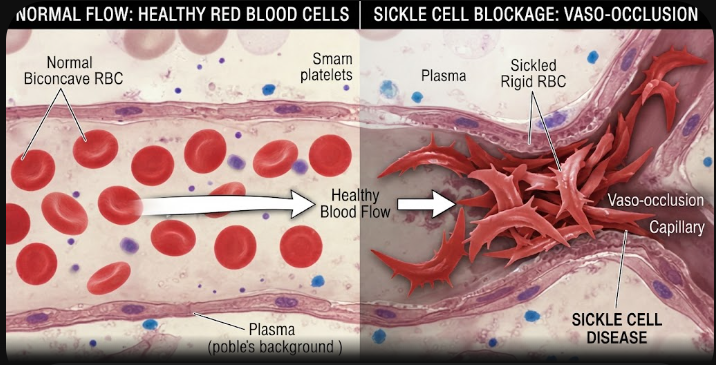
Ever wondered what happens inside the body during a sickle cell crisis? This medical emergency causes immense pain for those living with sickle cell disease. Basically, the genetic condition transforms normal, flexible red blood cells into stiff, crescent-like shapes. Consequently, these abnormal cells struggle to move smoothly through the body. In this article, we will explore exactly what triggers this sudden, debilitating pain and why the condition requires immediate medical attention.
The Internal Traffic Jam: Vaso-Occlusive Crisis
To understand the problem easily, you can picture a busy highway. Normally, cars flow freely without stopping. Similarly, healthy red blood cells glide smoothly through your tiny blood vessels to deliver nutrients. However, when the body experiences a crisis, the rigid, sticky cells clump together. They create a massive traffic jam inside your blood vessels. Doctors call this specific event a vaso-occlusive crisis. Because of this severe blockage, oxygen cannot reach your tissues and major organs. Therefore, the affected body parts rapidly begin to starve for oxygen.
The Severe Pain of a Sickle Cell Crisis
As soon as the oxygen supply drops, the body sends out intense warning signals. This sudden lack of oxygen triggers severe and debilitating pain. Often, patients describe this pain as sharp, stabbing, and completely overwhelming. Furthermore, this intense suffering can strike anywhere in the body. Most commonly, it affects the lower back, legs, arms, chest, and stomach. Additionally, a sickle cell crisis does not just last for a few brief minutes. Sadly, these agonizing episodes can continue for several hours or even drag on for many days at a time.
Why Emergency Care is Essential
Because the pain reaches such extreme levels, simple home remedies rarely work. Consequently, a patient experiencing a sickle cell crisis frequently needs an emergency hospital visit. Once at the hospital, medical professionals act quickly to manage the severe symptoms. They administer strong intravenous pain medications and provide heavy fluids to help unblock the trapped cells. Moreover, they give extra oxygen to support the starving tissues and organs. Quick medical action prevents permanent organ damage and helps the patient recover much faster.
Moving Forward and Learning More
Living with this condition requires constant vigilance and strong medical support. While a sickle cell crisis is terrifying, modern medicine offers effective ways to manage the pain and reduce the frequency of these dangerous episodes. Ultimately, spreading awareness helps patients get the timely, compassionate care they desperately need. If you want to learn more about how this genetic blood disorder affects the body long-term, you can read further on the Centers for Disease Control and Prevention (CDC) website.
References
- Centers for Disease Control and Prevention (CDC). “What is Sickle Cell Disease?”
- National Heart, Lung, and Blood Institute (NHLBI). “Sickle Cell Disease – Symptoms and Causes.”