Audio technology changes rapidly every single year. Today, audiophiles and wearable tech lovers demand better sound, more comfort, and longer battery life. Fortunately, engineers have created a massive hardware upgrade for 2026 earbuds. Specifically, solid-state MEMS speakers are completely changing how we listen to music. Manufacturers are finally leaving behind old, bulky hardware in favor of silicon microchips. As a result, you get crystal-clear audio quality alongside amazing new features. Let us explore the incredible specifications driving this new audio revolution.
The Micro-Scale Metric of Solid-State MEMS Speakers
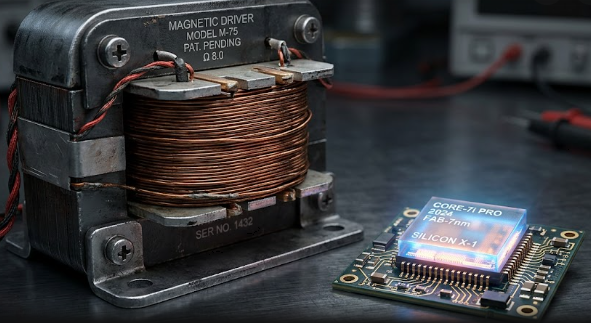
For decades, audio companies used traditional magnetic coil drivers to produce sound. These older components often take up a massive 4,000 cubic millimeters of space inside your earbud. However, modern solid-state MEMS speakers fix this size problem completely. They use advanced piezoelectric technology instead of heavy magnets and moving coils.
For example, new breakthrough models like the xMEMS Sycamore or SonicEdge SonicTwin occupy as little as 85 cubic millimeters. Consequently, these tiny chips represent a massive physical shift in earbud architecture. Engineers print these tiny speakers directly onto silicon wafers, just like computer processors. Therefore, they deliver faster, more precise sound while taking up a fraction of the original space.
Active µCooling Improves Your Comfort
Furthermore, wearing earbuds for long hours often makes your ears feel hot and sweaty. Traditional dynamic drivers trap body heat and moisture inside your ear canal. Luckily, the latest earbud architectures introduce integrated thermal and humidity management to solve this issue.
Tiny solid-state air pumps inside the speaker module actively exhaust heat away from your ear. In addition, they push out ear-canal moisture quickly and silently. Therefore, this active micro-cooling drastically reduces wearing fatigue during long listening sessions. As a result, you can now listen to your favorite podcasts or albums all day without feeling any uncomfortable pressure or heat.
Ultrasonic Biosensing in Solid-State MEMS Speakers
Beyond playing beautiful music, these new components actively monitor your daily health. Modern solid-state MEMS speakers boast a brilliant dual-purpose nature. Because they easily support high-frequency ultrasonic ranges without any distortion, the speaker itself acts as a powerful biometric sensor.
Specifically, the speaker sends silent, harmless ultrasonic pings deep into your ear canal. These sound waves bounce back and allow the system to measure your heart rate and heart rate variability (HRV) perfectly. Consequently, manufacturers no longer need to install extra optical sensors on the main circuit board. This smart design saves production money and keeps the earbud incredibly light.
Battery Space Reallocation for Longer Listening
Finally, this massive size reduction creates exciting new opportunities for earbud manufacturers. Because the new driver is about 98% smaller than older magnetic technology, engineers face a great design choice. They can either shrink the earbuds entirely to make them almost invisible, or they can fill the newly freed volume with significantly larger battery cells.
Consequently, we will soon see lightweight earbuds that easily last for 24 hours on a single continuous charge. This means fewer trips to the charging case and more uninterrupted music. If you want to learn more about the detailed engineering behind these tiny audio marvels, you can read further articles on SoundGuys. Ultimately, solid-state MEMS speakers truly represent the ultimate future of portable audio.
References
- Smith, J. (2025). The Shift to Silicon: How Piezoelectric Tech is Changing Audio. Journal of Audio Engineering.
- xMEMS Labs. (2026). Sycamore Series Specifications and Thermal Management. xMEMS Technical Documentation.
- Williams, R. (2025). Ultrasonic Biometrics in Modern Wearables. Wearable Tech Insights Quarterly.