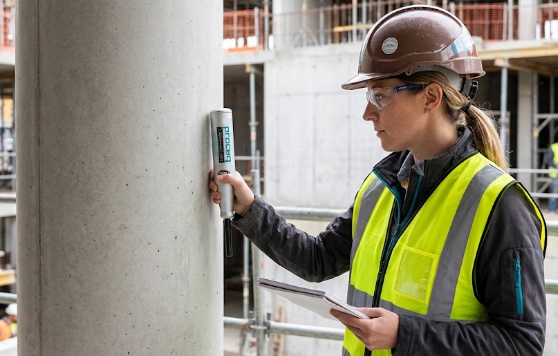
Ensuring structural safety requires accurate quality control on every construction site. Consequently, engineers use various On-Site Concrete Strength Testing Methods to verify that hardened concrete meets design requirements. Fresh concrete transforms through hydration, but environmental conditions can alter its strength development. Therefore, testing the actual structure ensures safety before workers remove formwork or apply heavy construction loads.
Site engineers rely on both non-destructive and destructive testing techniques to evaluate structural elements. Each method provides distinct insights into surface hardness, internal density, or actual compressive capacity. By combining these tests, engineers gain a complete picture of the building’s structural health.
Overview of Concrete Testing Methods
┌──────────────────────────────────────────────────┐
│ Concrete Testing Classifications │
└────────────────────────┬─────────────────────────┘
│
┌────────────────────┴────────────────────┐
▼ ▼
┌──────────────────┐ ┌──────────────────┐
│ Non-Destructive │ │ Destructive │
├──────────────────┤ ├──────────────────┤
│ • Rebound Hammer │ │ • Cube Crushing │
│ • UPV Testing │ │ • Core Drilling │
│ • Maturity Sensor│ │ │
└──────────────────┘ └──────────────────┘
Measuring Hardness with the Rebound Schmidt Hammer
The rebound hammer test offers a fast, non-destructive way to measure surface hardness. During the test, a spring-driven steel hammer hits the smooth concrete surface. The device measures how high the hammer rebounds after impact, giving a unitless rebound number.
Higher rebound numbers indicate a harder surface and higher compressive strength. However, surface carbonation, moisture levels, and coarse aggregate placement can alter the reading. Therefore, engineers use this tool primarily for quick relative strength comparisons across different slab areas rather than absolute strength measurement.
Rebound Hammer Mechanism
[ Spring-Loaded Plunger ] ──► (Impacts Concrete)
│
▼
[ Rebound Distance Measured ] ──► (Generates Rebound Number)
Assessing Density with Ultrasonic Pulse Velocity
Ultrasonic Pulse Velocity (UPV) provides a non-destructive way to evaluate internal concrete quality. This equipment transmits electro-acoustic pulse waves directly through the structural member. The system measures the precise speed at which these sound waves travel from the transmitter to the receiver.
Faster pulse speeds indicate dense, sound concrete with few internal defects. Conversely, slower pulse speeds signal internal voids, honeycombing, or hidden structural cracks. As a result, UPV testing helps site teams locate hidden structural weaknesses without damaging the element.
Ultrasonic Pulse Velocity (UPV) Setup
Transmitter Receiver
┌───────────┐ Electro-Acoustic Pulse ┌───────────┐
│ (T) ├──────────────────────────────────►│ (R) │
└─────┬─────┘ =======> Sound Waves =======> └─────┬─────┘
│ │
└─────────────[ Solid Concrete Member ]─────────┘
Compressive Cube and Cylinder Testing
Compressive cube crushing remains the standard reference method for structural concrete compliance. Workers pour fresh wet concrete into standard steel moulds during site placement. After field curing alongside the main structure, laboratory technicians place these cubes inside a calibrated Compression Testing Machine (CTM).
Standard 28-Day CTM Testing Cycle
[ Field Moulding ] ──► [ Water Curing ] ──► [ CTM Crushing ]
(Day 0) (Days 1 to 28) (At 7, 14, & 28 Days)
The CTM applies a steady compressive force until the concrete specimen fails completely. Technicians perform these crushing tests at 7, 14, and 28 days to plot strength development curves. Consequently, this test verifies if the delivered batch meets the design characteristic strength (f_{ck}).
Evaluating Structures with Concrete Core Drilling
When non-destructive test results yield inconclusive data, engineers turn to concrete core drilling. This semi-destructive technique uses a diamond-tipped core drill to extract physical cylindrical samples from the actual structure.
Workers transport these core samples to a certified laboratory for surface dressing and compression testing. Core drilling yields the most reliable measurement of actual in-situ concrete strength. However, because core extraction cuts through internal concrete, engineers must carefully choose drilling locations to avoid severing main reinforcement bars.
Tracking Hydration using the Maturity Method
Modern smart construction relies heavily on the maturity method for real-time monitoring. Technicians embed small wireless temperature sensors directly inside the fresh concrete element before pouring. These sensors record internal hydration temperatures continuously over several days.
Smart Maturity Sensor Workflow
[ Embedded Sensor ] ──► [ Tracks Heat/Time ] ──► [ Estimates Strength ]
(Inside Formwork) (Hydration Curve) (Real-Time App Data)
The system calculates a maturity index based on the combined effect of temperature and curing time. As a result, site engineers can estimate real-time strength development accurately without waiting for laboratory cube tests. This data allows contractors to strip formwork and apply construction loads safely. You can find additional technical specifications and testing standards on the American Society for Testing and Materials official portal.
References
- American Society for Testing and Materials. (2020). Standard Test Method for Rebound Number of Hardened Concrete (ASTM C805/C805M). ASTM International.
- British Standards Institution. (2019). Testing concrete in structures – Non-destructive testing – Determination of rebound number (BS EN 12504-2). BSI.
- Neville, A. M. (2011). Properties of Concrete (5th ed.). Pearson Education.