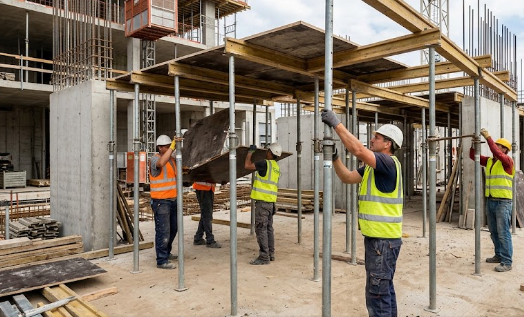
To begin with, slab formwork acts as a temporary mold that holds wet concrete in its proper shape until it hardens completely. Builders construct this temporary structure using timber, plywood, or steel panels. Consequently, the concrete gains enough internal strength to support its own weight over time. Furthermore, a well-built mold ensures that the final concrete surface looks smooth and level. As a civil engineer, you must understand that installing this mold correctly prevents costly material waste on the construction site. Therefore, workers must secure all panel joints tightly to stop wet concrete from leaking out during the pour.
Essential Support Systems for Slab Formwork
Next, we must look at the specific support systems that hold the slab formwork securely in place. The wet concrete carries a massive amount of weight initially. As a result, engineers use adjustable steel props and strong timber runners to bear this heavy load safely. Workers place these steel props at carefully calculated distances beneath the main wooden or steel decking. In addition, they brace the props to prevent any dangerous side-to-side movement. For example, if a worker bumps into an unbraced prop, the entire structure could easily collapse. Thus, you must always double-check the stability of your temporary supports before you pour any concrete.
Safe Striking Times for Slab Formwork
When can you safely remove the mold? Engineers call this removal process “striking.” According to structural standards like BS 8110 and Eurocode 2, you must follow specific timelines to strike slab formwork safely. First, you can usually remove the vertical side forms of beams quite early, often within 24 to 48 hours. However, the soffit (the bottom part) requires much more curing time. Typically, builders leave the bottom panels in place for 7 to 14 days. Moreover, if the concrete spans a large distance or the ambient weather remains cold, you must leave the supporting steel props in place even longer.
The Dangers of Removing Slab Formwork Too Early
What happens if you rush the striking process? Removing slab formwork too early creates massive safety risks on site. Primarily, the young concrete has not developed enough structural strength to hold its own weight. Consequently, the concrete floor will bend downward, causing excessive deflection. In the worst-case scenario, the entire concrete structure will collapse entirely. Such a catastrophic failure endangers the lives of workers and wastes expensive construction materials. Therefore, you must always rely on standard code guidelines and wait patiently for the concrete to cure properly.
Conclusion and Further Reading
In conclusion, mastering slab formwork installation and striking times guarantees a safe and successful building project. Always use strong support materials, follow codes like BS 8110 strictly, and never rush the removal process. Ultimately, your patience during the curing stage protects your structure from dangerous deflection and collapse. For further reading on standard concrete curing practices and safe formwork removal, you can visit the Concrete Centre’s guide on formwork.
References
- British Standards Institution. (1997). BS 8110-1:1997 Structural use of concrete – Code of practice for design and construction.
- European Committee for Standardization. (2004). Eurocode 2: Design of concrete structures.