With premium motor spirit (PMS) pump prices climbing past ₦1,400 per liter across Nigeria this May, car owners are urgently looking for alternatives. Consequently, the rush for a CNG vehicle conversion is at an all-time high. However, many people are making a huge mistake by using poor-quality DIY kits and uncertified roadside mechanics. These cheap installations pose severe structural hazards and can easily destroy your car. Therefore, as a car owner, you must understand the technical details before you change your fuel system. In this article, we will break down the critical safety specs you need to guarantee a safe CNG vehicle conversion.
Cylinder Class Integrity in a CNG Vehicle Conversion
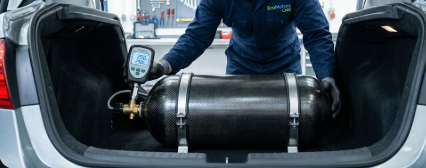
First and foremost, the cylinder tank is the most crucial safety spec in any CNG vehicle conversion. You must educate yourself on the different cylinder classes available in the market. For instance, roadside mechanics often use Class 1 cylinders. These tanks consist entirely of structural steel, making them incredibly heavy but very cheap. On the other hand, modern Class 4 cylinders use a high-tech carbon fiber matrix. As a result, they are lightweight and much safer, even though they cost a lot more money.
Furthermore, you must never use low-grade steel tanks for this process. A standard CNG tank must safely handle up to 200 bar (2,900 PSI) of pressure. If you install a weak tank, it can easily explode under high pressure. Therefore, always verify the pressure rating on the cylinder before the mechanic installs it in your trunk.
Choosing Gas Kits for Your CNG Vehicle Conversion
After selecting the right cylinder, you need to choose the best gas kit. Currently, the market offers two main types: Venturi kits and Sequential kits. Older “Venturi” style kits mix the gas crudely into the engine’s intake manifold. Because of this outdated technology, your car will suffer a 20% loss in engine power. Additionally, Venturi kits often cause dangerous engine backfires.
Conversely, modern Sequential Injection Kits offer a much better solution for your CNG vehicle conversion. These advanced kits use independent electronic gas injectors. Installers map these electronic injectors directly to your car’s Engine Control Unit (ECU). Consequently, the engine receives the exact amount of gas it needs at all times. This precise mapping preserves your engine life and gives you a perfectly smooth driving experience.
Managing Suspension During a CNG Vehicle Conversion
Another critical factor car owners often ignore is the suspension and weight balance. When you install a full steel Class 1 CNG cylinder, it adds roughly 70kg to 100kg of extra dead weight to your trunk. Naturally, this heavy load will continuously drag down the back of your car.
To prevent this dangerous tail-sagging, you must upgrade your suspension hardware during the CNG vehicle conversion. Specifically, you should install heavy-duty coil springs. Alternatively, you can use high-quality polyurethane spring spacers to lift the back end. If you fail to make these suspension adjustments, your shock absorbers will fail prematurely. Besides, driving a poorly balanced car greatly reduces your control on the highway and increases your risk of accidents.
The Importance of Dual-Fuel Valve Calibration
Finally, you must pay close attention to how the conversion system transitions from petrol to gas. A high-quality CNG vehicle conversion relies heavily on accurate dual-fuel valve calibration. Essentially, a properly calibrated system always starts your engine using petrol before making any switch.
Why is this petrol start so important? Petrol acts as a natural liquid lubricant for your engine valves. Therefore, starting the car on petrol lubricates the valves thoroughly before the system automatically switches over to dry CNG. This critical health spec dramatically extends the life of older engines. Without this automatic transition, the dry gas will cause your valves to wear out very quickly. Ultimately, proper calibration saves you from highly expensive engine repairs down the road.
To learn more about engine safety, tank pressure standards, and alternative fuels, you can read further on the Alternative Fuels Data Center website.
References
- Alternative Fuels Data Center. (2026). Natural Gas Vehicles. U.S. Department of Energy.
- Automotive Engineering Standards. (2025). CNG Cylinder Pressure Ratings, Suspension Balancing, and Safety Specs.