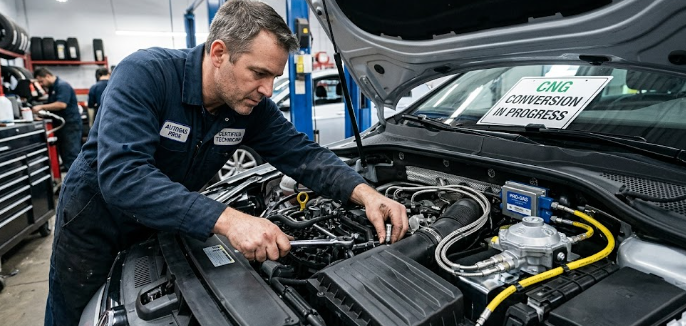
Fuel prices continue to fluctuate, making many drivers look for cheaper alternatives to petrol. In 2026, converting your engine to Compressed Natural Gas (CNG) has become a primary topic for car owners. The National Automotive Design and Development Council (NADDC) strongly supports this change to reduce transport costs. If you want to save money at the pump, understanding how this transition works is very important.
Many people remember my old 2007 Yaris and the many repairs it needed. Just like fixing an old car, switching to CNG requires technical knowledge and the right parts. While the initial price of a conversion kit might seem high, the long-term savings are often worth the effort. Petrol prices currently sit around ₦1,200 per liter, while CNG is much more affordable at roughly ₦380 to ₦500 per SCM.
The Real Cost of Converting Your Engine
You must consider the upfront investment before you make the switch. Currently, the price for a high-quality, 4-cylinder CNG conversion kit ranges between ₦1,000,000 and ₦1,300,000. Larger engines, like V6 or V8 models, cost even more because they require more complex parts. Although this sounds expensive, the fuel savings usually pay for the kit within 12 to 18 months of regular driving.
When converting your engine, you should also look for government incentives. The NADDC often partners with certified workshops to offer installment payment plans. These programs help spread the cost so you do not have to pay everything at once. Always ask your local technician if there are active subsidies or tax breaks available in your state.
Safety Specs and NADDC Standards
Safety is the biggest concern for most drivers when it comes to gas cylinders in their trunks. However, modern CNG tanks are incredibly strong and go through rigorous testing. They are designed to withstand high pressure and even severe collisions without leaking. The NADDC strictly regulates which workshops can perform these tasks to ensure every installation meets international safety standards.
When you are converting your engine, you must only use accredited centers. These certified workshops use seamless steel or composite cylinders that are much tougher than your car’s petrol tank. They also install safety valves that automatically shut off the gas flow if they detect a leak. Always check for the official NADDC accreditation sticker before you leave your car with any mechanic.
Long-Term Impact on Engine Life
A common myth is that CNG ruins engines, but the reality is actually the opposite. CNG is a “clean” fuel, meaning it leaves behind very few carbon deposits compared to petrol. This leads to cleaner spark plugs and less gunk inside your combustion chamber. When converting your engine, you are actually helping it run smoother over long distances.
However, you must adjust your maintenance routine. CNG burns hotter than petrol, which can put more stress on your exhaust valves. You should use high-quality, CNG-specific engine oil to handle these higher temperatures. If you follow a strict service schedule, a CNG-powered engine can last just as long as a petrol one. For example, my Yaris would have loved the cleaner burn of gas back in the day!
Is the Switch Finally Worth It?
In 2026, the infrastructure for CNG is better than ever before. More gas stations are popping up in major cities like Lagos, Abuja, and Port Harcourt. This makes converting your engine a practical choice rather than a risky experiment. If you drive long distances daily, the reduction in fuel costs will significantly improve your monthly budget.
Ultimately, the choice depends on how much you drive and how long you plan to keep your car. For commercial drivers and heavy commuters, the math clearly favors gas. For someone who only drives once a week, the high setup cost might take too long to recover. Take your time to weigh these factors and choose the path that fits your wallet.
References
- National Automotive Design and Development Council (NADDC) 2026 Guidelines.
- Major Energies Marketers Association of Nigeria (MEMAN) Fuel Price Index.
- Haul247 Technical Report: Long-term Effects of CNG on Internal Combustion.
For a deeper look at the technical specifications of gas cylinders, you can read more on international CNG safety standards.