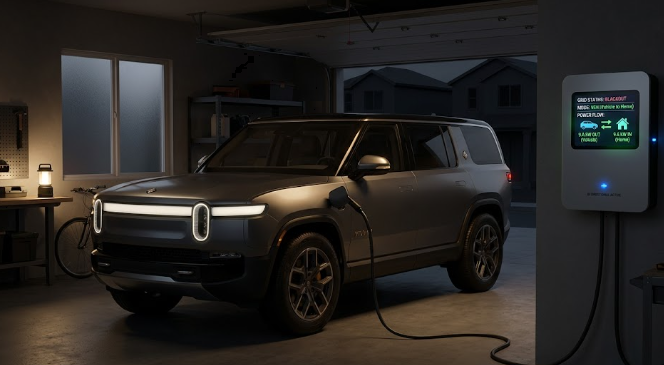
Imagine your electric vehicle (EV) sitting in your driveway. In 2026, that car is much more than just a way to get to work. It is essentially a giant, mobile battery that can save your home during a power cut. However, you cannot just plug a standard cable into your wall to make this work. You must ensure your electrical setup is Bi-Directional Ready. This technology allows power to flow both ways: into your car and out of it.
The trend of using cars as power stations is growing rapidly. It helps homeowners maintain a healthy lifestyle even when the main power grid fails. By turning your vehicle into a backup generator, you gain independence from utility companies. In this article, we will explore what this hardware involves and how it keeps your home running.
Understanding V2H and V2G Technology
To understand if you are Bi-Directional Ready, you first need to know two important terms. The first is V2H, which stands for Vehicle-to-Home. This technology allows your car to send electricity directly to your house. For example, if a storm knocks out the power lines, your car can keep your fridge running and your lights on. It acts as a silent, clean generator for your family.
The second term is V2G, or Vehicle-to-Grid. This is a bit different because it involves the utility company. With V2G, you can actually sell the extra power in your car battery back to the city. This usually happens during “peak hours” when everyone is using electricity and prices are high. Consequently, your car becomes a tool that can help you earn money or lower your monthly bills.
Is It Safe for Your Battery?
Many people worry that using their car to power a house will ruin the battery. They fear that frequent charging and discharging will make the battery wear out too fast. However, the “Battery Health Paradox” is mostly a thing of the past. By 2026, major manufacturers like Tesla, Ford, and Hyundai have solved this issue. They now include bi-directional usage in their official vehicle warranties.
These companies use AI-Smart Inverters to manage the energy flow perfectly. The AI ensures that the battery never drains too low or gets too hot. Specifically, the system balances the load so that the impact on the battery is minimal. Because of these smart controls, using your EV as a backup generator is now a safe and reliable practice for most modern electric cars.
The Hardware You Need to be Bi-Directional Ready
To make your home Bi-Directional Ready, you need a specific piece of equipment. You cannot use a standard Level 2 charger for this task. Instead, you must install a Bi-Directional DC Charger. This device is the essential bridge between your car’s high-voltage battery and your home’s electrical panel. It converts the Direct Current (DC) from the car into the Alternating Current (AC) that your appliances use.
Installation requires a professional electrician who understands smart home integration. This charger talks to your home’s energy management system to decide when to draw power. Additionally, you may need a “transfer switch” or a “power gateway.” This hardware safely disconnects your home from the main grid during a blackout. This prevents electricity from flowing back into the street, which protects utility workers from accidents.
Emergency Capacity: Why Gas Generators are Obsolete
The capacity of a modern EV battery is truly impressive compared to traditional backup systems. A typical EV often carries a 75kWh battery. To put that in perspective, an average home uses about 15 to 20kWh of electricity per day. Therefore, a fully charged car can power your entire house for 3 to 5 days without any issues.
Furthermore, EV backup systems are completely silent and produce zero fumes. Unlike old gas generators, you do not need to store dangerous fuel in your garage. You also do not have to worry about engine maintenance or loud noise at night. Because the car is always plugged in, the backup power starts almost instantly when the lights go out. This makes the transition to a modern, electric-focused home both easy and efficient.
If you want to learn more about the technical standards for these chargers, you can read more about ISO 15118-20 and the future of grid integration.
References
- Ford Motor Company. (2024). Intelligent Backup Power and V2H Integration Guidelines.
- Tesla, Inc. (2025). Universal Wall Connector and Bi-Directional Support Documentation.
- Hyundai Motor Group. (2025). V2L and V2G Battery Warranty Extensions for Ioniq Series.
- Department of Energy (DOE). (2026). The Role of EVs in Residential Grid Resilience.