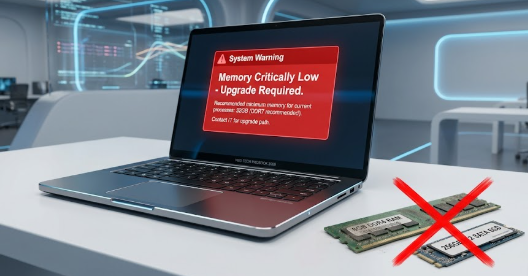
Buying a new laptop today feels different than it did two years ago. If you want a machine that lasts, you must Don’t Buy These Specs in 2026 like 8GB of RAM or a 256GB SSD. While these numbers seemed “fine” for basic office work in the past, the landscape has shifted. Modern Windows 11 updates and AI-native applications now demand much more from your hardware. If you choose low-end specs now, your computer will likely feel slow and outdated within just a few months.
The Death of 8GB RAM in the AI Era
Artificial Intelligence has changed how our computers use memory. In 2026, many apps run local AI models that stay loaded in your system memory at all times. Because of this, 8GB of RAM is no longer enough to keep your system snappy. When you open multiple tabs in Chrome alongside an AI assistant, an 8GB system starts “swapping” data to the hard drive. This process slows down your entire experience and makes simple tasks feel like a chore.
Furthermore, you should consider the importance of memory bandwidth. Modern processors in 2026 rely on high-speed DDR5 or LPDDR5x memory to feed data to the CPU and NPU (Neural Processing Unit). Lower RAM capacities often come with lower bandwidth, which chokes your processor’s potential. To keep your laptop fast for the next three years, 16GB is the absolute minimum you should accept.
Why 256GB SSDs No Longer Make Sense
Storage space is the next big hurdle for modern users. A 256GB SSD sounds like a lot of room until you realize how large modern software has become. Windows 11 and its cache files can easily take up 60GB to 80GB alone. Once you install a few professional apps and download some project files, you will find your drive is almost full. A full SSD is a slow SSD, as it loses the “breathing room” it needs to move data around.
You also need to look at SSD Read/Write speeds when shopping. In 2026, we have moved into the era of PCIe 5.0 storage. Budget 256GB drives are often older, slower models that cannot keep up with the fast boot times we expect today. High-end drives now reach speeds over 10,000 MB/s, but cheap, small drives often lag far behind. Choosing a 512GB or 1TB drive usually ensures you get a newer, faster controller that improves your daily productivity.
Future-Proofing Your Purchase
If you want your investment to stay relevant, you must aim for 16GB of RAM and at least a 512GB SSD. These specs provide the necessary ceiling for the next generation of software updates. When you avoid the trap and Don’t Buy These Specs in 2026, you save money in the long run by not needing an upgrade next year. Your laptop should be a tool that helps you work, not a bottleneck that holds you back. You can find more detailed hardware benchmarks and buying advice at PCWorld.
References
- Microsoft Hardware Support (2026). Updated System Requirements for Copilot+ Features.
- TechRadar Computing (2026). The Great RAM Crisis: Why 16GB is the New Baseline.
Tom’s Hardware (2026). SSD Performance Hierarchy: PCIe 5.0 vs Legacy Storage.