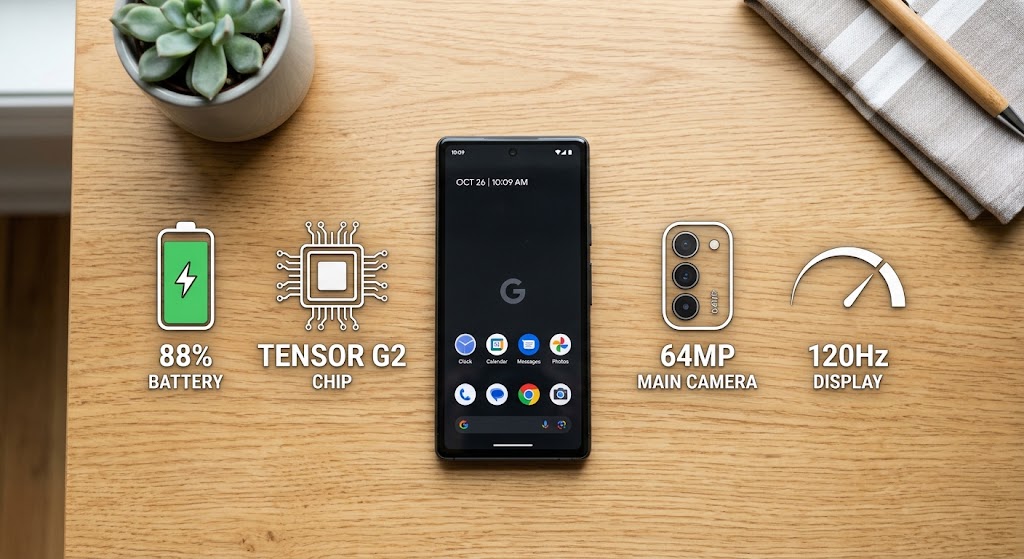
Summary of Key Points
- Focus on display quality by prioritizing 90Hz or 120Hz refresh rates over mere screen size.
- Choose processors like MediaTek Dimensity or Snapdragon 6-series paired with at least 6GB of physical RAM.
- Select phones with fast UFS storage instead of slower eMMC memory formats.
- Target a 5,000mAh battery paired with at least 18W to 33W fast charging support.
- Look past high megapixel counts and prioritize main camera sensor quality and software support.
Introduction
Shopping for an affordable phone can feel overwhelming because manufacturers release dozens of models every year. Consequently, buyers often struggle to separate marketing gimmicks from real hardware value. Understanding what to look for in budget smartphone specs before buying will save you money and ensure you get a reliable device that lasts for years. Therefore, focusing on core performance components rather than flashy promotional claims is essential for making a smart purchase.
Processor and RAM: The Engine of Your Device
The system-on-chip (SoC) determines how fast your phone opens apps, processes photos, and handles multitasking. For instance, modern budget processors like the Snapdragon 695, Snapdragon 4 Gen 2, or MediaTek Dimensity 700 series deliver excellent daily speed without draining your battery quickly. Therefore, always research the specific processor model rather than simply counting CPU cores.
In addition to the processor, system memory plays a critical role in maintaining system responsiveness. You should aim for a minimum of 6GB of physical RAM today. Although many budget brands advertise virtual RAM features, this software trick uses storage space and operates significantly slower than real physical RAM.
Display Quality and Refresh Rate
Because you interact with the screen constantly, display quality matters immensely. Many affordable devices now offer Full HD+ (FHD+) resolution instead of low-resolution HD+ panels. Furthermore, higher refresh rates make scrolling through social media and navigating menus feel exceptionally smooth. Therefore, look for screens offering a 90Hz or 120Hz refresh rate. Additionally, AMOLED screens provide better contrast, deeper blacks, and vibrant colors compared to traditional LCD panels.
Storage Speed and Capacity
Total storage capacity is important, but storage speed directly impacts overall phone responsiveness. Budget devices typically use either UFS (Universal Flash Storage) or eMMC memory. Always choose UFS storage (such as UFS 2.2) because it reads and writes data much faster than outdated eMMC storage. Consequently, UFS memory reduces app launch times and prevents system lag over time. Aim for at least 128GB of internal storage, and check whether the device includes a microSD card slot for easy expansion.
Battery Capacity and Charging Speed
Long battery life is a major strength of modern affordable phones. Ideally, select a device equipped with a 5,000mAh battery. This capacity easily provides a full day or even two days of moderate usage. However, battery size tells only half the story. Charging speed is equally important. Avoid phones capped at basic 10W charging, as they take hours to replenish. Instead, choose models supporting 18W, 33W, or higher fast charging standards.
Understanding Budget Smartphone Camera Specs
Phone manufacturers frequently inflate camera specs by adding extra low-quality lenses. For example, brands often include 2MP macro or depth sensors simply to advertise a quad-camera system. Instead of counting lenses, focus on the primary camera. Look for a main sensor with a wide aperture (such as f/1.8) and Optical Image Stabilization (OIS) if available. Additionally, an ultra-wide lens offers far more real-world utility than a low-resolution macro sensor.
Software Support and Updates
Operating system updates significantly influence how long your device remains secure and functional. Manufacturers like Samsung and Google now offer three to four years of security updates even on entry-level models. Therefore, check the manufacturer’s update promise before making your final decision.
Ultimately, knowing what to look for in budget smartphone specs before buying helps you maximize your investment without overspending. By prioritizing a modern processor, an AMOLED display, fast UFS storage, and clear update policies, you can easily secure a great device. To dive deeper into detailed hardware technical specifications and industry benchmarks, visit GSMArena for comprehensive mobile device reviews.
References
Android Authority. (2024). Smartphone Specs Guide: How to Choose the Best Budget Phone. AndroidAuthority.com.
GSMArena. (2024). Mobile Phone Specifications and Hardware Glossary. GSMArena.com.