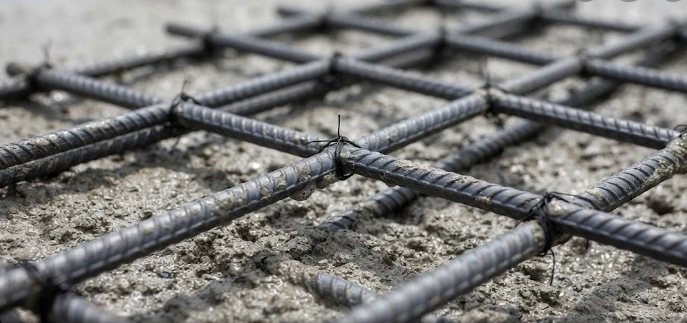
Have you ever wondered why modern concrete floors and roofs do not crack and collapse under heavy loads? The secret lies in a brilliant partnership between two different building materials. The synergy of steel and concrete creates a powerful composite system that shapes modern civil engineering. Without this combination, large skyscrapers and durable bridges would simply fail. Let us explore why steel and concrete work so well together.
Strengths and Weaknesses of Individual Materials
To understand this partnership, we must first look at how each material behaves on its own. Concrete handles high compressive forces exceptionally well, meaning it resists crushing under heavy weights. However, concrete possesses a major weakness because it is very weak in tension and pulls apart easily. Therefore, engineers must add another material to handle the pulling forces.
The Crucial Role of Steel Rebar
This is where steel reinforcement steps in to save the day. Steel rebar or welded wire mesh bridges this gap by absorbing tensile stresses efficiently. Furthermore, embedded steel bars prevent wide crack formation when heavy loads bend the slab downward. Consequently, the concrete takes the crushing loads while the steel handles the stretching forces.
Thermal Compatibility Benefits
Another amazing reason for this pairing involves how both materials react to temperature changes. Steel and concrete share nearly identical thermal expansion coefficients. Because they expand and contract at the exact same rate, they prevent internal stresses and cracking during extreme temperature fluctuations. Therefore, buildings remain structurally sound through hot summers and cold winters.
Bond Strength and Mechanical Grip
How do steel and concrete stay locked together without sliding apart? The ribbed texture of deformed steel bars ensures a strong mechanical grip within the hardened concrete matrix. As the wet concrete hardens around the textured rebar, it forms an unbreakable mechanical bond. Because of this strong grip, both materials act as a single unified unit under stress.
Conclusion and Further Reading
In summary, the synergy of steel and concrete relies on balancing compressive and tensile strengths, matching thermal expansion rates, and maintaining a strong mechanical bond. This engineering marvel makes our homes and offices safe and durable. If you want to dive deeper into advanced structural design techniques and material science, you can explore detailed guides on The Constructor.
References
- Nilson, A. H., Darwin, D., & Dolan, C. W. (2010). Design of Concrete Structures. McGraw-Hill Education.
- MacGregor, J. G., & Wight, J. K. (2011). Reinforced Concrete: Mechanics and Design. Pearson.