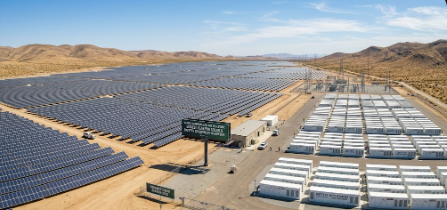
Power plant operators are adding a massive 86 gigawatts (GW) of new utility-scale electric capacity to the United States power grid. According to recent data from the U.S. Energy Information Administration (EIA), this historic surge makes 2026 the biggest year for solar and battery deployment in history. Clean energy technologies completely dominate this expansion. Consequently, this massive shift fundamentally changes how the national grid maintains its daily reliability. For example, solar power alone now accounts for more than half of all new power capacity. Because developers are building these clean power plants at an unprecedented speed, the energy sector is experiencing a true revolution. Therefore, traditional fossil fuel sources are quickly losing their dominant market position to cheaper, cleaner alternatives.
How Solar Power Drives the Biggest Year for Solar and Battery Deployment
Solar energy acts as the main engine behind this year’s record-breaking numbers. Specifically, developers plan to install 43.4 GW of new utility-scale solar capacity this year. This represents a staggering 60% increase in capacity additions compared to last year. As a result, solar farms now provide the majority of the new energy flowing into the national power grid.
Texas leads the nation by hosting roughly 40% of these new solar installations. For instance, the Tehuacana Creek 1 Solar project in Navarro County, Texas, serves as a prime example of this growth. This single massive facility will add 837 megawatts (MW) of solar power to the grid. Consequently, it ranks as the largest solar project coming online this year. Through projects like this, the state will soon generate more electricity from solar than from coal for the first time.
Eliminating the Nighttime Gap with Massive Battery Pairing
Solar panels generate abundant electricity during sunny days, but they stop producing power when the sun sets. To solve this problem, energy companies are rapidly adopting the “battery pairing” trend. In fact, utility-scale battery storage accounts for 28% of the new energy capacity in 2026. This means developers are adding a record 24 gigawatts of battery storage to the grid.
Furthermore, the industry is moving toward a reliable 2:1 solar-to-battery ratio. These massive batteries store excess solar energy during peak daylight hours. Subsequently, they discharge this stored power into the grid when solar production drops. This process effectively bridges the critical “Nighttime Gap” that previously threatened grid stability.
Texas, California, and Arizona together claim about 80% of this new storage capacity. For example, developers are building the Lunis Creek Battery Energy Storage System (BESS) in Jackson, Texas. This massive facility will deliver 621 MW of storage capacity, making it one of the largest storage farms in the country. Therefore, cities can confidently rely on clean energy even during the darkest hours of the night.
Wind Energy Makes a Powerful Comeback
While solar dominates the headlines, wind energy is also making a huge comeback this year. After a few slow years, annual wind capacity additions are doubling in 2026. Specifically, energy operators plan to bring 11.8 GW of new wind power online. States like New Mexico, Texas, Illinois, and Wyoming will host more than half of these new wind turbines.
The most notable development is the SunZia Wind project located in New Mexico. Once it begins commercial operations, it will feature 916 wind turbines across the state. At 3,650 MW, SunZia will officially become the largest onshore wind project in United States history. Additionally, a 550-mile transmission line will transport this wind energy directly to major markets in Arizona and California.
Analyzing the Cost-Efficiency and High Return on Investment
If you analyze the energy market closely, you will see a massive shift in financial returns. Today, combining solar panels with battery storage costs less than building and operating traditional natural gas plants. This financial advantage applies directly to major competitive markets like Texas, Arizona, and California.
For a long time, traditional power companies claimed that fossil fuels offered the cheapest electricity. However, rapid technological progress has flipped this dynamic entirely. Renewable energy systems no longer require expensive fuels to run. Instead, they harness free natural resources while battery prices continue to plummet. Consequently, clean energy combinations provide a much safer and more profitable return on investment for developers.
In conclusion, the data clearly proves that 2026 stands out as the biggest year for solar and battery deployment. By deploying 86 gigawatts of new capacity, developers are actively creating a cleaner, more resilient power system. This incredible growth protects the environment while significantly reducing electricity generation costs across the country. To discover more detailed statistics and insights about this historic shift, you can read the official announcement on the U.S. Energy Information Administration website.
References
- U.S. Energy Information Administration (EIA). (2026). Preliminary Monthly Electric Generator Inventory.
- Union of Concerned Scientists. (2026). New Records Set in the Renewable Energy Marathon.
Energy Online / LCG Consulting. (2026). EIA Estimates Record U.S. Electric Generating Capacity Additions.