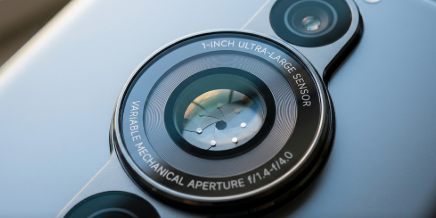
For many years, phone makers tried to win your heart by offering more megapixels. However, the game has changed completely in May 2026. Experts now agree that the 1-Inch Sensor is the 2026 battleground for smartphone supremacy. While old phones relied on software to fix blurry images, new flagships use physical size to capture better light.
Brands like Xiaomi, Vivo, and Oppo are leading this “Global 1-Inch Rollout.” These companies are proving that a larger physical sensor is much better than artificial sharpening. If you want a phone that takes professional photos, you must look at the hardware inside.
Optical Bokeh vs Artificial Blurs
In the past, your phone used “Portrait Mode” to blur the background of your photos. This software often made mistakes, like blurring your hair or the edges of your glasses. The 1-Inch Sensor solves this problem by offering true optical background separation.
Because the sensor is physically large, it creates a “creamy” and natural bokeh effect. This looks exactly like the photos from professional mirrorless cameras. You no longer have to worry about ugly digital errors around your subject. The light hits the glass and the sensor in a way that creates depth naturally.
Understanding the Light Fusion 1050L
A huge part of this shift is the new Light Fusion 1050L sensor. This tech is a major reason why the 1-Inch Sensor is the 2026 battleground for smartphone supremacy. These sensors do not just chase high pixel counts. Instead, they focus on having larger individual pixels.
Larger pixels allow the camera to capture much more light in a short time. This leads to “Zero-Noise” photography, even when you are in a very dark room. You can take a clear photo at night without waiting for a long exposure. This makes capturing moving objects in low light much easier for everyone.
Variable Aperture 2.0 and Manual Control
For those who love technical specs, Variable Aperture 2.0 is a game-changer. This feature uses a Mechanical Step-less Aperture to move a physical iris inside the lens. It can adjust from f/1.4 for low light to f/4.0 for sharp landscapes.
This mechanical part gives you manual control over the “depth of field.” You can decide how much of the background stays in focus. It also allows you to create beautiful “starburst” effects on streetlights. This level of control was once only possible on big, expensive cameras. Now, the 1-Inch Sensor brings this power to your pocket.
The Rise of Consistent Telephoto Zoom
Even though the main focus is on the primary lens, zoom technology is also improving. Most 2026 flagships now feature a 200MP Periscope Zoom lens. These lenses use high-resolution crops to maintain 10x optical quality.
This means you get a clear image even when you zoom in from a long distance. By combining a 1-Inch Sensor on the main camera with these powerful zoom lenses, phones have become versatile tools. You can take a wide landscape or a far-away bird with the same high quality.
The 1-Inch Sensor is the 2026 battleground for smartphone supremacy because it brings back the importance of physics. Software is still helpful, but it cannot replace the way a large sensor handles real light. This year, the best camera is the one with the biggest sensor, not just the most AI features. You can read more about the latest camera sensor technology on Digital Photography Review.
References
- Xiaomi Global (2026). Xiaomi 17 Ultra Official Specifications and Imaging Technology.
- TechEconomy Nigeria (2026). Best Camera Phones in 2026: Why 200MP is No Longer Just a Spec.
- Fast Company (2026). The Return of Variable Aperture in Modern Smartphones.
- Ginni Rich Tech Trends (2026). Smartphone Camera Trends: Hardware vs. AI.