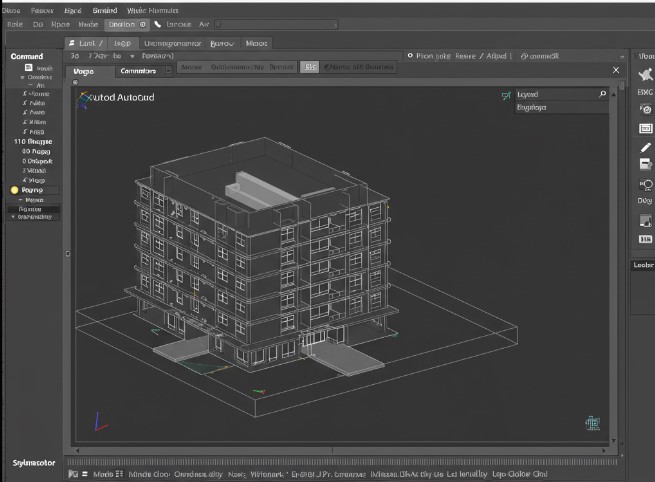
For decades, AutoCAD has been a cornerstone in the world of design and engineering, empowering professionals to bring their visions to life with precision and efficiency. As a foundational computer-aided design (CAD) software, its impact is undeniable. This article delves into what AutoCAD is, its diverse applications, how it has evolved, its future trajectory, and its relationship with the increasingly prevalent Building Information Modeling (BIM).
What is AutoCAD?
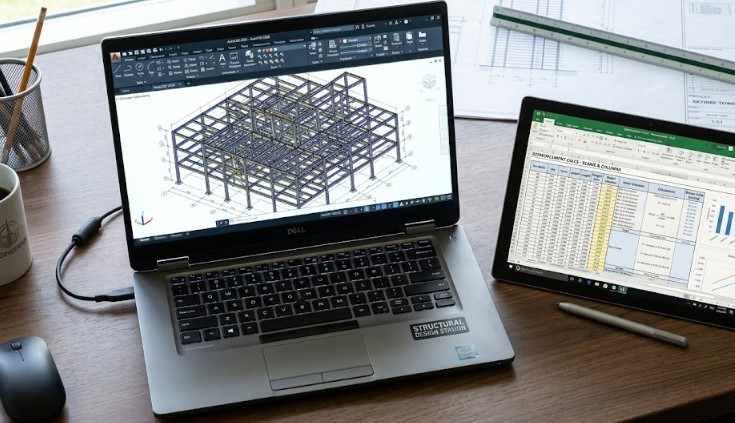
AutoCAD, developed by Autodesk, is a commercial software application for 2D and 3D computer-aided design (CAD) and drafting. First released in December 1982, it revolutionized the design process by allowing users to create detailed technical drawings and models on personal computers, a significant shift from the then-dominant mainframe or minicomputer-based systems. AutoCAD enables users to draw, edit, and document projects with a high degree of accuracy, making it an indispensable tool across a multitude of industries.
Main Uses and Applications of AutoCAD
AutoCAD’s versatility has led to its adoption in a wide array of fields. Key applications include:
- Architecture: Creating detailed floor plans, building elevations, sections, and 3D models of structures.
- Engineering:
- Civil Engineering: Designing infrastructure projects like roads, bridges, and land development layouts.
- Mechanical Engineering: Drafting mechanical components, machinery, and assembly drawings with precise dimensions.
- Electrical Engineering: Creating wiring diagrams, circuit board layouts, and schematics.
- MEP (Mechanical, Electrical, and Plumbing): Designing and coordinating building systems.
- Construction: Developing construction documents, shop drawings, and as-built plans.
- Manufacturing: Designing products, parts, and creating plans for manufacturing processes.
- Interior Design: Planning space layouts, furniture arrangements, and creating detailed interior elevations.
- Urban Planning: Developing city layouts, site plans, and mapping.
- Product Design: Creating prototypes and detailed specifications for various products.
- Fashion and Jewelry Design: Designing intricate patterns and detailed models.
Its ability to produce precise 2D drafts and increasingly sophisticated 3D models has cemented its role as a fundamental tool for professionals requiring accuracy and detailed documentation.
The Evolution of AutoCAD: From Pixels to Parametrics
AutoCAD’s journey since 1982 has been one of continuous innovation and adaptation:
- Early Days (1980s): The initial versions focused on bringing 2D drafting to personal computers, offering basic drawing tools and layer management. It quickly gained traction due to its accessibility.
- Advancements in 3D (1990s): Autodesk introduced more robust 3D modeling capabilities, such as the Advanced Modeling Extension (AME) in AutoCAD Release 11. User interfaces became more refined, and specialized versions like AutoCAD LT (a more affordable 2D version) and AutoCAD for Mac emerged.
- Increased Sophistication (2000s): This era saw further enhancements in 3D modeling, improved rendering, and the introduction of dynamic blocks and parametric constraints, allowing for more intelligent and flexible designs. Industry-specific toolsets (e.g., AutoCAD Architecture, AutoCAD Mechanical) provided tailored functionalities.
- Cloud and Collaboration (2010s – Present): Recognizing the need for greater connectivity, Autodesk integrated cloud storage and collaboration features. AutoCAD mobile and web apps enabled users to view, edit, and share drawings across devices. Recent versions focus on automation, AI-powered insights, and streamlined workflows.
Throughout its evolution, AutoCAD has consistently incorporated user feedback and technological advancements, maintaining its relevance in a rapidly changing digital landscape.
The Future of AutoCAD: Smarter, Faster, and More Connected
The future of AutoCAD is poised to be shaped by several key technological trends:
- Artificial Intelligence (AI) and Machine Learning (ML): Expect AI to play a more significant role in automating repetitive tasks, optimizing designs, identifying potential clashes, and providing intelligent suggestions to users.
- Enhanced Cloud Capabilities: Cloud-based collaboration, data management, and real-time project sharing will continue to be a central focus, facilitating seamless teamwork across geographically dispersed teams.
- Immersive Technologies (VR/AR): Integration with Virtual Reality (VR) and Augmented Reality (AR) will offer new ways to visualize and interact with designs, enabling immersive design reviews and stakeholder presentations.
- Streamlined Workflows and Customization: Further improvements in user interface (UI) and user experience (UX), along with greater customization options, will allow professionals to tailor the software to their specific needs and workflows.
- Mobile Accessibility: Continued development of robust mobile and web applications will provide greater flexibility for working on designs from anywhere, on any device.
- Sustainability Focus: Tools and features that support sustainable design practices, such as energy analysis and material efficiency, are likely to become more prominent.
AutoCAD is evolving to become an even more intelligent, intuitive, and connected platform for designers and engineers.
AutoCAD vs. Building Information Modeling (BIM): Understanding the Difference
While AutoCAD is a CAD software, Building Information Modeling (BIM) is a process or methodology. It’s crucial to understand their distinctions:
- Focus: Primarily on creating geometric representations – 2D drawings (lines, arcs, circles) and 3D models.
- Output: Digital drawings and models that convey design intent and specifications.
- Data: While it can contain data (e.g., dimensions, annotations), the core is the geometry.
- Workflow: Often used for individual design tasks, detailing, and documentation.
- Building Information Modeling (BIM):
- Focus: Creating an intelligent, data-rich digital representation of a facility’s physical and functional characteristics throughout its lifecycle – from conception to demolition.
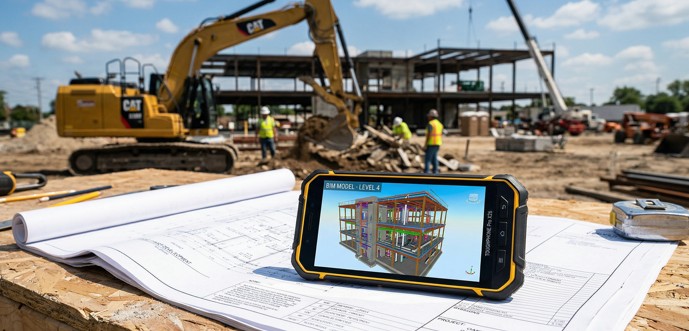
- Output: A comprehensive digital model (or set of federated models) that contains information about elements (e.g., walls, doors, pipes) including their properties, relationships, quantities, costs, and schedules.
- Data: The “I” in BIM (Information) is key. BIM models are databases where objects are “smart” and understand their relationships with other objects.
- Workflow: A collaborative process involving all project stakeholders (architects, engineers, contractors, owners) working with a shared information model. It supports analysis, simulation, and lifecycle management.
In essence, AutoCAD is a tool primarily for drafting and design visualization, while BIM is a holistic approach to project delivery and asset management, centered around an intelligent model. Software like Autodesk Revit is purpose-built for BIM.
Is BIM a Threat to AutoCAD?
The rise of BIM has led to discussions about its impact on AutoCAD’s dominance. Here’s a nuanced perspective:
- Different Strengths: Standard AutoCAD, in its native form, is not inherently a BIM tool as it lacks the comprehensive data management and object-based intelligence central to BIM. However, AutoCAD can be enhanced with add-ons to incorporate some BIM functionalities.
- Complementary Roles: AutoCAD and BIM (often facilitated by software like Revit) can and often do coexist. AutoCAD remains highly valuable for:
- Detailed 2D Drafting: Many industries still rely heavily on precise 2D drawings for construction documentation, manufacturing specifications, and schematics, areas where AutoCAD excels.
- Specific Design Tasks: It can be used to create detailed components or preliminary sketches that are then imported into a BIM environment.
- Legacy Data: A vast amount of existing design data is in AutoCAD’s DWG format, ensuring its continued relevance for working with older projects.
- Evolution, Not Replacement (for many): BIM is widely seen as an evolution in the Architecture, Engineering, and Construction (AEC) industry, offering significant advantages in collaboration, efficiency, and lifecycle management, especially for complex projects. While BIM adoption is growing rapidly, it doesn’t necessarily mean the immediate obsolescence of AutoCAD.
- Autodesk’s Ecosystem: Autodesk, the developer of both AutoCAD and leading BIM software like Revit, positions them as part of a broader ecosystem. They offer suites that include both, allowing professionals to leverage the strengths of each.
- Market Adaptation: While for many BIM-centric projects, dedicated BIM software like Revit is the primary authoring tool, AutoCAD continues to be a crucial skill and is adapting with features that improve interoperability with BIM workflows.
BIM represents a significant shift in how building and infrastructure projects are designed, constructed, and managed. While it offers a more comprehensive and data-rich approach than traditional CAD, AutoCAD is not disappearing. It remains a powerful and widely used tool for drafting, detailed design, and specific applications across numerous industries. For many professionals, the question is not “AutoCAD or BIM?” but rather “How can AutoCAD and BIM workflows be best integrated?”. The future likely involves leveraging the strengths of both, with BIM processes becoming increasingly central while AutoCAD continues to serve essential roles in the broader design and engineering landscape.