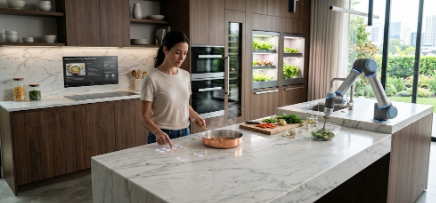
In the past, smart homes required a lot of manual work. You had to set schedules and “if this, then that” rules for every light and plug. However, today in May 2026, adaptive automation has changed everything. Instead of you telling the house what to do, the house learns what you want by watching your daily habits. This shift marks the end of boring programming and the start of a home that truly understands your intent.
The Power of the Orchestration Layer
Most people are tired of opening 50 different apps to control 50 different devices. To solve this, new systems use what experts call an “Orchestration Layer.” This is a central AI brain, often built into panels from brands like Brilliant or Aqara. This layer acts as a conductor for an orchestra. It watches how you use your home and finds patterns without you saying a word.
For example, imagine you start your favorite movie app every Friday night. The system notices that you always dim the living room lights and drop the thermostat to 70 degrees at the same time. After a few weeks, the adaptive automation system does this for you automatically. It does not follow a strict timer; instead, it waits for you to start the movie. This makes your home feel intuitive rather than robotic.
Why Physical Interfaces are Returning
Even though we have smartphones, “app fatigue” is a real problem in 2026. Many homeowners find it annoying to unlock a phone just to turn on a kitchen light. Because of this, we are seeing a huge return to physical interfaces. Modern homes now feature sleek, in-wall AI panels. These panels offer tactile buttons and screens that give you immediate control over your entire environment.
These physical panels are much more than simple switches. They serve as the face of your adaptive automation system. They provide a dedicated spot to manage security, climate, and lighting without needing a mobile device. This trend proves that while AI is invisible, humans still enjoy the feeling of a physical button or a dedicated wall display.
Invisible Cooktops and Smart Surfaces
The kitchen is also seeing a massive technical upgrade this year. Engineers are now installing invisible cooktops directly beneath porcelain or stone worktops. These systems use induction coils hidden under the counter surface. Because the tech is hidden, your kitchen island looks like a seamless piece of stone when you are not cooking.
This design fits perfectly into the adaptive automation lifestyle. When you place a compatible pot on the stone, the surface recognizes it and activates the heat. Once you finish, the stone stays cool to the touch, allowing you to use the area for homework or food prep. It blends high-end civil engineering materials with advanced electronics to create a clutter-free home.
Presence Sensing with mmWave Radar
Old motion sensors often failed if you sat too still. If you were reading a book, the lights might suddenly turn off, leaving you in the dark. Thankfully, adaptive automation in 2026 uses mmWave radar technology. These sensors are so sensitive that they can detect a human’s breathing or even a heartbeat.
We call this “Presence Sensing” rather than just motion detection. Because the system knows you are still in the room—even if you aren’t moving—it keeps the environment perfect for you. This technology ensures that your HVAC and lighting systems operate only when someone is actually using the space. Consequently, this saves a significant amount of energy while improving your comfort.
If you want to learn more about the latest smart home standards, you can visit the Connectivity Standards Alliance website for technical updates on Matter and AI integration.
References
- Brilliant Home Technology Trends (2026).
- Aqara AI Processor Specifications Manual.
- Journal of Residential Automation: The Shift to mmWave Presence Detection.
- Modern Kitchen Design: The Engineering of Invisible Induction.