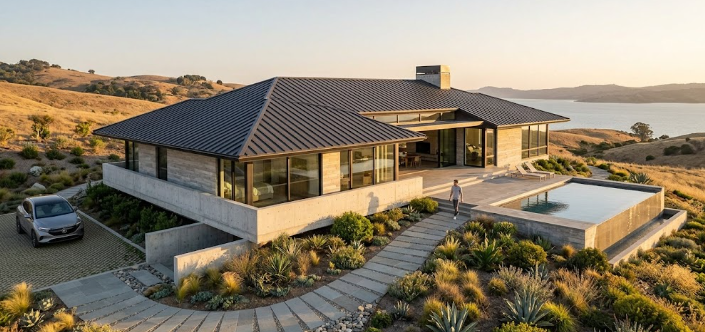
The real estate market is changing rapidly as we move through 2026. In the past, luxury meant having the most expensive marble or a massive swimming pool. Today, high-end buyers focus more on safety and durability. Recent data shows that people now want homes that can withstand extreme weather. Specifically, flood-proof and fire-defensible luxury specs have become the most requested features in high-end listings.
Homeowners no longer view climate protection as a “bonus” feature. Instead, they see it as a necessary investment to protect their wealth. For example, a beautiful home loses its value if a forest fire or a flash flood easily destroys it. Consequently, architects and engineers are integrating advanced safety tech into their designs. These features look beautiful and keep the family safe at the same time.
Why Flood-Proof and Fire-Defensible Luxury Specs are Trending
Current market reports from Zillow and Martha Stewart show a massive spike in “Climate-Proof” searches. Buyers are nervous about the increasing number of natural disasters. Because of this, listings that mention flood protection have jumped by 64%. Similarly, mentions of fire protection have risen by 28% in just the last few months.
Developers are responding to this demand by changing how they build. They are moving away from traditional materials that burn or rot easily. Furthermore, insurance companies are offering better rates for homes with these resilient features. This financial benefit makes the shift even more attractive to savvy investors. When a home features flood-proof and fire-defensible luxury specs, it stands out in a crowded market.
Preventing Water Damage with Permeable Walkways
One of the most effective ways to protect a home from water is through smart landscaping. Traditional concrete driveways do not allow water to soak into the ground. During heavy rain, this water pools up and causes flash flooding. To solve this, luxury builders now use permeable pavers. These special stones allow rainwater to filter directly into the soil.
Additionally, native rain gardens are becoming a staple in high-end yards. These gardens use local plants that love water to soak up excess runoff. Not only do they look lush and green, but they also act as a natural sponge. By using these methods, engineers ensure that water moves away from the house foundation. This proactive design is a key part of modern flood-proof and fire-defensible luxury specs.
Protecting Homes with Hardened Exteriors
Fire safety is the other half of the resilience puzzle. In the past, wood siding was the standard for luxury cabins and suburban homes. However, wood burns quickly during a wildfire. Today, builders use “hardened exteriors” to defend against heat and embers. Materials like fiber-cement siding are now very popular because they look like wood but do not catch fire.
Metal roofing is another essential upgrade for fire protection. It prevents sparks from landing on the roof and starting a fire. These materials create a “Defensible Space” around the home. This means the house can survive a fire even if the local fire department cannot reach it immediately. Investing in these flood-proof and fire-defensible luxury specs provides peace of mind that traditional luxury items cannot offer.
The Future Mindset of the 2026 Homebuyer
The way people think about their homes has shifted permanently. About 86% of homebuyers now rank climate resilience as a top priority. They want to know that their investment will last for decades, not just years. Therefore, developers who ignore these trends will likely see their property values drop over time.
Whether you are a professional developer or a DIY renovator, you should focus on future-proofing. Adding resilient features increases the resale value of the property significantly. It also makes the home much more comfortable to live in during stormy seasons. Ultimately, flood-proof and fire-defensible luxury specs represent the perfect blend of high-end design and practical engineering. For more information on resilient building standards, you can visit the Insurance Institute for Business & Home Safety.
References
- Zillow Research. (2026). The Rise of the Climate-Resilient Home.
- Martha Stewart Living. (2026). Trending Home Features for May 2026.
National Association of Realtors. (2026). Buyer Preferences and Environmental Impact.