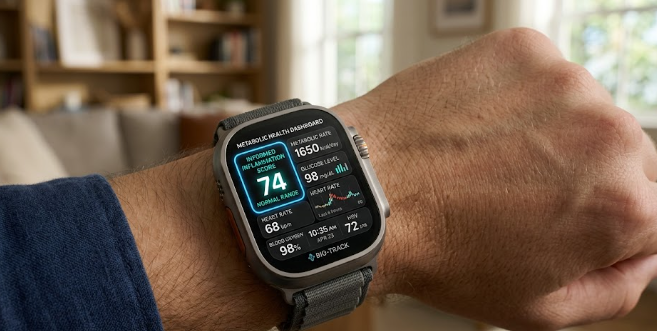
For years, we measured our health by how many steps we took each day. While walking is great, 2026 has brought us a much more powerful tool: the Informed Inflammation Score. This new metric moves beyond simple movement. It looks deep inside your body to see how you are actually feeling. Modern smartwatches now use advanced sensors to tell you if your body is under too much stress before you even feel tired.
In the past, you might have waited until you felt sick or “burnt out” to take a break. Today, technology helps you stay ahead of the game. By monitoring your Informed Inflammation Score, you can make small changes to your routine to avoid long-term health issues. This shift from “tracking activity” to “tracking recovery” is changing how we live and work.
How AI Calculates Your Informed Inflammation Score
You might wonder how a watch knows what is happening in your blood. The secret lies in Artificial Intelligence (AI) and two key readings: blood oxygen levels and Heart Rate Variability (HRV). Your smartwatch constantly scans these numbers. It looks for tiny patterns that the human eye cannot see. For example, if your HRV drops while your resting heart rate rises, the AI flags this as internal stress.
When your body fights off a cold or deals with high work stress, it creates inflammation. This is a natural response, but too much of it is dangerous. The AI combines these biometric signals to give you an Informed Inflammation Score. A high score means your “internal fire” is burning too bright. It warns you that your immune system is working overtime, even if you think you feel fine.
Predicting Burnout Before It Happens
Burnout does not happen overnight. It is a slow process that builds up over weeks of high stress. Luckily, the Informed Inflammation Score acts like a weather forecast for your brain and body. By watching the trends in your score, you can see burnout coming from a mile away. If your score stays in the “high” zone for three days straight, your watch might suggest a rest day or a better sleep schedule.
Imagine you have a big project at work. You feel motivated, but your Informed Inflammation Score is rising. This tells you that while your mind is ready, your body is struggling to keep up. Using this data allows you to manage your energy better. Instead of pushing until you crash, you can take a short walk or meditate to bring your inflammation levels back down to a healthy range.
Why Metabolic Tracking Beats Step Counting
Counting steps is a very basic way to look at fitness. You can walk 10,000 steps and still be incredibly unhealthy if your body is inflamed. This is why the Informed Inflammation Score is much more valuable. It provides a metabolic “check-up” every single minute. It tells you how your body is reacting to your diet, your sleep, and your stress levels.
For example, a person who sleeps poorly will see a bad Informed Inflammation Score the next morning. Even if they hit their step goal, their body is not recovering. By focusing on this score, you prioritize quality over quantity. You learn that sometimes, a nap is more beneficial for your long-term health than a five-mile run. This intelligent approach helps you build a body that is resilient and strong.
Using the Informed Inflammation Score Daily
To get the most out of this tech, you should check your score every morning. Think of it like checking the fuel gauge in your car. If your Informed Inflammation Score is low, it is a great day for a hard workout or a challenging task. If the score is high, it is a signal to slow down. Listen to what the data is telling you about your internal environment.
Over time, you will notice what triggers your inflammation. Maybe it is late-night snacking or a specific type of coffee. By tracking the Informed Inflammation Score, you become a detective for your own health. You gain the power to fix problems before they turn into chronic illnesses. This is the true power of wearable tech in 2026.
References
- Journal of Metabolic Health (2025): AI Applications in Wearable Biometrics.
- HealthTech Review: The Shift from Activity to Recovery in 2026.
- International Society of Bio-Sensors: Monitoring Internal Inflammation via HRV.
For more details on how metabolic health affects your daily energy, you can read this guide on internal wellness.