Summary of Key Points
- High blood pressure damages delicate blood vessels in the kidneys.
- Damaged vessels fail to filter waste effectively, leading to toxins in the blood.
- Managing blood pressure protects long-term renal health.
Introduction
Understanding how high blood pressure causes chronic kidney disease over time is essential for protecting your overall health. Your kidneys act as complex filters for your body. They clean your blood every single day by removing waste products and extra fluid. However, when your blood pressure stays elevated, it places immense strain on these vital organs.
The Direct Link Between Hypertension and Kidney Damage
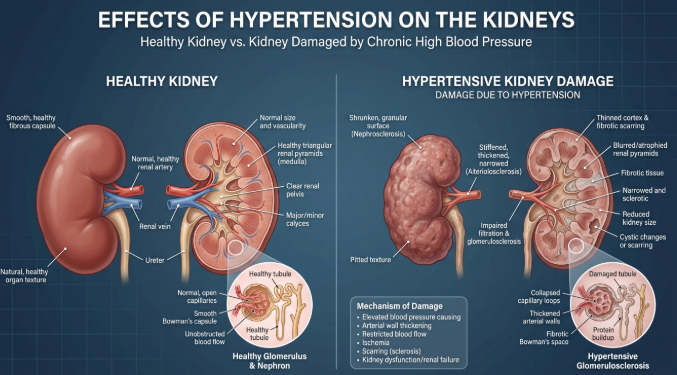
Blood pressure measures the force of blood pushing against the walls of your arteries. When this force remains too high for a long time, it harms the delicate blood vessels inside your kidneys. Consequently, the organs cannot filter waste and excess fluid properly. As a result, fluid builds up in your blood vessels, which pushes your blood pressure even higher in a dangerous cycle.
How High Blood Pressure Causes Chronic Kidney Disease Over Time
To see how high blood pressure causes chronic kidney disease over time, we must look at the microscopic units inside the kidneys called nephrons. Nephrons do the actual filtering work. High blood pressure narrows and weakens the arteries supplying these nephrons. Therefore, the nephrons do not receive enough oxygen and essential nutrients.
Over the years, this lack of blood flow scars and destroys the nephrons. Because the kidneys cannot repair themselves easily, lost nephrons mean permanent damage. As more nephrons fail, the kidneys slowly lose their ability to function. Eventually, this progressive loss leads to full chronic kidney disease, requiring intensive medical treatments or dialysis.
Prevention and Management Strategies
Fortunately, you can take control before severe damage occurs. Adopting a healthy lifestyle significantly reduces your risk. Eating a balanced diet low in sodium, exercising regularly, and taking prescribed medications will keep your blood pressure in a safe range. Furthermore, regular doctor checkups help catch early warning signs of renal distress.
Ultimately, keeping your blood pressure under control shields your kidneys from long-term harm. For more information on managing your cardiovascular and renal health, visit the Centers for Disease Control and Prevention.
References
National Institute of Diabetes and Digestive and Kidney Diseases. High Blood Pressure and Kidney Disease. American Heart Association. Understanding Blood Pressure and Renal Health.